Your source doesn’t seem to answer the big question:
What exactly is Thirisadai?
The original hoax gave three different explanations (which is itself an alarming sign, showing the hoaxer hadn’t made up their mind). One says it means “three oil”; another says “each Thirisadai is equivalent to three Dharani.”
OK, so the heading thiri must be a Tamil borrowing of the Sanskrit tri for “three” then.
Now, the hoax page offered a full list of its Chola ship ranks, from small to the largest Thirisadai, and Dharani is said to be the second-largest ship.
So what is Dharani? The word is itself a common Sanskrit word:
https://www.merriam-webster.com/dictionary/dharani
Hinduism & Mahayana Buddhism
mantra
Etymology
Sanskrit dhāraṇī, literally, act of holding, remembering, from dhārayati he holds
It literally means “holding”, and is usually known as a synonym of “mantra” via the sense of “keeping in memory”.
However, for the given topic, what we need is a feminine form of the word:
Dhāriṇī धारिणी “she who holds”.
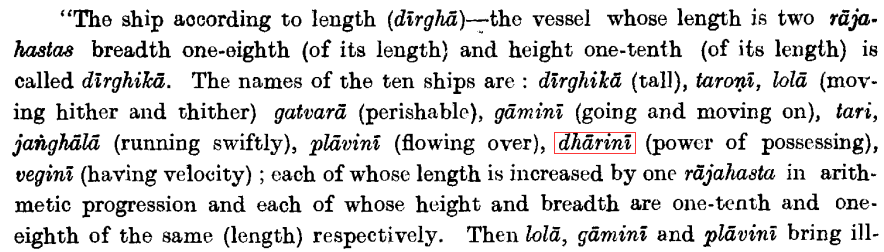
Dharini is the second-largest ship listed in Yukti-Kalpataru, a statecraft manual from Bhoja, who was a polymath king, a different and significantly more famous figure than the Mihira Bhoja we met in the Dynasties of India campaign.
A paper’s translation:
Translated into a table:
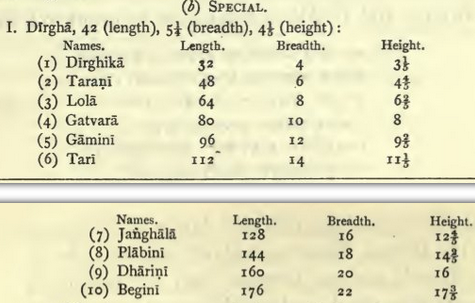
When a FE dev said they found the ship in a real ancient book, this might be a reason: they might have found that “Dharani” appears real, ergo Thirisadai is real.
With this explained, we still don’t know what Thirisadai means, do we?
Well, the answer is simple.
Here’s a paper on her:
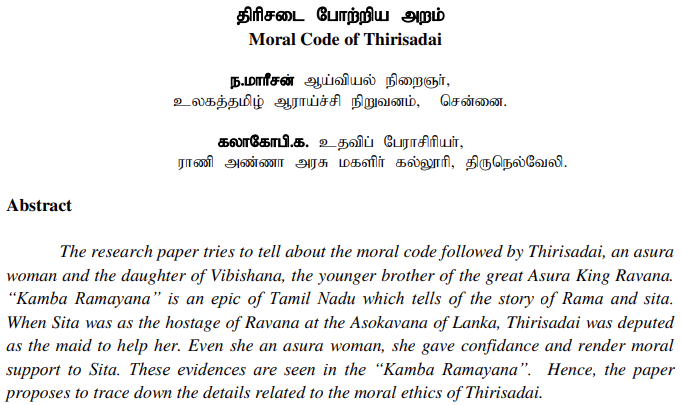
Turns out Thirisadai is the Tamil name for Trijata.
If you are not familiar with the story outline of Ramayana, Trijata is a supporting character in the Indian epic. A kind-hearted demoness, she cared for the heroine Sita when she was kidnapped by the demon king Ravana.
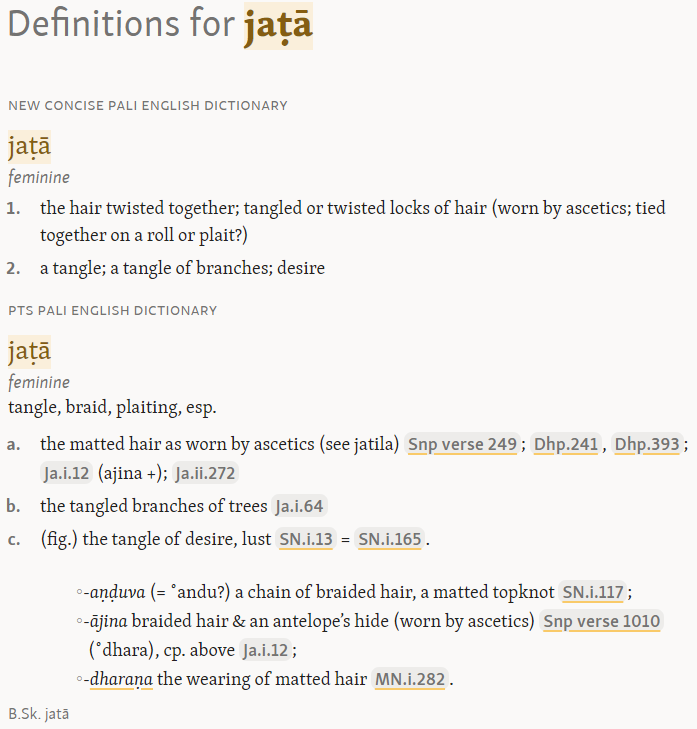
The name itself literally means “three hair knots, three braids”.
===
Now you can see what the hoaxer had done. They drew inspiration using the real ship list from Bhoja, perhaps changing some names, and borrowed a legendary character’s name for their fake largest ship, sorta like calling it “Mary Magdalene”. Unlike the real Chola ships which used Tamil, these names are Sanskrit in origin.