Anirudh Kanisetti’s book only once mentioned Yukti Kalpataru, in note form. This is what he wrote:
Chaudhuri, Mamata. ‘Ship-Building in the Yuktikalpataru and Samarangana Sutradhara’. Indian Journal of the History of Science 11, no. 2 (1975): 137–47, 143. These texts date to the same period and were composed at the Paramara court, who were allied, on and off, to the Cholas. While geographically distant, these descriptions were probably based on merchant vessels which plied along the west coast and would undoubtedly have been familiar to the Five Hundred corporation.
The Ainurruvar (“Five Hundred”) is a Tamil merchant corporation, but as he acted as an objective historian, he did not associate the text with Chola outright. He mentioned that the Five Hundred would have been familiar, not that they used (the vessels mentioned in) it — that’s a whole different claim. Just because the Chinese had a rocket in the 10th century doesn’t mean that they made it to the moon — objective reasoning must be made to the claim, and most importantly, a contemporary text collaborating the claim must be found first.
All while the devs, if they didn’t invest enough in research to access an academic paper on Chola ships (there was one available at the time, offering exactly the right info), even if they cheap out, could still have used an available in public domain, noncontroversial name: colandia, from Periplus of the Erytlhraean Sea.
Colandia is also something like the “feel-good” thingy Kanisetti mentioned, this is also a supposedly big ship like the Thirisadai that can be used to bolster nationalist fervor. The colandia is also associated with Chola because of its name, because of this few (or many?) Indian scholars presented it as proof of ancient Indian shipbuilding mastery. However, rechecking of the text does not support this: The “c” in Colandia is not pronounced “ch”, the text mentioned ΚΟΛΑΝΔΙΟϕΩΝΤΑ (kolandiaphonta), not colandiaphonta or cholandiaphonta. The name Kolandiaphonta might be a transcription of the Chinese term Kun-lun po, which refers to an Indonesian-type of vessel.
Here is a publication by Robert Dick-Read, he also mentioned the Yukti Kalpataru, and advised not to take the information in it at face value. Robert DR also criticized Radha Kumud Mukherjee, who started the claim of the Borobudur ship being an Indian ship rather than an Austronesian ship.
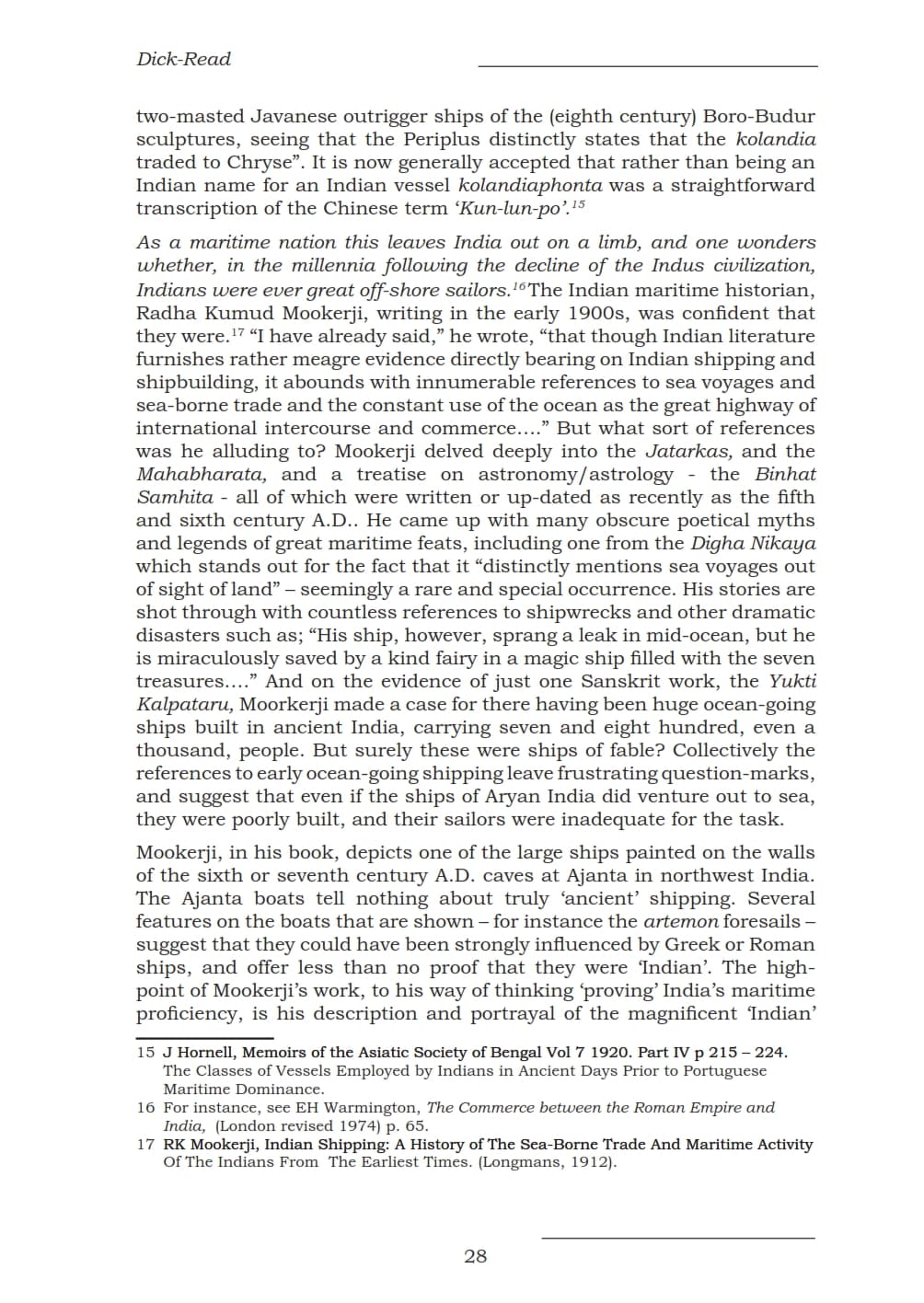
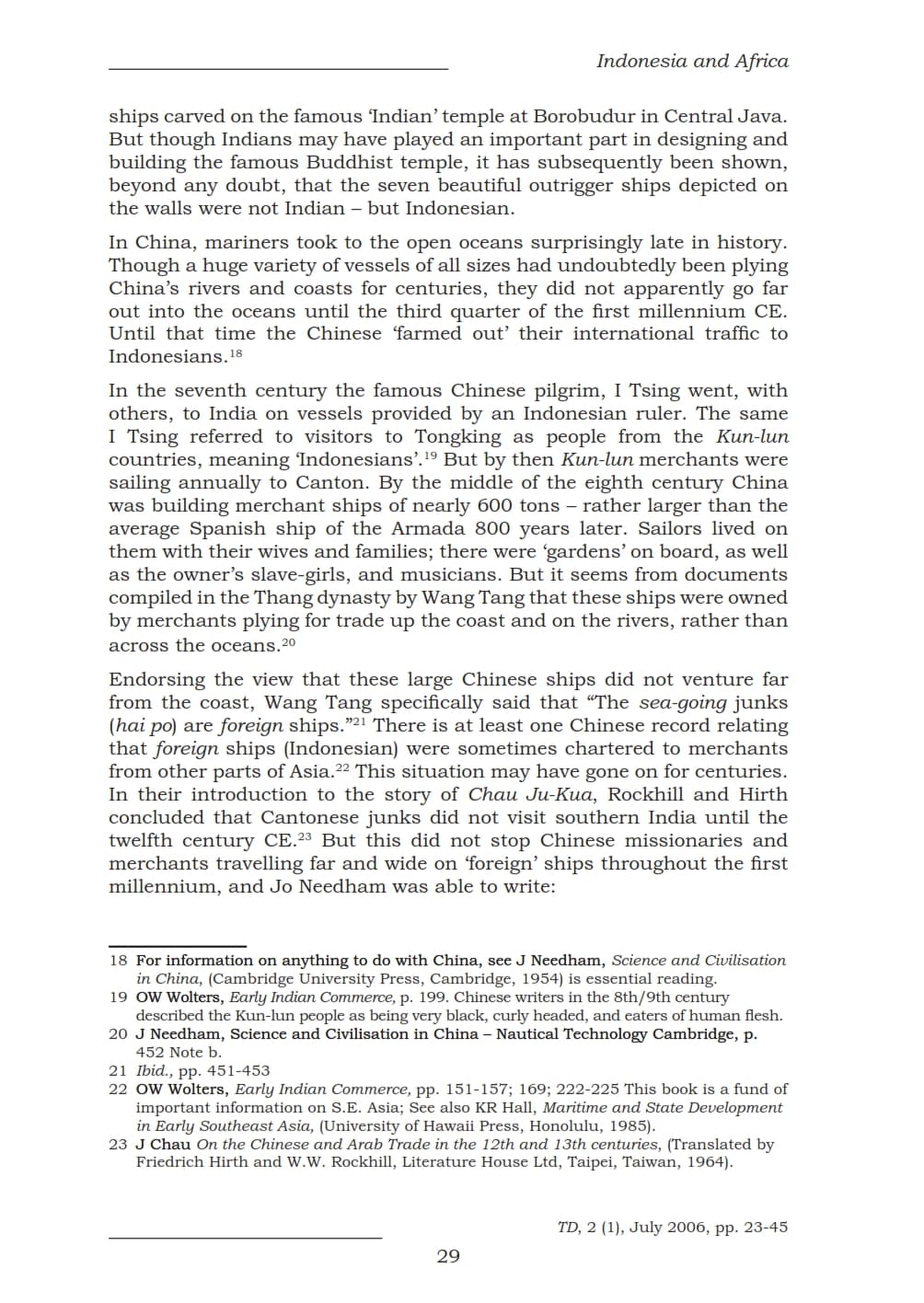
The Paramara court, which composed Yukti-Kalpataru also reigned over what later be known as Surat and some parts of Gujarat region. This is a well-known shipbuilding location in medieval and early modern India – the Gujaratis have their big ships built there, and they’re often larger than Portuguese carracks in the 1500s. From Manguin, Pierre-Yves. 2012. “Asian shipbuilding traditions in the Indian Ocean at the dawn of European expansion”, pp. 597–629 :
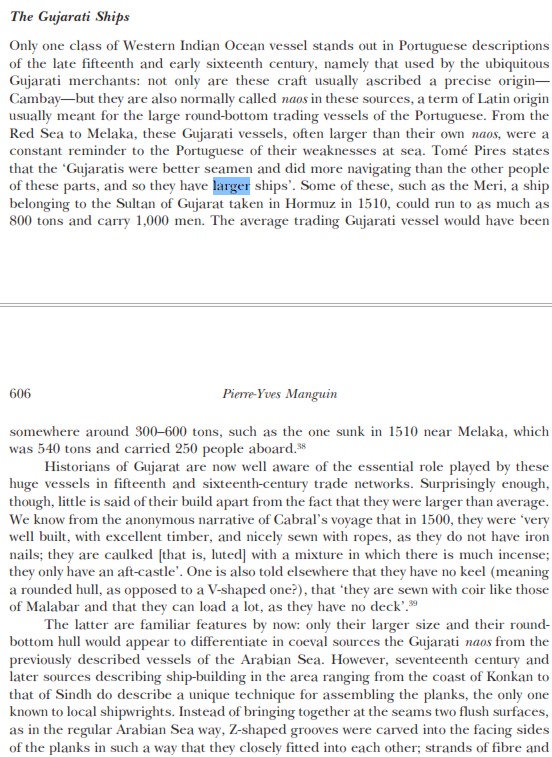
These Surat-Gujarati ships continued to be relatively large (compared to contemporary European ships) in the early 1600s. Examples are Rahimi and Ganj-i-Sawai.