I actually agree with you about Persia and Korea.
First of all, I think Persia is one of the biggest missing pieces in AoE3. If the game never gets Persia, I personally feel that its representation of early-modern Asia will always be incomplete. So if the developers decide to add Persia, I would strongly support it.
As for Korea, I want to clarify something: I have never argued that Korea should not be added. Quite the opposite. I completely understand why Korea is an attractive candidate. The Turtle Ship and the Hwacha (火車) are both highly recognizable and could provide a very distinctive gameplay experience if designed well.
What I am actually trying to discuss is a slightly different question: why is Korea almost always the first answer Western players give when they talk about “the next Asian civilization”? I think the reason is quite understandable. China, Japan and Korea have enormous cultural visibility in the modern Western world. They have become three of the most recognizable East Asian cultures in the Western imagination.
So Western players naturally know more about their history as well. They have spent much more time digging through Chinese, Japanese and Korean history looking for “cool things” — unusual weapons, unique units, special buildings and interesting mechanics that could work in a strategy game.
There is nothing wrong with that. But it creates a feedback loop. Because these countries are well known, Western players study them more. Because they study them more, they discover more interesting things. And because they discover more interesting things, these civilizations seem even more naturally suited to strategy games.
That is the cycle I am trying to break.
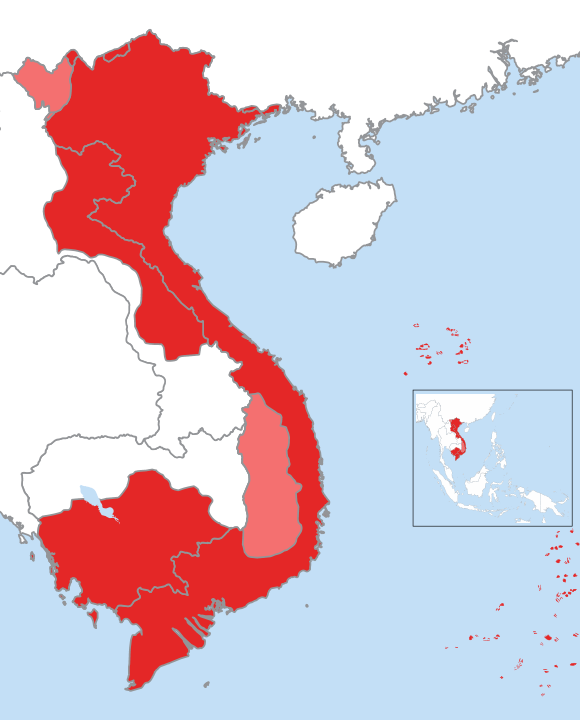
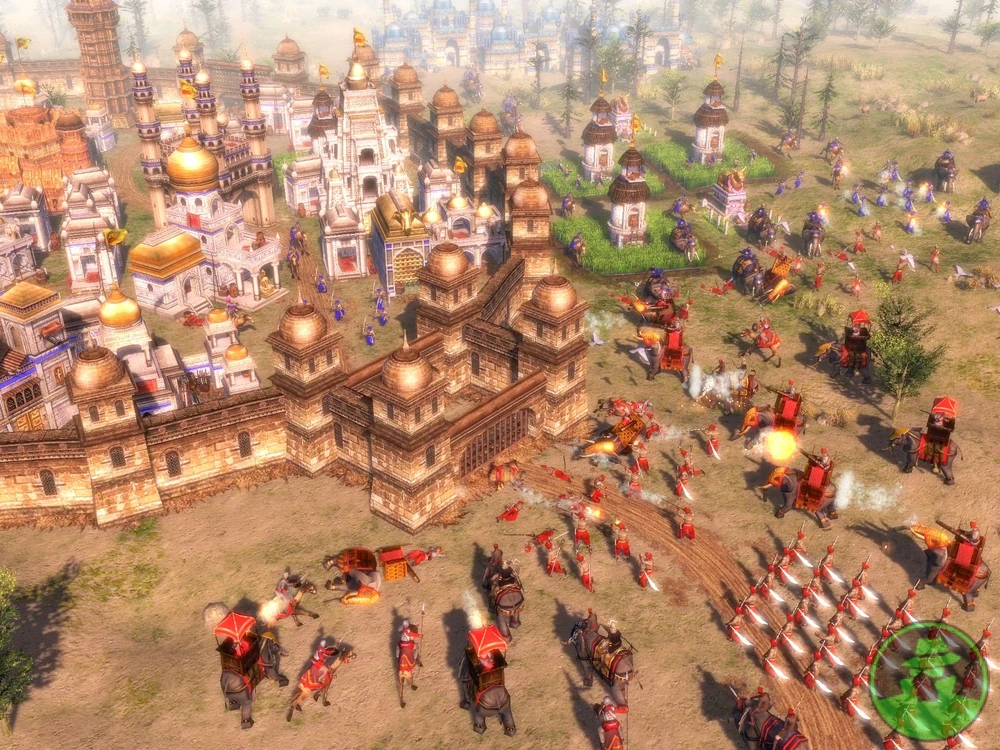
If you actually look at Asian history between roughly the 16th and 19th centuries, you find a much larger and more diverse world. There were Persia, the Durrani Empire, the Marathas, the Sikh Empire, the Burmese kingdoms, Siam, Vietnam, and numerous Central Asian states, among many others. Many of these were major political and military powers of their time.
And this is the point I really want to emphasize: “Having cool unique units” is not a special advantage of China, Japan or Korea.
If you seriously study almost any civilization, you can find unusual, visually distinctive and historically fascinating things that could become great game mechanics.
The difference is that we have already spent an enormous amount of time digging through Chinese, Japanese and Korean history looking for these things. We have not done the same with many other Asian civilizations. That is what I want people to notice.
The Hwacha itself is a particularly interesting example, because it shows not only how games select historical “cool things”, but also how games can reshape historical memory.
Civilization III was released in 2001, and Korea’s unique unit was the Hwacha. It subsequently appeared in later Civilization games and became a very recognizable Korean historical symbol among strategy-game players around the world. But if you go back to Korean Internet culture before 2001, there is a very interesting phenomenon.
If you searched for “화차” in older Korean webpages, the results could be quite confusing. “화차” could refer to the historical Hwacha (花茶), but it could also be confused with “화차” in other meanings, including freight or cargo vehicles (貨車). In other words, the historical weapon was not necessarily an immediately recognizable term in ordinary modern Korean usage.
This does not mean that Koreans as a whole were unaware of the historical Hwacha. It simply illustrates how obscure the term could be outside specialist historical contexts. There is even a particularly interesting discussion from 2002 on a Civilization III forum in which a participant who said he had grown up in Korea and studied Korean history stated that he had never heard of the Hwacha before. https://forums.civfanatics.com/threads/korean-special-unit.39089/
Again, one person’s experience obviously cannot represent an entire country. But the timing is fascinating: it happened shortly after Civilization III had popularized the Hwacha as Korea’s unique unit.
China has similar examples. Before Age of Empires III and other modern strategy games and historical media brought them to a wider audience, things such as the Shenhuo Feiya (神火飛鴉) and Menghuo Yougui (猛火油柜) were extremely obscure to ordinary Chinese people. Specialists and history enthusiasts certainly knew about them, but they were not part of everyday historical consciousness.
This creates an interesting cultural cycle. A relatively obscure historical weapon is rediscovered by Western historians and game developers. It is turned into a distinctive game unit. It becomes a window through which Western players learn about Korean military history. And eventually it becomes much more prominent in modern Korean historical and national narratives as well.
This is also why I think the Hwacha should be placed within the broader history of East Asian gunpowder technology. Hwacha is a rocket luncher weapon with Korean characteristics, but it is actually no different from other rocket luncher weapons in the East Asian context. it was not an isolated technological phenomenon unique to Korea. It belonged to a much broader East Asian tradition of rockets and gunpowder weapons.
China had already developed a large variety of rocket weapons during earlier periods, and by the Ming period there were many different types and scales of multiple-rocket systems. There were smaller weapons such as the Yiwofeng (一窩蜂). There were medium-sized systems such as the Jiahuo Zhanche (架火戰車), also known as Huoxiangche (火廂車), as well as various rocket carts and frame-mounted launchers. There were also larger weapons such as the Shenhuo Feiya (神火飛鴉).
The Ming military also established the Shenji Battalion (神機營), and the term “Shenji” (神機) later appeared in the military terminology of other East Asian societies.
The important point here is not that one country was “better” than another. The point is that gunpowder technology circulated throughout East Asia, and Korea developed these technologies within its own military environment. So the Hwacha should not be understood as an isolated Korean technological miracle. It is better understood as a Korean development within a much broader regional tradition.
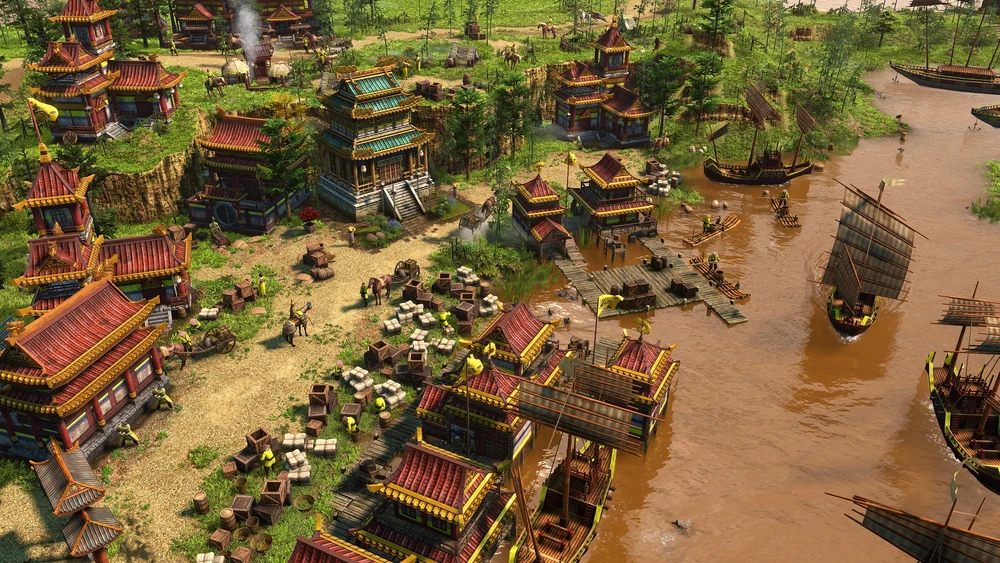
This is also reflected in the way modern historical strategy games sometimes represent these weapons. For example, in Age of Empires IV, China’s distinctive rocket artillery unit is the Nest of bees (一窩蜂), rather than a weapon presented as something uniquely Korean. Likewise, in the newer content for Age of Empires II, multiple-rocket weapons are represented as part of a broader East Asian mainland military tradition rather than being treated as an exclusively Korean technology.
That is actually a very useful way to understand the history: Hwacha can be a distinctively Korean unit while this kind of weapon still belonging to a much broader technological tradition shared across the East Asian mainland. And this actually makes the history more interesting, not less.
There is also an important distinction between being visually impressive and being militarily effective. Many traditional East Asian rocket weapons were spectacular and ingenious, but they also had significant practical limitations, especially in accuracy, reliability and trajectory control. Their psychological and battlefield effects could certainly be useful, but they were not necessarily comparable to later generations of firearms and artillery in terms of precision and destructive power.
And this is where the European firearms revolution becomes important. From the 16th century onward, East Asian states increasingly encountered European-style firearms and artillery. Japan rapidly adopted and mass-produced the arquebus. Ming China increasingly adopted European-style artillery and firearms, including weapons such as the Frankish cannon (佛郎機) and later Hongyi cannon (紅夷炮). As these weapons became more widespread, many traditional rocket systems rapidly lost their position as important battlefield technologies.
It was a broader transformation affecting traditional East Asian gunpowder weapons in general. I am not saying that the Hwacha was uniquely ineffective, nor am I trying to portray traditional Korean military technology as somehow inferior. The same basic limitation applied to many Chinese rocket weapons as well. Weapons such as the Yiwofeng, Jiahuo Zhanche and Shenhuo Feiya could be fascinating and sometimes useful, but compared with increasingly mature European firearms and artillery, their practical military advantages were limited.
So when I say that the Hwacha was eventually made obsolete by newer firearms and artillery, I am not trying to “debunk” Korea. I am simply putting it into the broader history of the technological transition from traditional East Asian gunpowder weapons to early-modern firearms and artillery.
The Hwacha can still be an excellent game unit. But its uniqueness as a game unit should not make us assume that it was a uniquely advanced military technology. And this is exactly why I think we should be careful about using a few famous “cool units” as the main reason for choosing civilizations.
If you seriously investigate other Asian civilizations, you will find plenty of equally interesting technologies, military traditions and historical stories. Persia has them. The Durrani Empire has them. The Marathas have them. The Sikh Empire has them. Vietnam has them. Burma has them. Siam has them. Central Asia has them. They are not lacking in “cool things”. They simply have not received the same amount of attention from Western popular history and strategy games.
So my position is actually very simple: I am not objection to adding Korea. I strongly support adding Persia, and I think Persia is one of the civilizations AoE3 most urgently needs.
But I also hope that when we talk about “Asia”, we do not automatically stop at China, Japan and Korea.
Those civilizations are not the entirety of Asian history. If we are willing to look beyond the civilizations we already know well, I think we will discover that the rest of Asia has just as much potential to provide unique and interesting gameplay.
That is really the point I am trying to make.