I said there’s no firm evidence suggesting any direct contact between Japan and SE Asia prior to the 16th century. I hope I’m clear this time cause I already repeated myself many times yet you don’t seem to get it. If you think there’s firm evidence then please provide it. So far you only provided a Wiki article which isn’t a reliable source.
There’s nothing political. Cooke el al. 2021 led an international team of researchers including many Japanese ones and they tested bones and skeletons from the Yayoi and Kofun periods, and their results are all genuine.
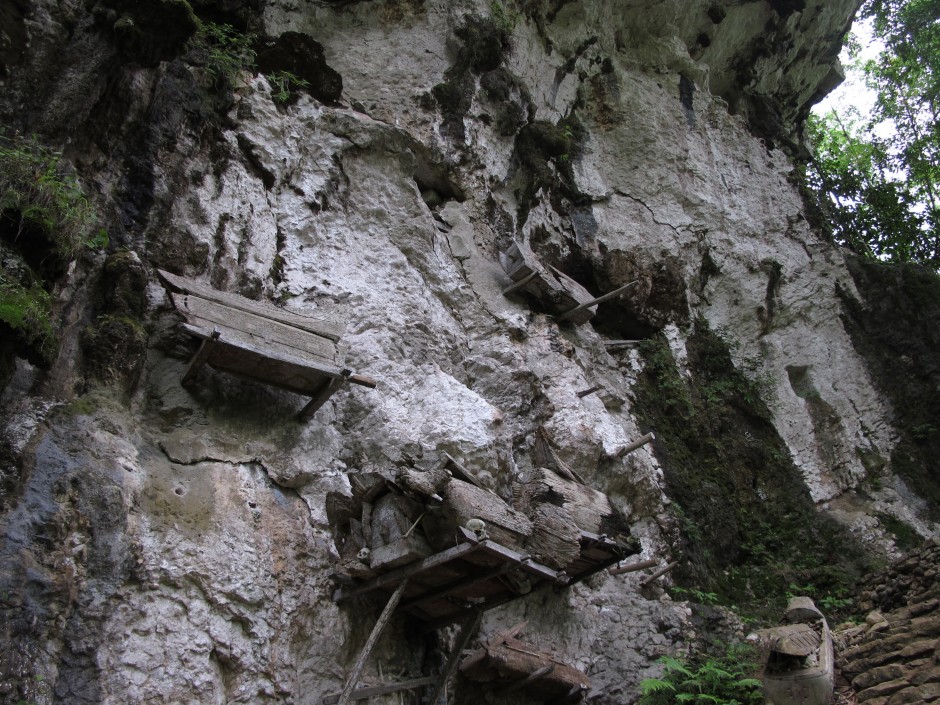
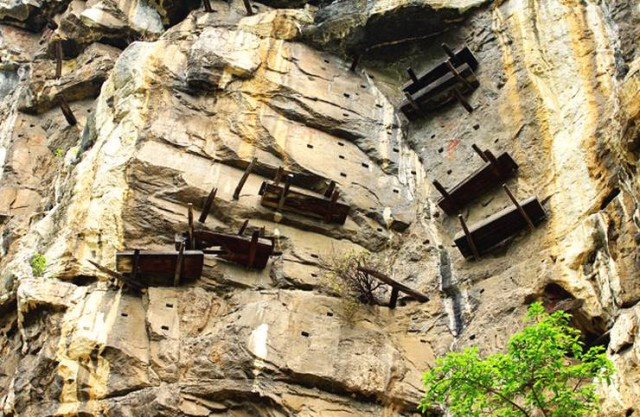
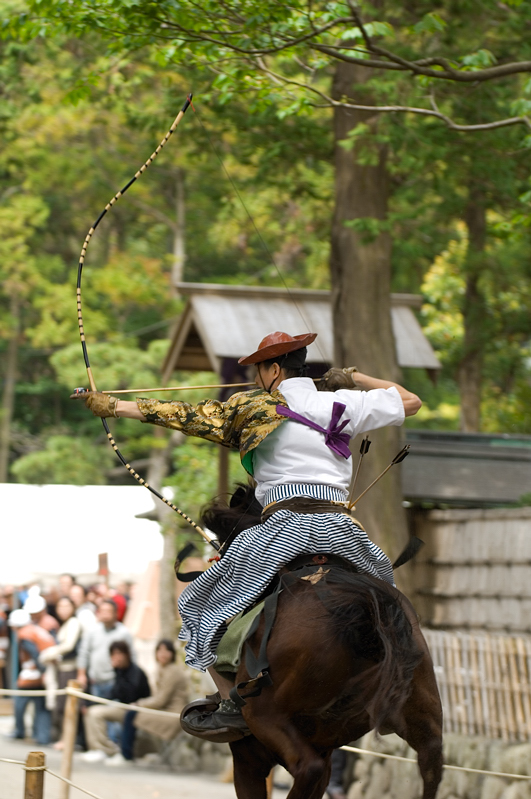
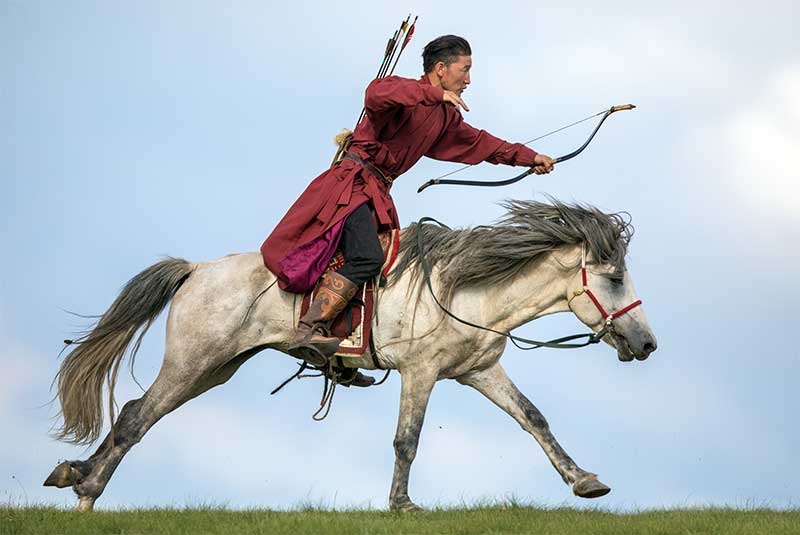
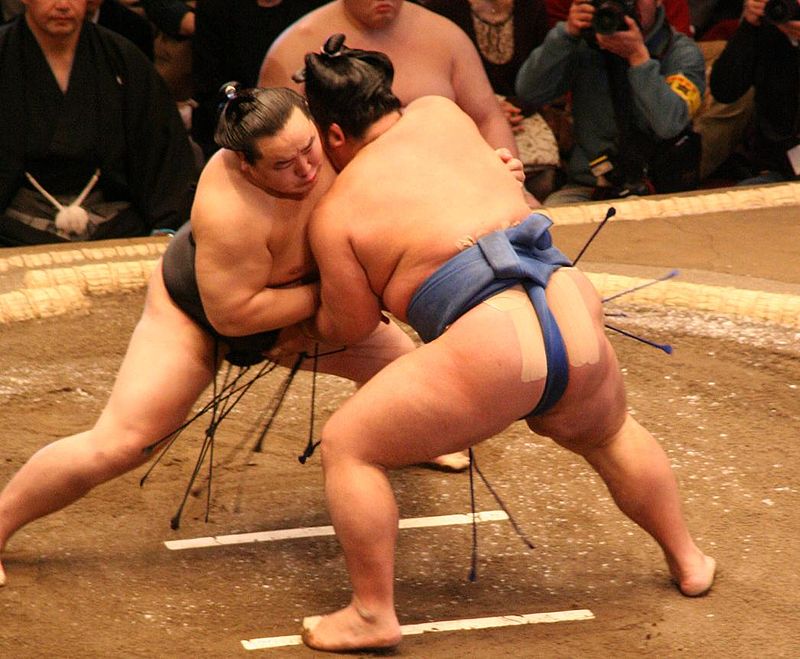
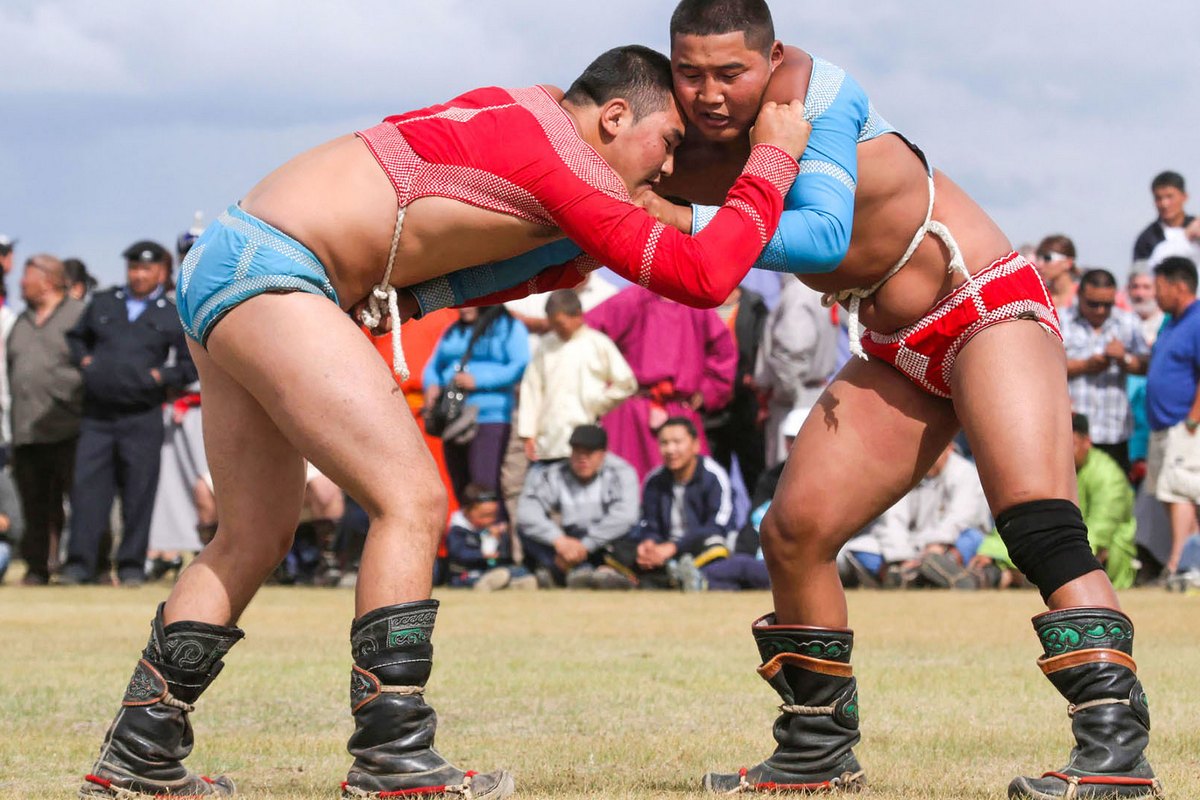
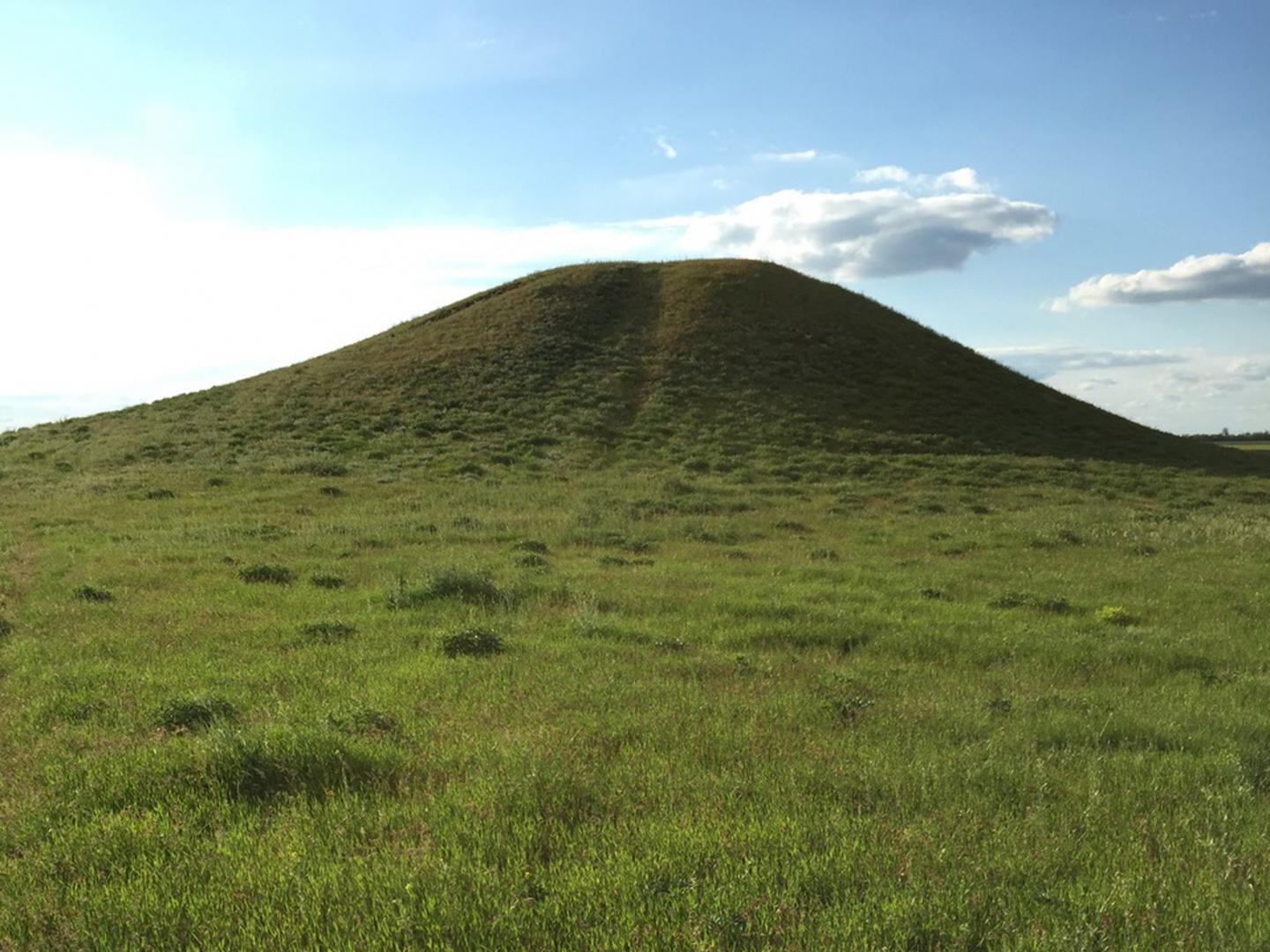
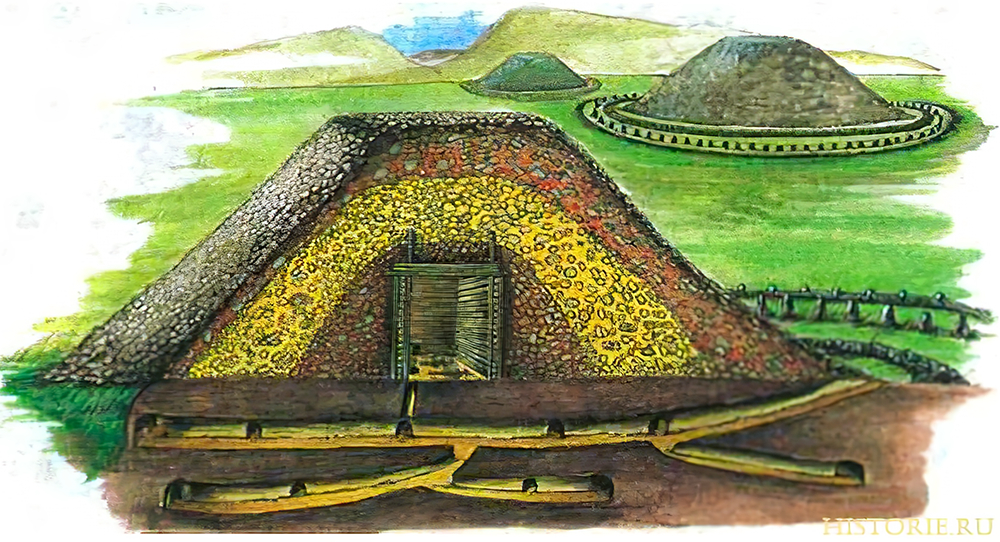
Even Japanese culture shows clear evidence of influence from North and Northeast Asia, as exemplified by Yabusame horse archery and Sumo wrestling. And Kofun burial mounds reflect northern influence as well since such burial styles originated from the Eurasian steppe with the Kurgan mounds. Whereas the burial styles in Neolithic and Bronze Age South China and SE Asia were drastically different, such as cliff hanging coffins or dismemberment burials.
They are Japanese now but they weren’t Japanese back in AoE 2’s time period. They were their own kingdom with a unique culture different from that of mainland Japan.
Even if it existed it was in the late 16th century at the very end of AoE 2’s time frame. For much of AoE 2’s period and really for much of its existence Japan was a quintessential North or Northeast Asian nation.
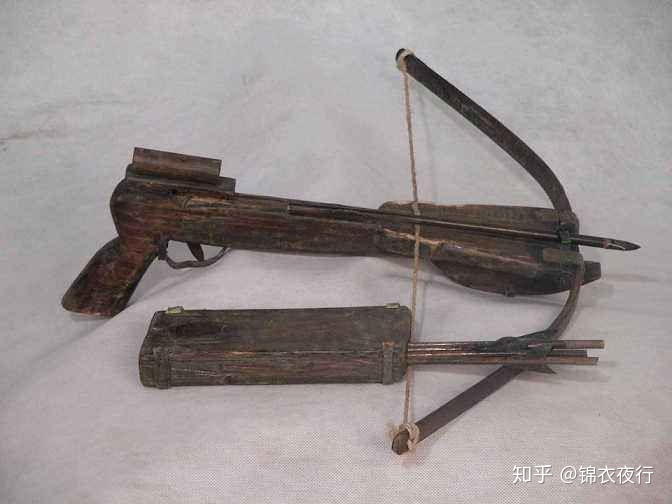
Jarai tribesman (the Jarai are one of the descendants of Champa) from Ratanakiri in northeastern Cambodia making a crossbow
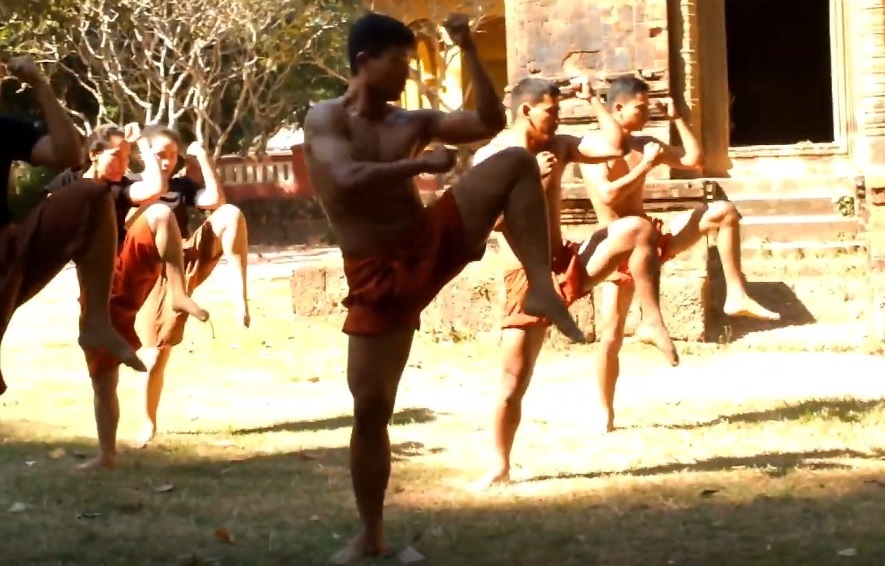
Kun Khmer or traditional Khmer kick boxing, which used to be the dominant combat sport in Khmer era
A short demonstration video of Zhuang minority martial arts the Ang Quan, showing a lot of knee and elbow strikes similar to Kun Khmer, Muay Boran, Muay Thai, and Muay Lao
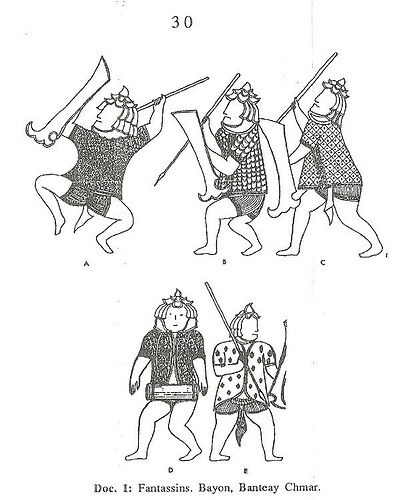
Cham infantrymen taking turns throwing their javelin, reproduced from the stone carvings at Angkor
South Chinese javelin recorded in a Ming era military manual Wubei Zhi (a lot of the weapons recorded in that manual had existed for a long time and predate the Ming era by a long shot)
Hanging coffins of the Sagada people of the Philippines
Hanging coffins of the Toraja people of Indonesia
Ancient hanging coffins from South China
On the other hand we have Japan and the North Asian steppe (Mongolia and surrounding regions), also sharing many similar features
Yabusame horse archery, preserving the way of the ancient Samurai
That doesn’t deny the possibility. How about villagers? How about some documents we’ve not found yet?
Not there. Ancient Japanese history has some arguments; how telling farming, who is toraijin, how many they came in, what they told, when yayoi age started, how Japan is in 4th century, how the Japanese country made.
Do you think similality is evidence? Not reason? Don’t you consider the historical backgrounds? What are direct relations? How about Kamekanbo, Kussou, some monuments, some style of kofun, how to spread kohun? Same things can apply between Japan and Judea. And that doesn’t deny the possibility.
A possibility needs to be approved by evidence, you cannot take possibilities or random unconfirmed hypotheses as facts.
Genetics is the most scientific and the most direct evidence. Bones and skeletons won’t lie. Cooke et al. 2021 supports Northeast Asian origins of Yayoi and Kofun peoples.
Even archaeologically Japan in the 4th century Kofun era had lots of similarities with neighboring Northeast Asia, including iron tools, weapons and armors, as well as Kofun burial mounds.
Similarities combined with genetic and archaeological evidence are enough to prove the connection between Japan and Northeast Asia.
And even linguistically Japanese is very different from southern languages but is much closer to Korean, Mongolian, and Manchurian in terms of grammar and syntax. I speak some Tai-Kradai languages and I also have some knowledge of Japanese, and they’re completely unrelated.
Your answer is your opinion, which doesn’t represent historical facts.
Historical facts are facts, genetic facts are facts, I trust scientific evidence over revisionism, hearsay, and random unconfirmed claims or hypotheses.
If Japanese originated from South China or SE Asia then they should have used the crossbow widely, since crossbow usage was ubiquitous among the natives of South China and SE Asia, and nope it was not brought there by the Chinese since even Austroasiatic hunter-gather tribes like the Nicobarese and Shompen who had no connection with ancient China whatsoever used wooden crossbows to hunt small games like birds.
Yet surprisingly the crossbow was rarely mentioned or used by the ancient and medieval Japanese, and not only that Japanese doesn’t seem to have a word for crossbow. I searched on the Internet and the only two words I got was Kurosubo which was obviously borrowed from English and Ishiyumi which means “Stone Bow”, likely a compound word invented later.
On the other hand, native peoples of South China and SE Asia all had their own words for crossbow, and they are not compounds or borrowings from English.
Here’re the words for crossbow in various SE Asian languages:
You don’t try to read and understand my posts
You don’t try to verify a opinion
You’ve not learned history in university, you think historical facts are definitive
You misread the meaning of evidence and clearly, your posts are also opinion
You don’t understand Japanese history until now
“Historical facts aren’t facts” Thats historical professors’ word I was taught in university. Crosssbow are 石弓 in Japan.
I have no motivation to reply.
The facts that I presented are definitive unless you can provide firm evidence to counter them, which you failed to do so and instead relied on hearsay and so-called “possibilities”. Nope it doesn’t work that way.
And nope I’m not picking on Japan. It’s the same for Chinese history. Chinese historians have claimed the existence of the Xia Dynasty before the Shang, yet so far have failed to provide any firm evidence supporting its existence, hence internationally the Xia is still considered a mythical dynasty rather than a real one.
I learned my history in the western world and through reading academic papers, which is usually more objective than the history written on Chinese and Japanese textbooks where you probably learned yours. The textbooks in East Asian countries like China, Korea, and Japan are notorious for being highly politically oriented.
Ishiyumi is a compound word composed of Ishi (stone) + Yumi (bow), two morphemes two distinct words.
Yet the words for crossbow in all the South Chinese and SE Asian languages I presented above are single words with only one morpheme that cannot be further divided. And furthermore etymologically they have nothing to do with Ishiyumi either.
(x) Doubt. Dudes never knew the wheel, didn’t have iron working, didn’t tame horses. The last is arguably why they never formed large empires for extended periods of time, they simply couldn’t traverse large distances to exert control and communicate effectively. The role of the horse domestication in Eurasian civilisations is far from trivial, it is essentially what led to large empires where communication was vital. Sure, they might have had a few really large cities but that was pretty much it, and I wouldn’t call that development.
You do realize the first two were never invented because they didn’t need them, right? Inventions only exist if they are needed; they are not an objective standard of technological development, as there are many examples of unique local inventions that serve the same purpose as the broader inventions, but accomplish it differently due to the different environment and circumstances.
You know that’s a way better from of transportation then carts with wheels?
Boats on rivers.
Guess where the Mississippian cultured where located.
Strangely familiar if you look at Egypt or Mesopotamia. Highly developed cultures without horses or Iron. Horses only appeared in those places late into the Bronze Age.
Also all of the 3 things you said apply to Aztecs, Mayans and Incans too, do you want them to be removed from the game?
It gets boring to hear the same stereotypes of why Europeans are supposed to be superior to everyone else for all of history reposted again and again in every discussion.
Things like Manifest Destiny are unfortunately still pretty alive in the heads of many people.
Funny enough we are talking about a game that literally has ancient Rome in it.
The biggest damage to the Native American civilisations was not caused directly by hands of Europeans but indirectly by the disease they and their livestock brought with them.
The Europeans only encountered a fraction of the population that used to live there. The massive decline in population destroyed urban populations and brought their civilisations to a collapse without direct intervention by the Europeans.
The only European civilisations the North American civilisations interacted with where the Vikings, which where actually driven out of North America by them.
So we don’t have to compare the Mississippian culture to 15th century Europeans, because we don’t do that with Vikings or Romans either.
Vikings would have no chance against a late Medieval Armour and Weapons either.
Did you know that the Mississippi is not in Newfoundland?
Whoever the Vikings encountered where pretty far away from any city.
Even today the biggest city in Newfoundland barely has 100,000 inhabitants.
But there was still some trade. We found a Norwegian coin way south of Newfoundland that apparently got their through trade.
Also the sophistication of a civilisation is not purely based on what metals they used.
There is a lot more to technology then just metal, most every day items and tools were not made of metal for a long time because metal was too expensive for that.
Bronze is generally a hard to make metal because it requires 2 relatively rare metals (Copper and Tin) compared to the much more common Iron. You need to be living in the right parts of the world to be able to reliably make Bronze.
The Incans actually did have Bronze weapons though.
But that all doesn’t matter. Aztecs and Mayans have be in the game for over 20 years by now. No one want’s to remove them. I’ve ween a lot more people argue for the removal of the Huns.
There is no fundamental technological reason to not allow North Americans but still allow Mesoamericans.
You can do a Mississippian campaign from Tuscaloosa (d. 1540), an Iroquois campaign from Deganawida (c. 1534-1575) and little else…
In reality it was a little later during the rise of the Hunnic Empire in 370 in AoE 1 (although in 1 DE it is the Battle of the Catalaunian fields from the Roman side)…
True, but that was during late antiquity, also AoE 1 ends in 373 (if we count the Yamato campaign it ends in 740)…
Yes, it was during the reign of Jayavarman VIII that the Mongol forces under the command of Kublai Khan attacked the Angkor empire in 1283. In 1281, Jayavarman VIII had imprisoned emissaries of the Mongol generalissimo in Champa.[1] (Jayavarman VIII - Wikipedia) In 1283, he decided to pay tribute and buy peace and thus his rule survived.[3] Chinese ###### record that in 1291, “the king of Lohu” [Cambodia] sent a mission who presented “the usual tribute of gold, elephant ivory and other things”.
In game, the Romans date back to about 395 C.E., making them contemporaries with the Goths, Celts, Britons, Franks, Persians, etc. By this period in Late Antiquity and Early Middle Ages – Rome was a crumbling shadow of its former glory. Plagued by an inability to pay its soldiers, lack of manpower, and its older fortifications in disrepair, they could not face the invasions of their former provinces or fend off attacks closer to home.
By the time of Attila, Rome simply couldn’t field any large armies of note, and relied on Germanic tribes to guard their frontiers, but those tribes often went rogue and became as enemies instead. The old Roman-controlled area was inundated with an influx of different peoples who settled the land, bringing their own culture and customs, annihilating the old Roman ways.
By the end, Rome could not overcome a collapsing economy, loss of manpower, an inability to pay troops, plus bad leadership. When the “official” end in 476 came with the ousting of the last Roman emperor by a Germanic king, the Roman Empire had already silently melted away.
As early as 1593, Siamese chronicles record that the Siamese king Naresuan had 500 Japanese soldiers in his army when he defeated Phra Maha Uparaja, the Burmese Crown Prince, in a battle on elephant-back. (It’s the only relationship they can have in AoE 2, but the devs will most likely put Naresuan in AoE 3, so I think it doesn’t count)…
Yes, but they were a tributary state of the Ming since 1429… but something could be done I guess…
It may be through the Portuguese, since they conquered Malacca in 1511 and arrived in Japan in 1543…
Yes, at most the Mississippians were a bronze civ, but very similar to the Aztecs since they had pyramidal buildings and human sacrifices…
1593 is at the very end of the AoE 2 period and also the end of the 16th century, so what you said doesn’t contradict what I said earlier that there was no firm evidence of direct contact between Japan and SE Asia prior to the 16th century (or prior to the second half of the 16th century to be more exact). Really I’m not sure why certain revisionists online are trying hard to link Japan with SE Asia when in fact for much of its existence Japan had nothing to do with SE Asia whatsoever.
Ming wasn’t located in SE Asia.
Only Ryukyu was a tributary state of the Ming, whereas Japan was never tributary to them.
Being a tributary state of the Ming doesn’t mean they were ruled by the Ming, the Ryukyuans just had to give some local specialties or presents to the Ming emperor, and what they received from the Chinese emperor in return was often far more than what they had given. Politically speaking they were an independent kingdom with their own kings and own government.
Yes, that is…mostly during the Middle Ages Japan was related to China and Korea and nothing more…from the Mongol invasions in the 13th century to the Gempei Wars at the end of the 16th century, Japan was involved in their issues, especially in the Sengoku period… and even after that, during the Edo period (which is what AoE 3 covers) Japan was isolated (except trading a little with the Dutch) until the Meiji Revolution of 1868 and recently there Japan once again focused on Asia, in the final stages of the AoE 3 timeline (First Sino-Japanese War of 1894-1895, the Russo-Japanese War of 1904-1905 and the occupation of Korea in 1910)…to see a Japan truly related to the SEA civs, it would have to be WWII Japan in a possible AoE in the 20th century, occupying Indochina (Vietnamese and Khmers) and Indonesia (Malays) and fighting with the British Burma…
Yes, I know, that’s why I said it… despite being a Ming tributary state, Ryukyu could enter as a new civ and have another Pacific civ…
Yes, in short, we need more American civs with or without Eagles (last I would leave the Eagles for the mesocivs and for the Andean civs I would give them the Chasqui of AoE 3)…
Of central importance to the Inca military were the Chasquis, scouts and messengers who could swiftly relay orders and were capable of traveling across extremely long distances as a result of their peak physical condition and the existence of an extensive network of Tambos, inns situated alongside the vast roadways of the Inca Empire. Chasquis were formidable fighters as well as messengers and scouts, however, and their keen senses, speed, and agility made them a challenge for even the most experienced troops in an enemy force.
Yep, for much of their history Japan was rather isolated and only interacted with Korea, China, and Manchuria
This is supported by the latest genetic research on the bones and skeletons from ancient Japan (Cooke et al. 2021):
Jomon = a highly divergent group of Ancient East Asian, not closely related to any modern population
Yayoi = West Liao River Tungus people from Manchuria mixed with Jomon
Kofun = Yellow River North Chinese + West Liao River Tungus + Jomon
No South Chinese or SE Asian admixture whatsoever
20th century is way outside of AoE 2’s timeline
Except that the Ryukyuans aren’t Pacific Islanders but rather East Asians. Culturally and ethnically speaking they are similar to other Northeast Asians like Japanese and Koreans, and linguistically they belong to the Ja()ponic family. They have nothing in common with Pacific Islanders like Micronesians or Polynesians.
If the Ryukyuans were to be introduced into the game, then they could share the same architecture with the Japanese (the current East Asian one, which is actually based on Japanese architecture), whereas a new Pan East Asian architecture set needs to be introduced for Chinese, Vietnamese, and Koreans. And the Mongols need to have their own nomadic set as well.