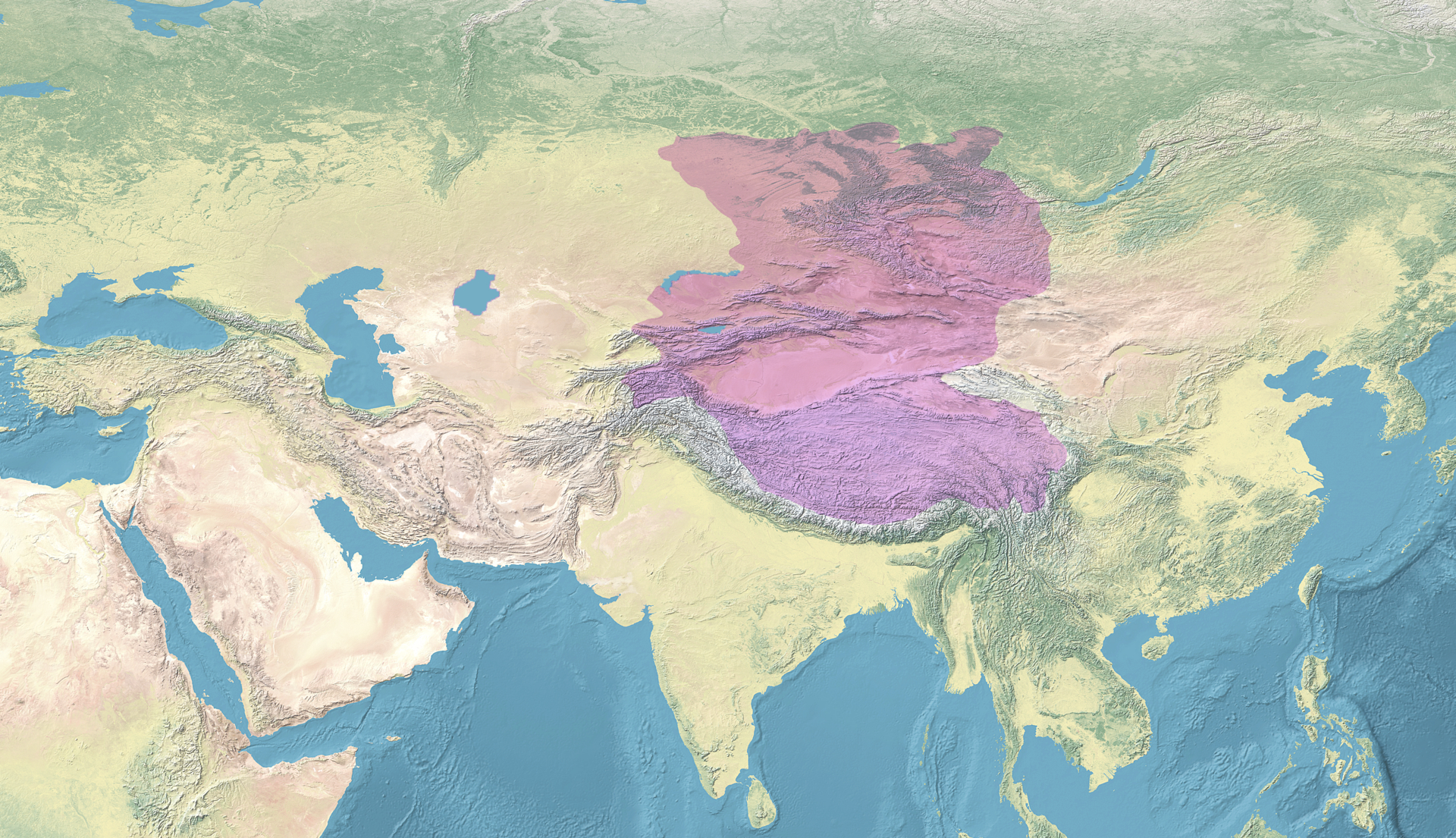
Imagining the Tartar civilization

The call for creating representations of civilizations like those of the Mongol tribes, the Dzungar Khanate, the Kazakh Khanate, and even the Crimean Khanate has been around for a long time. But given the current circumstances, trying to pinpoint these civilizations too precisely could lead to some issues.

So the solution I came up with is to group these nomadic civilizations together into one single "Tatar civilization."As we all know, “Tatar” has always been a general term used to refer to people from the Crimean Peninsula to the Mongolian Plateau. Nobody would consider it offensive to use this term.

Age of Empires 3 has always been a source of great mechanics for Age of Empires 2 and Age of Empires 4, and now we can also draw on their excellent features.After adding the North American nomadic civilization in Age of Empires 3, we can use the ranches from Age of Empires 2 as economic buildings, employ mounted herders as settlers, and adopt the Mongol mechanics from Age of Empires 4—i.e., movable buildings. For troops, we should try to create something unique. Besides mounted archers, we could also build camel forts with Central Asian characteristics (by the way, camel forts can also be used in Persia), and so on. The idea of settlers riding horses is actually pretty creative. To balance it out, they could be prevented from entering the town center, but they could become mounted archers instead. The town center could be made up of detachable, movable yurts, just like in MCV, but the mobility of the town center would only be unlocked in Era 2 or Era 3.When upgrading the era, you can choose different nomadic tribes or nations, and you can even use the mechanics from African countries - that’s awesome.

I want to thank the development team for their hard work so far and hope they can continue to push forward and create even more unique, innovative, and historically accurate new civilizations!
4 Likes

Yes, I think a Central Asian DLC will include the Tatars (who already appear in Chuvash Cape) and the Afghans…

2 Likes

A lot of preamble using weird “we” phrasing (Who is we precisely?) just to peddle slop.

What you mean grouping all the nomadic peoples under a Tatars umbrella?

This is the second time I’ve seen someone saying this game doesn’t deserve multiple Central Asian nomad civs, is this some sort of primal fear from your ancient settled ancestors or what gives?

1 Like

Well…

Sorry, the Tatars was not a Country.

Wasn´t even a demonym, but a Umbrella term to describe every people (turkic or not), from the East of the Tsardom of Russia, without distinction.

About being offensive or a minconception (Yeah, it is)

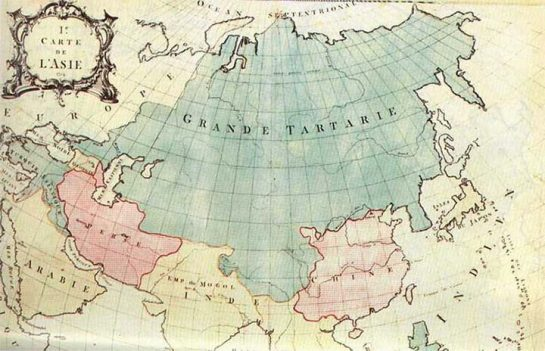
I don’t know where you got the idea that it isn’t offensive; those people are called Turks, not Tatars. In fact, the entire description of “Tatars” is a fictional European construct created after 1300 to fill in an area on the map that was difficult to visit or chart; mapmakers simply used the name “Tartaria” to fill the space between Russia and China.

https://www.quora.com/Why-do-some-people-have-negative-stereotypes-about-Tatars-and-is-there-any-truth-to-them-among-Turkic-groups-like-Uzbeks-Kazakhs-or-Turks

Tartaria problem

The problem is that “Tartaria” itself has been the subject of conspiracy theories regarding an exotic land of that name; assigning that demonym to a civilization would create a lot of confusion—especially for one that, unlike the Hausa or the Ethiopians, “never fully united.”

Tartaria Parody

I even once make a parody of Tartaria as a civilization. The goal was to explain why it isn’t a good idea to use umbrella terms or fictional countries, and I published it on April 1st:

About nomad Civ

UPDATE: By the way, the point of all that was to clarify the name “Tartary.” But yes, I would also like to see nomadic civilizations or ones from the Central Asian region, though I think there are better terms or factors to consider. For instance, you could use the Khanate of Bukhara, or—if you want a nomadic power from the game’s timeframe (1500–1800)—there is the Dzungar Khanate.


Dzungar Khanate limits

I also think we need Korea.

1 Like

I am agree, age of empire 3 really need add Korea. With Korean civilization , it can also add campaigns maps where Japanese invasion of Korea (which already exists in history).

1 Like

I would play that campaign for sure. Age 3 needs more campaigns not just historical battles.

Yes Afghans could have jezzails and camel jezzails as unique units

Don’t think you’d get much out of such a campaign that you wouldn’t get already from AoE2’s Noryang Point.

I don’t play aoe 2. I don’t like how my archers and artillery always miss.

So I wrote quite some time ago an umbrella Tatar proposal, but my rationale was that because civ design is much more intensive in AOE3 compared to AOE2, it was likely we would only get one single steppe faction, if any at all. As such, I felt that it would be better to have a civ that combined elements of everything between Crimea to Dzungaria and allow it to be customizable to fit how people wanted to roleplay.

1 Like

If you say that Tartar isn’t a specific country or ethnic group, then you’re right, that’s what I mean too, and that’s what should be done.

The term “Tatar” has a long history, and I’ve said that it should be considered a general term.Chinese dynasties in East Asia often collectively referred to the northern nomadic tribes as Tatars, which is consistent with how Russia referred to them.

Tatar is clearly not an offensive term. The Russian Empire did indeed classify a large group of people as the “Tatar” ethnic group, but it’s just that this generic term was used incorrectly."If “Tatar” is really an offensive term, the “Tatar” ethnic group within Russia would be the first to oppose it.

I don’t want to accept the accusation that nomadic peoples were all under Tatar rule - you know I don’t mean that at all.

Age of Empires III involves different eras, and nomadic nations were becoming weaker and weaker. A single nomadic state couldn’t sustain the scale of a civilization. The Age of Empires series has always used general terms to describe groups of people who existed over long period.

To be honest, if they really split up into separate nomadic tribes, each one of them would only be good for becoming a Native trading post.

Finally, the “we” in “as is well known” is part of what’s already widely known, so this accusation makes no sense at all. You should be fighting against grammarians, not wondering if there’s anything wrong with me using “we.” If you really have to ask, then I say there isn’t.

Regarding your definition of Tartar, you know full well that what you’re saying is wrong and has been misinterpreted by others.

How can the term “conspiracy theory” be taken as fact?

As I mentioned before, The ancient Chinese empire often collectively referred to the northern nomadic tribes as the Tartars.Even during the Mongol conquests, large groups of people were generally referred to as Tatars.

Also, I need to point out that only considering the wrong views and conspiracy theories of Europeans is completely pointless Eurocentrism.

The Japanese invasion of Korea was covered by AoE2 already—ergo, you’d kinda have to start a AoE3 Korean timeframe with ~1620 or so, when the Ming Dynasty was beginning its real death throes.

A Korean-themed DLC should also come with some more changes if not a total Ottoman-style overhaul to the Chinese civ, and also incorporate elements of both the revamped Russian civ and the Hetmanate Revolution in its historical battle.

I’m sure I’ve mentioned the Qing/Joseon vs. Cossacks battles in the mid-1600s, but they’d be featured as a difficult, lengthy scenario that requires all of sieging enemy forts, naval engagements, and defending checkpoints.

Maybe if you didn’t explicitly ask for them to be grouped into a single Tatar Civilization you wouldn’t be accused of such a thing, just saying.

It’s also funny to say these nations kept getting weaker and weaker when we still have a Kazakhstan, an Uzbekistan and a Mongolia, among others, to this day.

Like the Khanates of Khiva and Kokand survived to the 20th century.

2 Likes

Yes, it was a huge “empire,” but in reality it was a collection of khanates…

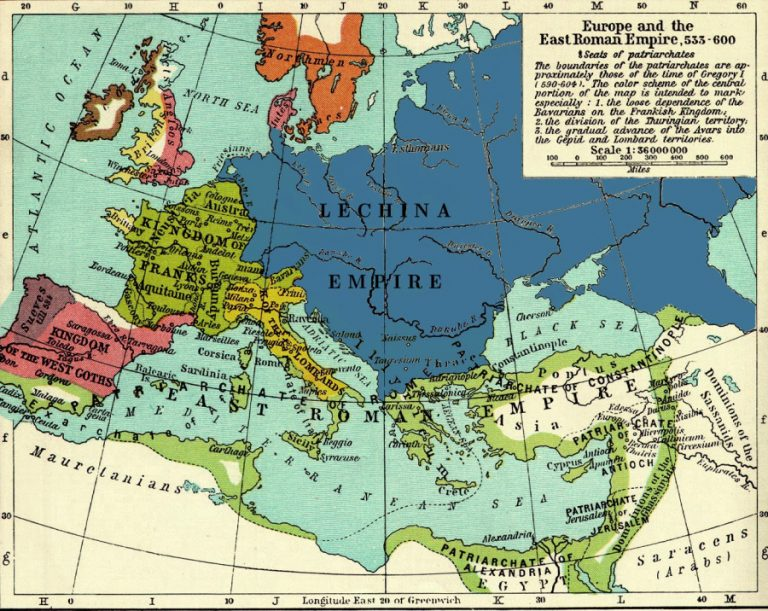
At least it’s not the Lechina Empire that players would like to see in AoE 2 and 4…:joy:

Yes, you could adapt the Japanese campaign from AoE 3 TAD Mobile (which takes place during the Imjin Wars, although the Koreans use the Chinese civilization)… and obviously the Yi-Sun-Sin campaign from EDotMW…

Yes, I’m working on it… I’m currently adding the Maltese and United States civilizations to the original campaigns (Blood is played with the Maltese, Ice with the British and Haudenosaunee, and Steel, Fire, and Shadow with the United States)… then the campaigns from The Asian Dynasties could be played with the Asian civilizations from the normal multiplayer, and afterwards I was planning to adapt several campaigns from Age of Empires II, American Conquest, and Cossacks III…

Yes, they would use the Tatar voices from AoE 2…

Sort of disagree. As you said it yourself, Tatar at this time period is the catch-all term for noamdic groups, broadly encompassing several Turkic or Mongolian tribes, factions, entities, etc. It would be akin to creating a “European” faction that encompasses the French, British, Spanish, etc. Summarily, it would be weirdly overgeneralized.

That being said, I do think there is strong potential for designing four nomadic factions appropriate to this time period: Crimeans, Dzungars, Uzbeks, and Kazakhs. It may be a good idea for the four factions to share some mechanics / unit similarities, such as:

  • pillage coins from buildings (in addition to gaining experience from destroying buildings); however, there are no resource shipments (i.e. no 700 gold card).

  • certain buildings can be packed and moved around (i.e. houses, barrack/stable buildings).

  • pastures instead of mills / rice paddies, worked on by herdables to produce either food (meat, dairy) or coin (wool, leather).

  • age up selection is split between nomadic (get units, maybe with slight stat buff) vs. sedentary (get special “wonder wagon”) options. For example, to proceed to Age 3, player can either receive:
    a. 12 Nomadic Raider + 10% HP buff
    b. a Powder Mill wagon that, when built, enables training Seymen (Crimeans) / Jezailchi (Kazakh, Uzbek, Dzungar) and researching gunpowder techs.

  • unit varieties should be limited to weak archaic infantry (spearman, archer), good diversity of cavalry, and conditionally acquired gunpowder weapons and artillery (shipped or trained from special buildings).

As for differences between the 4 factions, I would recommend the following:

  • Crimeans: defense-focused nomdic civ, with focus on strong fortified buildings (any buildings that cannot be packed and moved should have HP boost.), All cavalry should be fast, and specialized in interdicting artillery.
  • Dzungars: gunpowder-focused nomadic civ, with better-carded gunpowder infantry and cavalry. Can train zamburaks (the actual camel swivel-gun, not the current Indian Light Cavalry).
  • Uzbeks: economy-focused nomadic civ, with faster shipment speed (completion), and Caravensarai (not the Indian stable, but actual unique building to the Uzbeks) amplifying resource/experience yield from each Trading Post built.
  • Kazakhs: horde-focused nomadic civ, with TC also being packable-and-movable. Gain extra explorer for each age up. Always gain a number of spearmen and archers upon age up for raiding or defense. Units are cheaper and are more numerous from shipments.
4 Likes

I am an academic, and Everything I write is from a source. Unless the source itself can be doubted, you would have to prove me wrong using “other” sources—or at least an argument that counter that fact.

But let’s get to the point:

Oh, I think there is a confussion with what I wrote.

Because i criticize 2 terms:

Is better is to diffentiate beetween “Tartary” (The term, geography) to the invented nation of “Great Tartary” (Fomenko country), which are different thing, and maybe is better to my to explain who is Fomenko.

The thing id, Great Tartary (Fomenko) is consideres a conspiracy theory, because many academics, even my, discard the claims of Fomenko as pseudohistory. Not Tartary, but GREAT Tartary.

And both are Umbrella terms, so… well, thats why i disagree with a civ with Tartary name.


Great Tartary

A few decades ago, during the Cold War (1945–1991), a russian guy named Anatoly Fomenko came up with a historical theory called “New Chronology.” In it, he describes a kingdom known as “Great Tartary”—claiming it was hidden by the elites and erased from history, and that the history we are actually told is false, and so on.

  • Supposedly they were like a “Atlantis”, a civilization with advanced technology that was destroyed by the Tsardom of Rus.
  • By that fact, the Mongols, the Hordes, and khanates of that region never existed, but a invented “Rus Horde”.
  • Greeks didn´t existed, the Roman Empire never fall in 476, many of the ancient history were medieval history.
  • That Commenos and Jesus were the same person. And Mahoma was Mehmed II.

The thing is, he capitalized on the term “Tartary”—and people’s general lack of knowledge about Asia (beyond places like China or India)—to construct his theory.

It caused quite a scandal in Russia—especially since the book sold well after the fall of the USSR and misled many people.

It didn’t make as big a splash here in South America, but it was a scandal in its day, primarily due to the brand of pseudo-history he concocted in Russia.

As far as I know, the term for the barbarians of ancient northern China is not “Tartar.” The Chinese assigned names to their enemies based on where they believed a particular type of nomad originated. First came the “Xiongnu” (213 BC–93 AD) and later the “Xianbei” (93–238 AD). The term “Tatar” only came into use around the 8th century AD to refer to barbarians specifically from Mongolia—using the terms “Dada” or “Tata,” based on their understanding of the Proto-Mongolic language.

That actually creates further issues:

  • Are we going to use a term that is applied in Russia to all East Asian peoples until China, yet used by the Chinese solely for the Mongols? It creates confusion; that is the point of my comment.

I don’t think the fact that a state approves a term automatically makes it “good,” especially when it applies to foreigners or people of a specific ethnicity. Nazi Germany officially referred to people of a certain ethnicity as an “inferior race”—even in official documents. Medieval muslims, too, used to refer to Europeans as “Franks.”

In fact, recent games tend to prefer terms that are favored by the people living in the country today, or by the descendants of the civilization being represented:

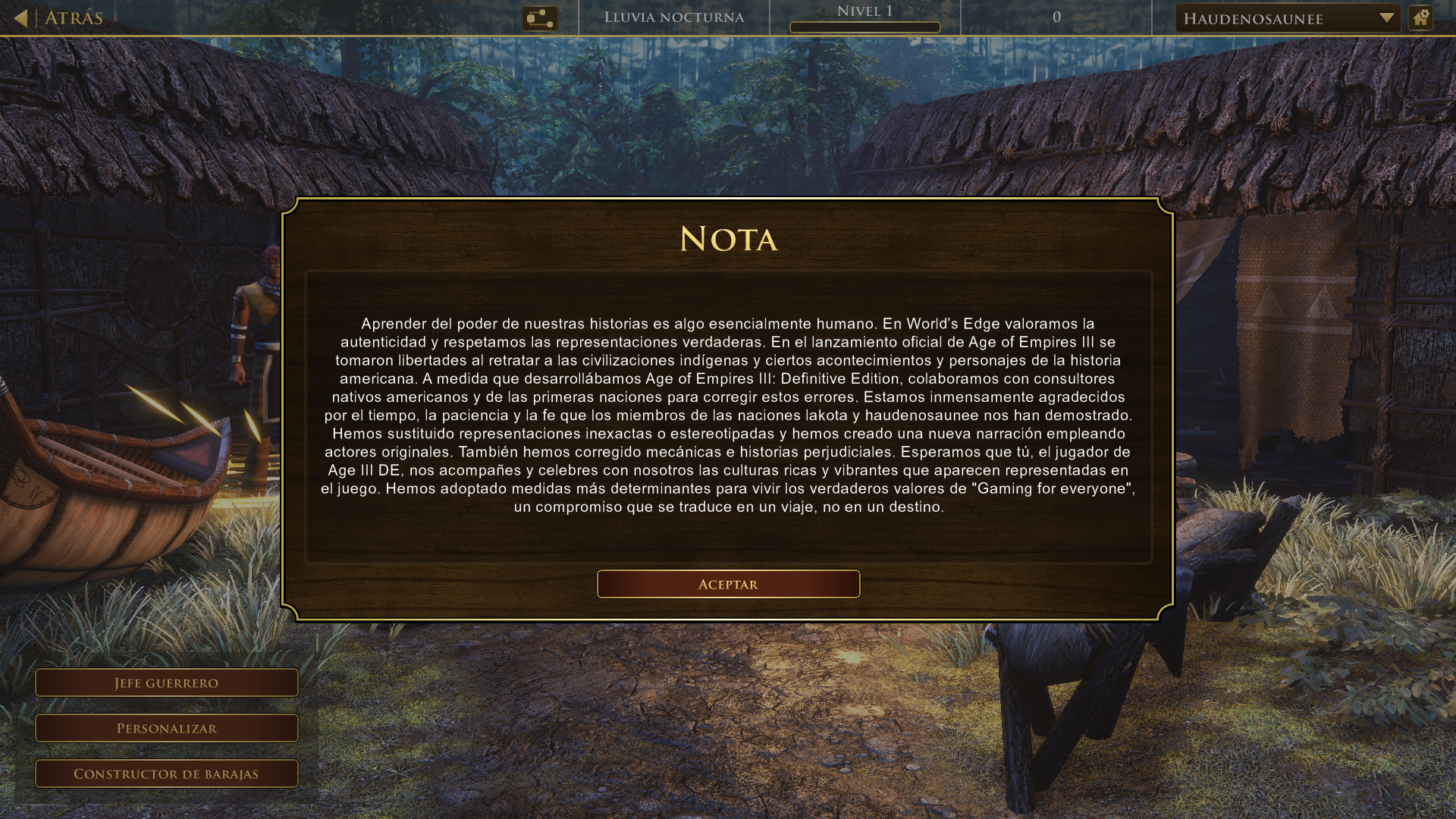
  • A more recent example: the 2021 Definitive Edition changed the names of two civilizations—“Iroquois” became “Haudenosaunee”, and “Sioux” became “Lakota”. They even displayed a message explaining the change:

1 Like