I’m a bit late to the party.
Here is my candid feeling about 3K:
“the 3K DLC has destroyed the last bit of trust I had in the dev team. Seeing 3K civs in tournaments saps the joy out of them. I have significantly reduced how much I engage with aoe2 content online due to this DLC”
I am not sure whether Hindustani is a reasonable term to use as the name of groups from Hindustan region in the view of people from India, although if I remember correctly the word is used in some languages to refer to people of Indian origin. However, Zhongyuan is simply the name of a region, while Zhongyuanese is obviously not an idiomatic term; it would be coined solely to patch over this game’s mistakes.
Put aside the name, it’s still an awkward approach in my view. I’m not very fond of the approach of discarding a full civ and then limiting it to a specific region. Although I said that having civs specific to regions is not entirely unreasonable, but it is still a fairly unsatisfactory approach, frankly speaking.
One of the problems is that it becomes much less clear which civ should represent particular powers in Chinese history. For example, the founding of the Ming dynasty originated from an uprising in the Jianghuai region (that is, the area covered by Wu or Wuyue), but not long after they formally ruled China, the political center shifted northward (that is, to the Central Plains). So which civ should be used to represent them? And when their treasure fleets were active in Southeast and South Asia, with crews composed of people from both the north and the south, which civ should they belong to then?
Is it really the case that the Ming dynasty’s powers changed so much within less than a century that it should be treated as different civs? Even if we can classify the various historical Chinese powers, were those powers in real history really so different because of regional differences?
Compared with the Indian case, the biggest difference is that the four South Asian civs each represent polities and groups with sufficiently large differences in culture, ethnicity, and religion. They had never considered themselves part of the same group, and were never unified before the British came.
If the Chinese were split into three regions (excluding the Xianbei/Hu), they would still represent groups with relatively high homogeneity, which were repeatedly unified throughout history, and had shared a common writing system, calendar (e.g., for festivals), philosophy and values (e.g., Confucianism), and historical continuity (e.g., with successive dynasties identifying themselves as part of the same cultural and historical lineage). That is why the vast majority agree that the Khitans (who founded the Liao dynasty), the Tanguts (who founded the Western Xia), and the Jurchens (who founded the Jin dynasty) can each be their own civs, whereas Tang, Song, Ming cannot, let alone Shu, Wei, Wu. The logic is supposed to hold for regions as well.
Zhongyuan is sometimes used as an adjective in English, and its culture does seem to be seen distinct enough for it to have a sizable article on Chinese wiki.
That said… even though there are differing warfare traditions between the regions, and you could give each a different religion (Buddhism, Taoism, Confucianism) to differentiate them further, they’d still be different variants of Han Chinese. It might be better to move these three into Chronicles/Legends/Whatever to make space for civs with similar gameplay but distinct identity (i.e. the Shu leave ranked but their neighbours, the Bai who ruled Nanzhao and Dali kingdoms in the medieval period, could be added in ranked borrowing many of Shu gameplay bonuses; for Khitangut split, one of the new civs could take Wei bonuses, etc) while the og 3K civs would remain playable in unranked.
The points conveyed by the content of that Wikipedia page are that the culture of the Central Plains (Zhongyuan) is the origin and core of (Han) Chinese culture, and that successive Chinese dynasties throughout history regarded themselves as inheritors of the Central Plains cultural tradition, what I stated above as “historical continuity with successive dynasties identifying themselves as part of the same cultural and historical lineage.”
Historically, all regional regimes that sought to unify China regarded themselves as inheritors of the preceding Central Plains cultural dynasties, regardless of whether they were based in Sichuan or the Wuyue region.
The Hu (including Xianbei), Khitans, Jurchens, Mongols, and later the Manchus differed from those groups in that they entered China proper as conquerors, rather than seeing themselves from the outset as part of Central Plains culture and as competitors claiming succession to a Central Plains cultural dynasty. Although after their successful conquests they usually, almost inevitably, became Sinicized to varying degrees because they were a minority, adopting and adapting to Central Plains culture in order to rule China’s vast territory and population, and in some cases eventually turning into highly Central Plains cultural polities and losing their original ethnic identity over time.
That was what they were supposed to do! Spin-off modes like Chronicles or RoR are like sandboxes, allowing developers and the community to experiment freely, even with entirely fictional civs in a fictional world. If the Three Kingdoms had its own mode, they could even introduce new civs based on other warlords or factions, such as Yuan Shao’s or Dong Zhuo’s forces, to further enrich the Three Kingdoms theme.
I don’t even think the gameplay is necessary to be similar. When designing and developing a Bai civilization, it should be based on their own history, like the Nanzhao and Dali, without needing to conform to Shu-like gameplay if that doesn’t fit well.
Or separating Xianbei elements from Wei to make Wei more accurate (in the Three Kingdoms mode), introducing Xianbei/Hu as a new civ in the base game, and then giving the Khitans and Tanguts their own separate civs as well.
There’s still the issue of people who don’t care much about the history and only bought the DLC because “muh 5 new civs in ranked”. I see comments of people liking and/or recommending Wei and Shu (Wu not so much, but might be just a coincidence), so I guess if the 3K left ranked, they’d still like to have something that plays similarly in their place.
It’s true that most of them had ambition to reign over the entirety of China, and the regional differences between local Han sub-cultures didn’t mean they identified as separate nations (let alone civilizations). They did differ in warfare (cavalry starting to dominate Central Plains during Cao Cao, camels in the northwest, navy in the south, etc), which is why I wouldn’t be too mad if after a rework there still was more than one Han Chinese civ (medieval plz), but such intricacies might be better suited for Chronicles.
(A note regarding regional warfare: lack of proper Tanguts was a disservice even to the 3K campaigns, because a sizable portion of Dong Zhuo’s armies comprised of Qiang tribesmen, ancestors of the Tanguts…)
Khitans ultimately descend from the Xianbei, so I’m not sure if we really need (Dong)Hu. I think it would be sufficient to make a separate nomadic architectural set so that we could use Huns to roleplay both the western and the eastern plunderers. That said, we have both Goths and Spaniards, or Romans and Italians, so whatever, they’d still fit more than 3K.
They had little or nothing to do with the Shu. They weren’t known for using repeating crossbows, instead they had mountain troops and skirmishers armed with bronze shields, spears/javelins, and lacquered rhino or elephant hide armors according to Tang records.
The Hu is too broad a term basically anyone that came from the north/northwest and that wasn’t Sinitic could be referred to as the Hu. If you wanna introduce a Xianbei civ then just call it Xianbei.
If they don’t care about history and only care about the number of playable civs, as long as there are enough new civs as compensation, I suppose they wouldn’t mind whetheer the new civs are similar to the removed Three Kingdoms.
The differences here are more like the same group of people adopting different approaches due to different environments, just as a player will choose different strategies and units when playing the same civ depending on the map and the civs of their opponents. If Cao Cao had established his power in the south, the map would likely be hybrid, and he would probably prioritize building Docks rather than Stables.
It’s said that the reason the existing Chinese civ was originally designed with an emphasis on being a versatile civ was to incorporate as many of the achievements of medieval Chinese people in different environments as possible.
I used to think that as long as there was a Khitan civ, a Xianbei civ wouldn’t be necessary. But now that we already have Xianbei units and wonders in the game, so they could be separated from Wei to form their own civ. However, these elements aren’t really suitable for the Khitans, so the Khitans should still need some of their own elements after the Tangut elements are removed.
The Hu I mentioned as a civ name is not meant to represent only the Donghu (the ancestors of the Xianbei), but also other Hu peoples involved in the Upheaval of the Five Barbarians and the establishment of the Northern Dynasties, including the Xiongnu, Di, Qiang, and Jie. In this way, pre-Tang history can be represented more properly, for example in the scenario of Xie An, Fu Jian and Fu Rong were Di, Yao Chang was Qiang, and Murong Wei was Xianbei historically.
By the way, the meaning of the term Hu had changed by the Tang dynasty. Groups like the Xianbei, who had established dynasties in northern China, had already assimilated, while the steppe tribes remaining further north gradually developed into groups such as the Mongols and Khitans. The peoples originally referred to as Hu had faded, and by that time, Hu was used to refer to peoples of Caucasian and Iranic origin instead, such as the Sogdians (Eastern Iranic) and Persians (Western Iranic).
Since they are actually different types of peoples, I would prefer that if we have a Hu/Xianbei civ, it wouldn’t be used to represent the Sogdians; instead, the Persians could be split to civs including the Sogdian, and the Sogdians could be introduced alongside with the Gokturks if there is another Centrual Asia DLC.
This might be too broad tbh, on par with Khitanguts. Qiang and Di spoke Tibeto-Burman languages, they could be represented by Tanguts (or Tibetans if they were added).
I understand what you mean, but it’s too broad for my taste. You’re putting several distinct peoples that had different origins all into the same basket.
IMO only the Xianbei is worth introducing. Di and Qiang could be covered by the Tanguts if we ever get them. Xiongnu could be covered by the Huns or the Gokturks, and the Jie could possibly be covered by a Tocharian or Sogdian civ.
I understand what you mean. I just want to point out that in many contexts, “Hu” in Chinese traditionally refers collectively to the Xiongnu, Xianbei, Di, Qiang, and Jie before the Sui and Tang dynasties. This is the conventional and typical usage of the term in Chinese, so it makes sense for a civ under this name to represent those five. I know they are actually different, ethnically speaking, but the Chinese use this term in a way probably similar to how the Romans referred to many tribes collectively as “Germani.”
Surely if we could also include Tanguts, Gokturks, and Sogdians to enrich the Xie An scenario, that would naturally be a good thing. Also persaonlly I don’t object to having a civ named Xianbei represent the other four Hu groups, just as the Goths in the game represent many Germanic tribes.
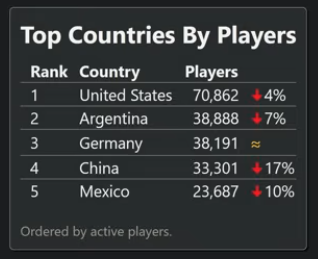
I did not see it mentioned on this forum before, but if the goal of the Three Kingdoms DLC was to increase the playerbase in China, then they did not succeed:
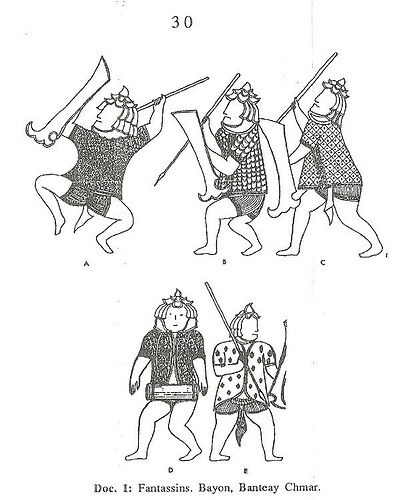
Not just the Bai, in fact javelineers and skirmishers were the staple of other medieval South China ethnic groups like the Raeuz or the Dong (rebelled numerous times against the Chinese dynasties though failed to establish their own polities) as well as of medieval SE Asian armies like Champa and Khmer. And they also had poisoned crossbows. Bows were relatively uncommon in this region compared to the more northern parts of Asia.
Cham infantrymen taking turns to throw their javelins, 12th century mural carving
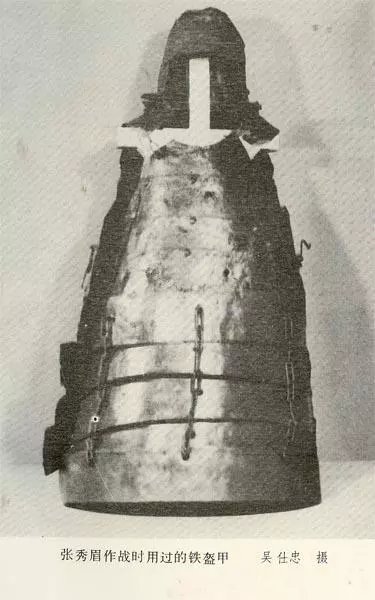
Lacquered leather armor worn by a Hmong rebel from South China in the 18th or 19th century. Such style of armor was already quite popular in South China more than 1,000 yrs ago and Dali/Nanzhao troops would have used similar armors
I think only the Lao and Yuan don’t have any obvious candidates for this. Though I’d say this sort of idea would work best in like, an RTS that focus on Chinese history. Unless AOE2 expands hard enough that more than a dozen Civs to represent East Asia isn’t too egregious.
First of all I think the reworked Chinese civ can already cover both the Zhongyuan and the Wuyue regions, so there’s no need to have another Sinitic civ.
Secondly while I can understand associating Zhongyuan with the Tang and Wuyue with the Song, I cannot understand the others. Jin and Qing although somewhat related weren’t the same; Qing was a lot more Mongol influenced than the Jin who had received a lot more Sinitic influences. Lingnan Tai-Kradai natives had absolutely nothing to do with the Sui dynasty whose capital was in Chang’an (Xi’an) in North China and whose rulers were of mixed Sinitic-Xianbei descent. And last but not least the Ming capitals were in Nanjing and Beijing, and the ruling Zhu family came from northern Anhui, so not sure why you chose Shandong as representative of the Ming.
And Yuan can be perfectly covered by the Mongols, and Liao by the Khitans, no need additional civs to represent them either.
IMHO the only underrepresented regions of China in this game are Lingnan and Yungui, which can be represented by adding a Bo/Pu civ that not only covers Nanzhao and Dali but also the adjacent tribal chiefdoms.