Yeah, there are. But in the timeline we talk about we are referring to a greater concept. Yamato Era where this discussion takes place.
https://www.britannica.com/place/Japan/Rise-and-expansion-of-Yamato
Yeah, there are. But in the timeline we talk about we are referring to a greater concept. Yamato Era where this discussion takes place.
https://www.britannica.com/place/Japan/Rise-and-expansion-of-Yamato
And? I think the fact they’re all just Japanese is more important to the discussion than whether that’s a time period.
It seems like you are not understanding. Yamato is the majoritary ethnicity of nowadays Japan but, in the context of the game, we are referring to the time period when this “Civ” flourished. We are not discussing if they were or not Japanese. It is called Yamato Jidai, cause on that period of time this people lead the goverment of the territory we now know as Japan.
ok then every civilisation outside of Europe should be removed from the game? There are no Middle Ages in China so no Chinese either.
If Yamato and Japanese are the same thing then Emishi and Ainu would be the same thing too, right?
I don’t like this logic because it doesn’t allow adding new areas to the map. They don’t need to have interacted with any of the current civilisations to be viable.
But anyway I suggest adding Silla, which interacted with the Chinese at least while Yamato interacted with Silla. There were some interactions between Yamato and China too but not militarily.
Yeah but civ variety is important unless you want another incas vs incas campaign
From what I know, no. There are problems with adding Ainus to AoE2, but being the same as Emishi is not one of them.
That’s why I suggested 3 civilisations that interacted with each other.
It’s complicated. But most scientists nowadays agree that they probably are the same. At least the same enough for AoE2 standards. You could call the civ Ezo, Ainu or Emishi.
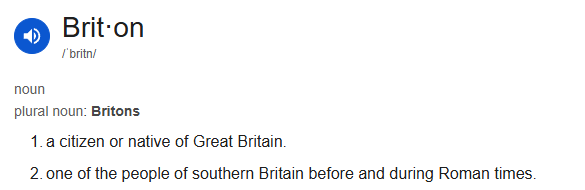
It’s been said before, but to reiterate; the Yamato are the AoE2 Japanese. This is like wanting Britons and British as two different civs.
Yes and No. You miss the context.
Britons were inhabitants of Southern Great Britain under Romans. English people are those from England not all Britain
Some people do want the Britons renamed, due to thinking the name is unfitting for a civ representing the English.
I’m English. I know what it means…
Anyway. My point is that “Yamato” are already in the game.
Good DLC concept about early middle age in this part of the world.
Reusing the name is good, they already do this for the Romans civlization. Good to add a early medieval pre-gunpowder japanese.
Language : they must speak a ancient form of japanese or dialect different of the one already used in the game
Campaign : Yamato
There were know for their horsemen.
Maybe we can use them as an umbrella civilization for the Ainu and the Emishi ?
For the UT, the Ainus used poison made by Aconitum plant. An UU where the bowmen start to inflict poison damage (pregressive damage like the bleeding damage).
Civilization bonus : Iomante ceremony : gain food every time a monk is trained
or
When a relic is garrisoned a peaceful tamed bear (he have no attack) appear outside of the monastery every few minutes and can be killed for meat, this meat can be deposit in the monastery.
(The Ainu practiced a ceremony called Iomante were a bear was raised before being sacrificed. Then the Ainu east the bear’s meat.)
Language : Ainu obviously.
Name : maybe renaming them the Choson like the one of AoE 1 because Silla was just one the many korean kingdoms. Another name can be Samguk (the korean name for the period)
Early pre gunpowder korean.
Language : an early form of korean (or a reconstructed form of peninsular japonic, extinct in the first millenium CE but a koreanic civilization who spoke a form of japanese language will be disliked by the korean players)
Ashigaru : a new secondary UU who replace the handcannoner as a weaker but cheaper unit.
Hei guang cavalry is good for the Silla and I think giving them to the Chinese and the Korean must be done (visually better looking than the cavalier unit)
Lou Chuan : good for pre-gunpower civilizations in this region
Traction trebuchet : maybe for the Silla, Yamato and Emishi ?
Yabusame : Good for the japanese civilization (Japanese, Yamato and Emishi) At start the japanese warrior fought mostly on horse.
Samouraï rider : either as a regional unit or a reskin.
Removing the actual wall skin for the three japanese civilizations (Japanese, Yamato and Emishi) and giving them a japanese skinned wall.
Sail : junk sail with the Mon of the Tokugawa clan
The actual east asian wall skin will be kept for the remaining east asian civilization because he is very chinese themed.
Chinese archtectural set
New architectural set who keep the actual east asian wall. For the civilizations : Chinese : Korean, Silla, Vietnamese, Jurchen, 3K civilization.
(Mongol and Khitan can gain him but with pasture and yurt or gaining a new eastearn steppe architectural set)
Sail type : the actual east asian sail (with the bird)
The actual east asian architectural set will be renamed : japanese architectural set.
Silla : the (korean) Three kingdoms period is good. Can feature some steppe people (Khitan, Jurchan) and 3k civilizations for the Chinese of the period. Gaya kingdom can also be played by the Yamato.
Emishi/Ainu campaign The story of the Ainu people. First they fight (as the Emishi) against the japanese (Yamato). Later they fight against the Nivkh and Udege peoples who were vassal of the mongols. In retaliation the mongol launched an invasion of Sakhalin
In this campaign you fight against the Yamato then against the mongols and the Emishi/Ainu (Nivkh people)
Yamato vs Emishi/Ainu campaign
Korean : Ijmin war. The obvious choice because the actual Korean civilization is build on her. Korean, Japanese, Chinese and maybe some Jurchen in the north.
Japanese
There is many possibility of Japanese vs Japanese campaigns, here some Japanese vs another civilization campaigns :
Mongol invasion of Japan : Fight against Mongols Japanese, Korean , Jurchen. Good but short lived campaign
Wokou campaign : From the 13th century to the 17th century, the wokou pirates raided chinese and korean coast. In the later period they fight in southern chinese sea against the Ming dynasty, the spanish in Philippine and the siamese in the city of Patany. Also the ming and the portuguese allied against them in 1564. But this later wokou were mostly chinese. French Wikipedia indicate also, than they go in Thailand, Burma and India.
So in the wokou campaign the player start playing the japanese and switch to the chinese in the last scenarios. The enemy can be the korean, chinese, malay, spanish, portuguese, burmese, dravidian, malay. Also int his campaign we can have many of the unique ship : turtle ship, loushuan, galleon, caravel, dragon ship. Because of the wokou were of diverse ethnic origins you can recruit many UU from different civilization : chu ko nu, samuraï, karambit warrior, etc.
Realistically the Choson should be the renamed ones, because that’s an outdated romanization. They should called Joseon or Gojoseon (the latter is to tell them apart feom another Dynasty also called Joseon).
The Yamato period was the time when the Imperial Court was located in Yamato. It is often lumped together with the Yayoi and Asuka periods. It was feudal age in Japan.
The Emishi were inhabitants of the Kanto, Tohoku and Hokkaido regions, and there are theories that they were Ainu or Jomon people. However, since the Ainu are a people that emerged after the 13th century, they are most likely Jomon people (or Wajin).
The Ainu are a hybrid of the Jomon people of Hokkaido and the Okhotsk people who migrated from the north. They became the mainstream ethnic group after the 13th century.
The Okinawans (Ryukyuans) are a people closely related to the Jomon people. They established a royal authority different from the Yamato court, and incorporated Chinese and Southeast Asian cultures with their Japanese base (for some reason, some people deny any connection between Ryukyu and Southeast Asia, but their sources are unclear).
Silla was feudal age in Korea.
It could be called “Yabusame Archer”.
But it is also not suitable for the Emishi. Yabusame has a Shinto religious background.
Yamato and Japanese are almost in a direct, complete line of descent. Even Romans and Italians do not have such a relationship. The Japanese in AoE2 can even legally and reasonably renamed to Yamato because they are essentially the Yamato during 400 to 1600. Therefore, I do not think AoE2 needs another Yamato civilization in the base game. If there is a need to focus on early medieval Japan, I believe reworking the Japanese to some extent would be a better decision.
That said, I completely agree with introducing Yamato as a new civ in the Chronicles, but I think Wa would be a better name for this civ, as it better distinguishes the Japanese that are essentially Yamato, and better reflects the Civil War of the Wa kingdoms and Queen Himiko’s Yamatai polity. The period roughly corresponds to the Three Kingdoms of China which also should have been in the Chronicles…
The only one on this list that is actually worth introducing into AoE2. But I believe they are still better suited for the Chronicles. As a Chronicles civ, they can still fight against the AoE2 Japanese civ in campaigns.
Again, like the Yamato, a second Korean civ would at best belong in the Chronicles, not the base AoE2. It’s similar to how most people do not accept splitting a civ based solely on dynasties.
A better approach would be to rework the Koreans to make it more appropriately representative of the early medieval period. For example, allowing Hwarang to serve as a healer–warrior unit that can be trained at the University or Monastery (based on their training in Buddhist studies and scholarly knowledge.)
By the way, they can introduce Sohei as a healer–warrior unit with naginata, Miko as a female monk unit with kagura suzu, Himiko as a hero version of Miko (maybe with a unique look), and Onna-musha as a female naginata warrior hero unit (allowing creators to rename them to specific figures, such as Tomoe Gozen and Hangaku Gozen). it would be a simple and effective way to enrich Japanese scenarios.
First of all, I am Korean.
I understand your reasoning for creating a “Silla” civilization, but from a Korean perspective, there are several points that are historically inaccurate. I would like to explain them clearly.
First, Silla does not represent the Korean medieval period.
In Korean history, Silla is classified as part of the ancient period, together with Goguryeo and Baekje. This era is commonly referred to as the Three Kingdoms period.
While it is true that Silla unified the peninsula and lasted until 936, that alone does not make it a representative medieval Korean state.
Second, the Hwarang were a military group that existed only in Silla.
They were essentially aristocratic youth trained for leadership — closer to “noble cadets” than a universal Korean military unit. Because of this, they do not represent Korea as a whole.
That said, the current Korean unique unit in AoE2, the War Wagon, is also historically inaccurate. The developers later admitted that it was a fictional creation due to a lack of knowledge about Korean history.
Third, if the goal is to portray medieval Korea, the most appropriate approach would be to base the civilization on Goryeo (918–1392), the actual medieval dynasty, while also including Joseon (1392–1910) as its continuation.
In this case, the unique unit should be related to archery.
Historically, Goguryeo, Silla, Goryeo, and Joseon were all known in China and Japan as cultures with exceptional archery skills.
This reputation continues even today — South Korea consistently dominates Olympic archery events.
As a candidate for a unique unit, I would recommend an archer using a traditional Korean bow known as the “Aegisal”.
It is characterized by extremely long range. While this may overlap with the British Longbowman, that balance issue can be discussed separately.
(Reference video: https://youtu.be/c-DkINB6ZIs?si=jzX9We-ZuJibbe05
https://youtu.be/Cwod-m1YlLQ?si=oLpz2L0Tkx1RxJ7p)
As an additional point, it is also difficult to exclude gunpowder from Korea’s identity.
During the Goryeo period, Korea used cannons to achieve a major victory against Japanese forces at the Battle of Jinpo (1380).
This demonstrates that Korea has long been a civilization proficient in both archery and gunpowder weapons.
Yes, exactly, so many problems we could have avoided since The Conquerors if they had stayed in the Middle Ages like Age of Kings…
The Conquerors jumps around too much in time (only El Cid and the Conquerors historical battles are worthwhile)
The Forgotten is okay (although Alaric is earlier than Attila)
The African Kingdoms is okay (maybe Almeida is a bit late)
Rise of the Rajas is okay (only Bayinnaung is very late)
The DE DLCs from TLK to RoR were okay
From RoR onwards, only TMR and VaV are worthwhile
In the Spanish translation of the classic game, the Britons were called “Ingleses” (English in Spanish), but in the DE they changed it to Britons…
Haha … If Gaya were playable as Yamato, many Koreans would be extremely upset.
The reason is that in the 20th century, Japan promoted a fabricated historical theory claiming that Japan ruled the southern part of the Korean Peninsula in ancient times.
(This idea was also reflected in the Yamato campaign in Age of Empires I.)
However, joint research by Korean, Chinese, and Japanese scholars later concluded that this theory was fiction, and it has since been discarded.
It is no longer taught in Japan, and even Japanese historians do not support it today.
Additionally, this claim does not make sense culturally or historically.
In East Asia, culture and institutions generally spread from China → Korea → Japan, not the other way around.
I’m interested in that research. Which research is it?
The 4th century is a time when there are few historical documents about Japan, but I understand that Goguryeo and Yamato were fighting, and that Yamato was expanding its influence on the Korean Peninsula to some extent. There are various theories about Gaya, including one that it was a branch office of Yamato. It is likely that it mainly imported iron resources.
To explain the situation accurately:
Baekje formed an alliance with Wa (Japan) and Gaya and launched attacks against Silla.
When Silla faced the risk of collapse, it requested military assistance from Goguryeo. Despite being engaged in wars with Chinese states at the time, Goguryeo dispatched an army of approximately 50,000 troops to Silla. This force defeated the Baekje–Wa–Gaya coalition and drove them out of Silla.
After this intervention, Silla entered a subordinate relationship with Goguryeo.
The crucial point here is that Wa (Japan) did not advance into the Korean Peninsula independently.
Its involvement occurred as an ally of Baekje, not as an autonomous expansion or colonial power.
This context is important when discussing theories such as Yamato control over Gaya.
Most modern scholars interpret the Yamato presence on the peninsula during this period as limited military cooperation and diplomatic involvement through Baekje, rather than direct rule or administration.
The older “Imna / Mimana” colonial theory is now widely regarded as a misinterpretation based largely on later Japanese chronicles, and it is no longer accepted in mainstream Korean, Chinese, or Japanese historiography.