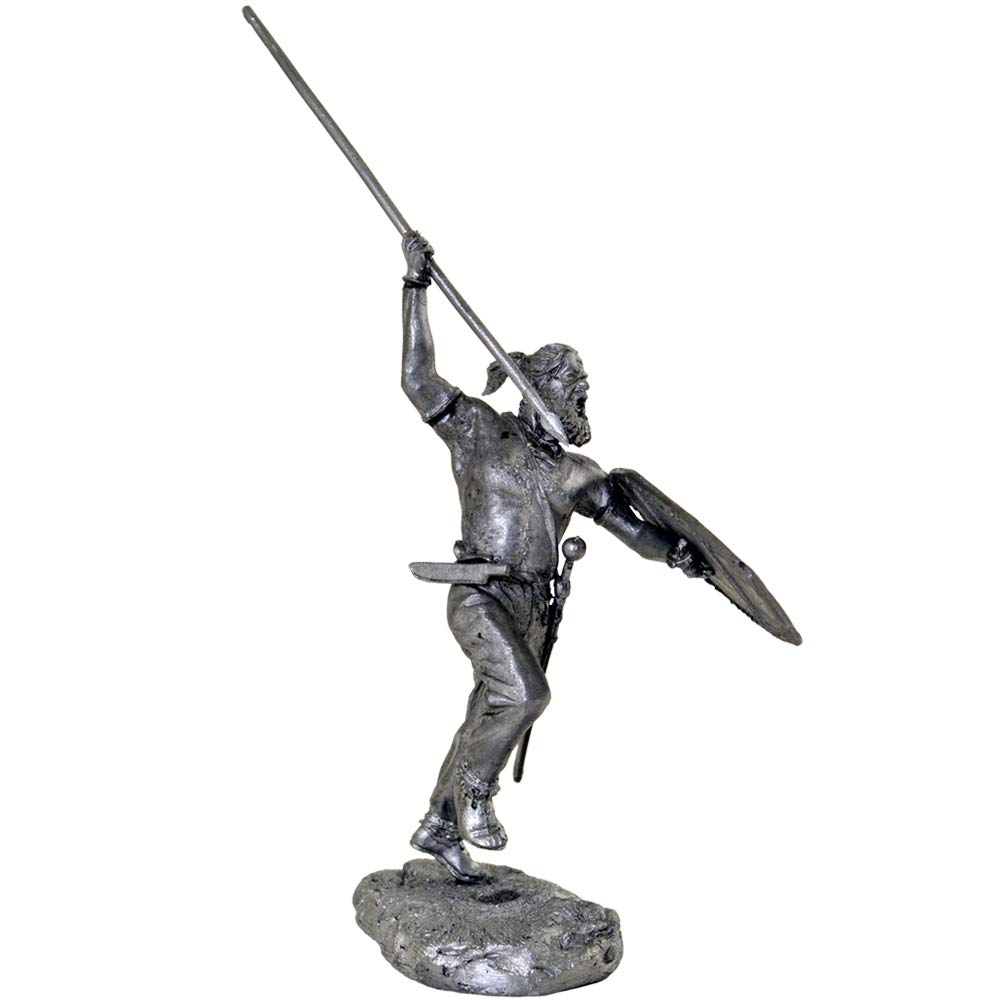
Hello there! A quick bit of background before I get into the meat of this post (and there is a lot of it!) I’ve always thought that some sort of pantheon/civilization based on a Celtic people would be a great addition to the Age of Mythology franchise, and I’m not the only one. Being the imaginative person I am, I started pondering how such a civilization might look and play in-game, and I’m here to share these results with you! This took a long time, and I’m quite proud of it.
However, one thing I want to make clear right away was the problem I ran into when designing this pantheon: the “Celts” are far from one singular people group with one singular mythology, even less so than the existing pantheons in AoM. A “Pan-Celtic” pantheon felt disingenuous to me, and would draw from too many disparate sources at once, to put it simply. Not to mention, there simply aren’t very many well-attested Celtic gods/myths, especially from Gaul and other continental Celts.
I quickly realized the British Isles would be my best source for lots of mythology, and specifically, the Irish Tuatha Dé Danann provided more than enough gods (or fairies, as Christian chroniclers would later transform them) for a diverse, playable pantheon. Exploring the myths and folklore of the Emerald Isle even gave me a good idea for a Retold-style single-player campaign, which I may detail elsewhere if enough folks are interested. However, admittedly, I found trouble finding enough specifically Irish legendary creatures to fill out a roster (at least without resorting to very poorly-attested creatures or more modern creations like the leprechaun and Dullahan), so I also explored the mythologies of nearby Goidelic-speaking peoples – the Scots, Manx, and Orcadians – to create what I’ve decided to call the Gaelic pantheon.
Most of my unit names, where they aren’t just English or anglicized native names, are drawn from Old or Modern Irish, and I’ll try to provide a brief bit of explanation after each one, so I hope you’re ready to read quite a long post.
Please also note that I am not a game developer – hence, my attempt at balancing these powers, units, and technologies is not going to be 100% perfect! I don’t have stats, training times, etc. for my units, and their costs were devised by comparing units I imagined to be similar. Likewise, there are some combinations of technologies, God Powers, etc. that I know for a fact would just be broken, but I feel like I’ve worked on this little project about all that I can.
Without further ado, let’s get started!
Without trying to format a full tech tree in this thing, I’ll give a brief rundown of how the Gaels might be expected to play and where their strengths lie.
- The Gaels have a unique economy, to put it simply. Their villagers, called Yeomen, gather Food the most efficiently of any resource, but they’re also more vulnerable to attack than other villagers. Thus, the Gaels also have human military and myth units that can partially fill villager roles in a pinch and allow for more efficient resource allocation by allowing you to train less Yeomen.
- On that note, the Gaels have three dropsites, one for each resource: the Granary, the Lumberyard, and the Ore Pit.
- Militarily, the Gaels have extensive infantry and ranged options, with a couple of decent cavalry units. Siege is where they are weakest, though their heavier siege unit can be pretty useful (see below).
- Though their warships are quite affordable, they’re not the most powerful, and thus, the Gaels’ naval strength comes largely from their numerous aquatic and amphibious myth units.
- The Gaelic Hero units are the Druid, trained at the Temple, and the Bard, trained at the Town Center and the Dún, their fortress-type building.
- Lastly, the Gaels’ main method of earning Favor is using Druids to construct Druid Groves near forests or bodies of water; the trees contained within a Druid Grove will slowly grow taller and accumulate more Wood, as well as generating Favor. Much like the Japanese Shrine, you can harvest these trees if you need to, but obviously that will prove unfavorable (pun intended) to the gods. The option to build them at the water’s edge is mostly present to allow for viability on a map with few trees, or for when your island’s trees are expended, though historically Celtic peoples did also leave offerings/sacrifices in bodies of water.
Let’s now introduce you to the basic units and technologies shared by all Gaelic players, regardless of their Major God.
ARCHAIC AGE
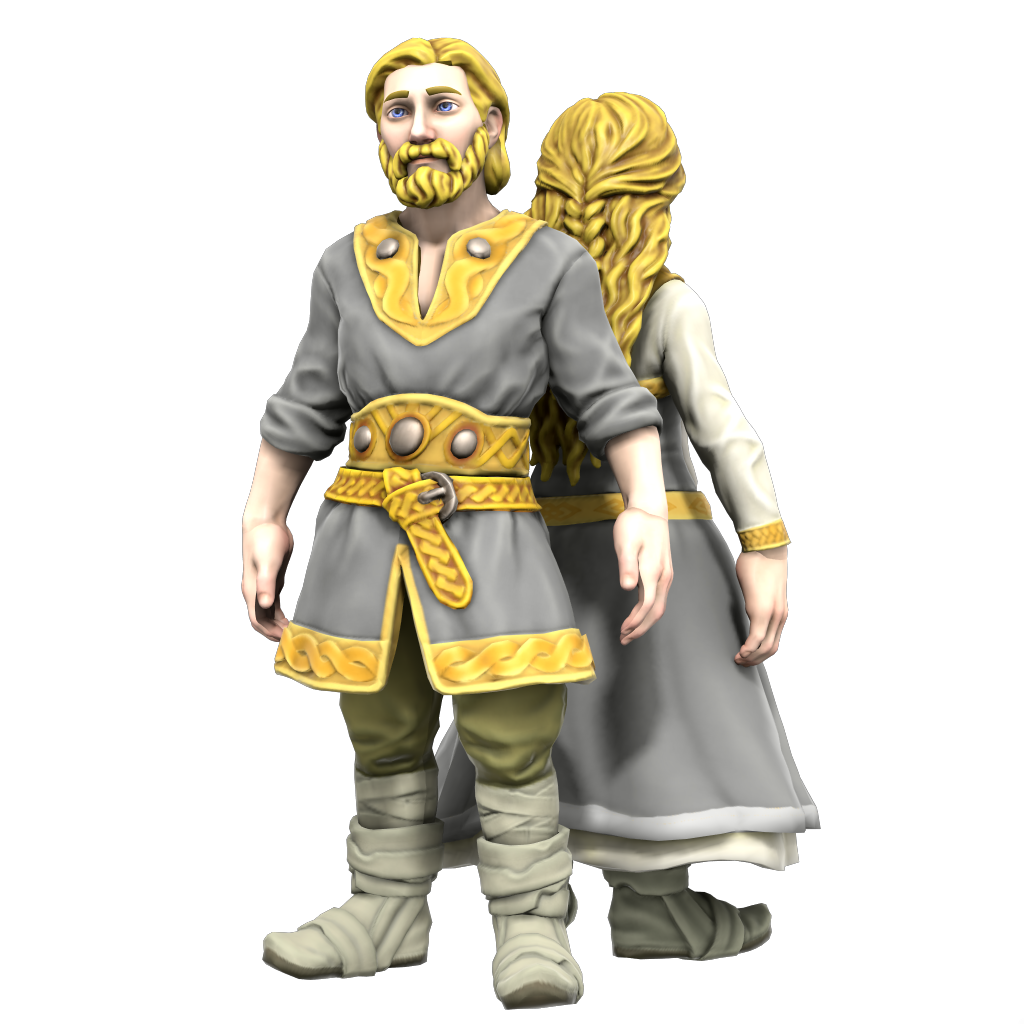
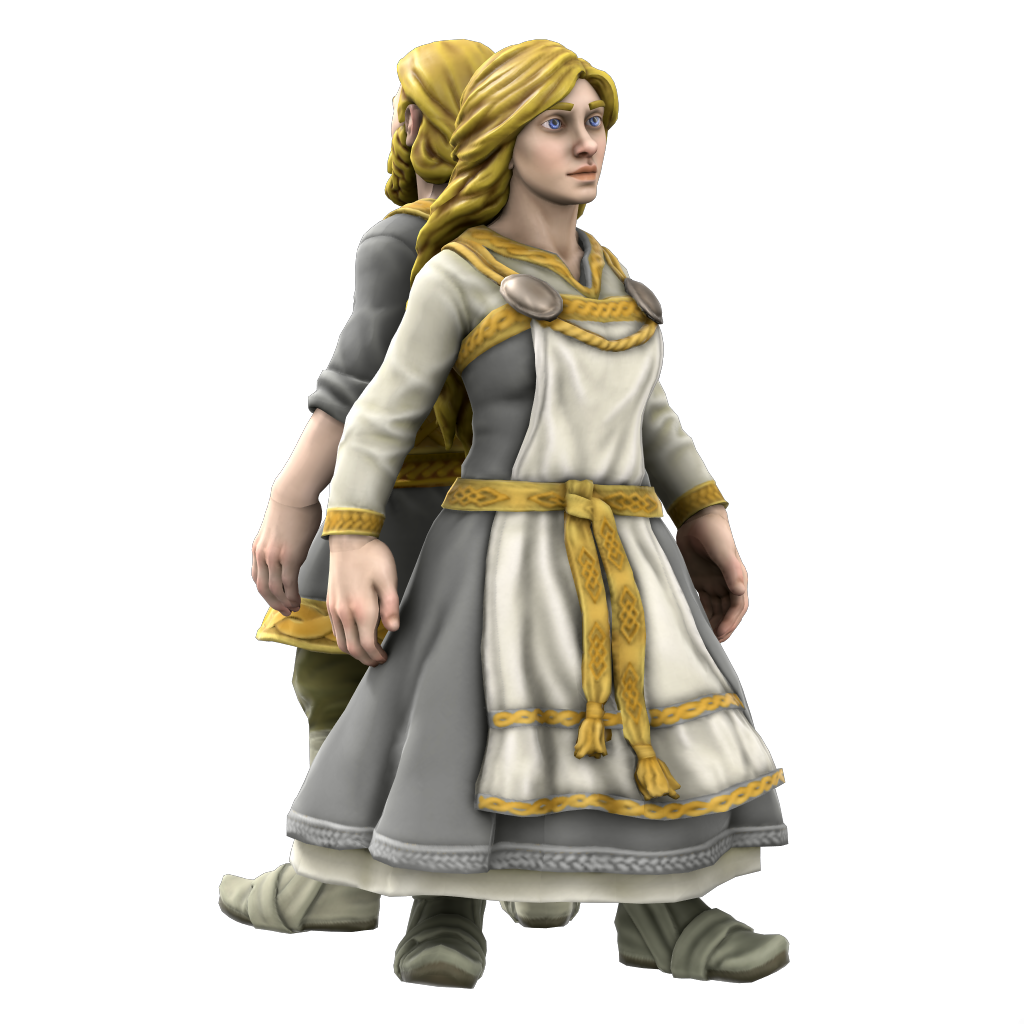
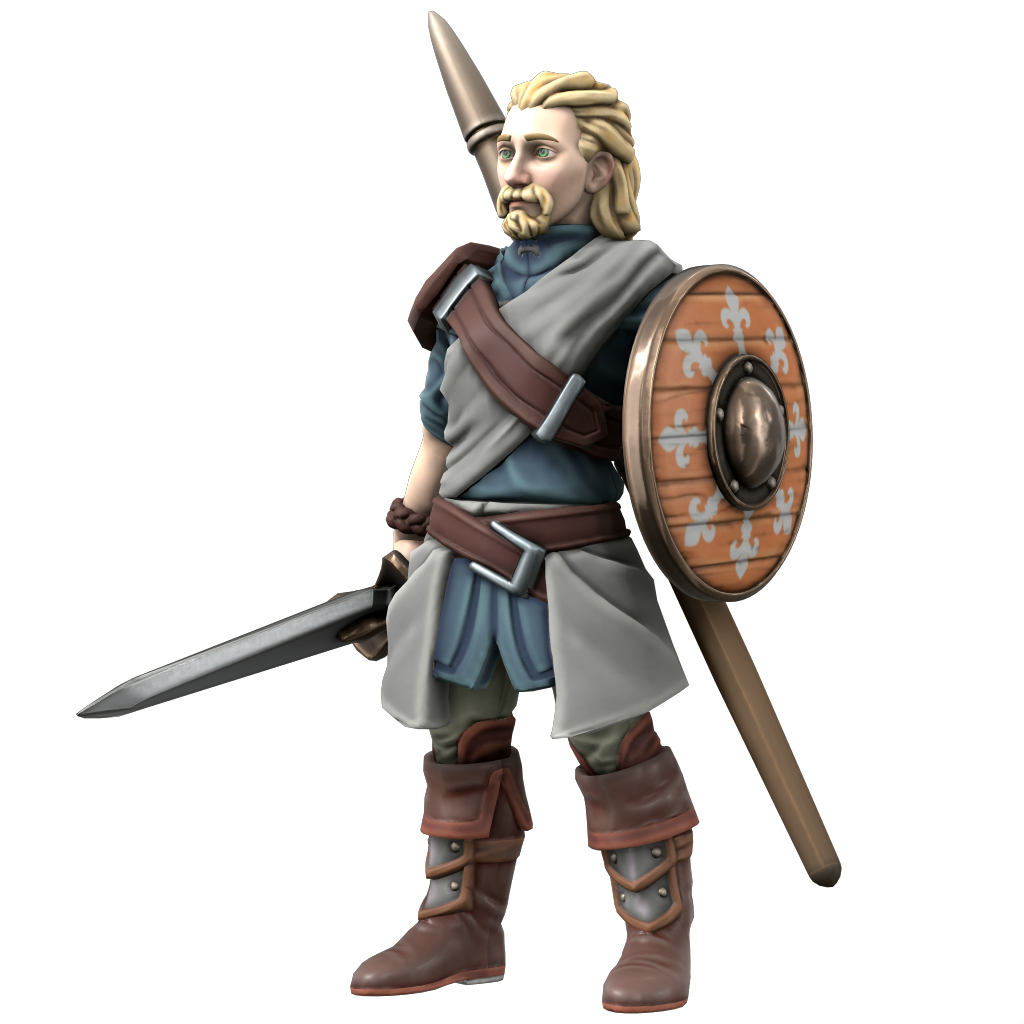
The basic unit that drives your economy is the Yeoman, trained from Town and Village Centers (50 Fd, 1 Pop). Yeomen gather resources and construct buildings; their attack is higher than other villager units, but they also have less armor. They gather resources about as well as any villager, but they’re especially good at gathering Food. (The rather fetching grey fabric/leather/markings you’ll see on these units indicates the parts that would be the player’s color!)
Now, being good at gathering Food and having a high attack… it makes you think they’d be great hunters, right? And they are, except for that pesky low armor. Fortunately, they have a ready solution in their loyal Cú Faoil (30 Fd, 0.5 Pop)! The Irish wolfhound is a large, noble breed with roots going back centuries. Here, they act both as swift scouting units and useful economic tools: when ordered to hunt alongside your Yeomen, they will automatically draw the attacks of the irate wild animal, while dealing out ferocious bites of their own, of course! This way, you can safely gather Food from animals in the early game without fear of losing your workers to a boar’s tusk or a wolf’s maw… and, should a nosy enemy scout come by looking to swipe your livestock, the Cú Faoil can have them turning tail as well! These good boys and girls are likewise trainable from Town and Village Centers.
(Note: Here, the unit would have a colored collar denoting its ownership.)

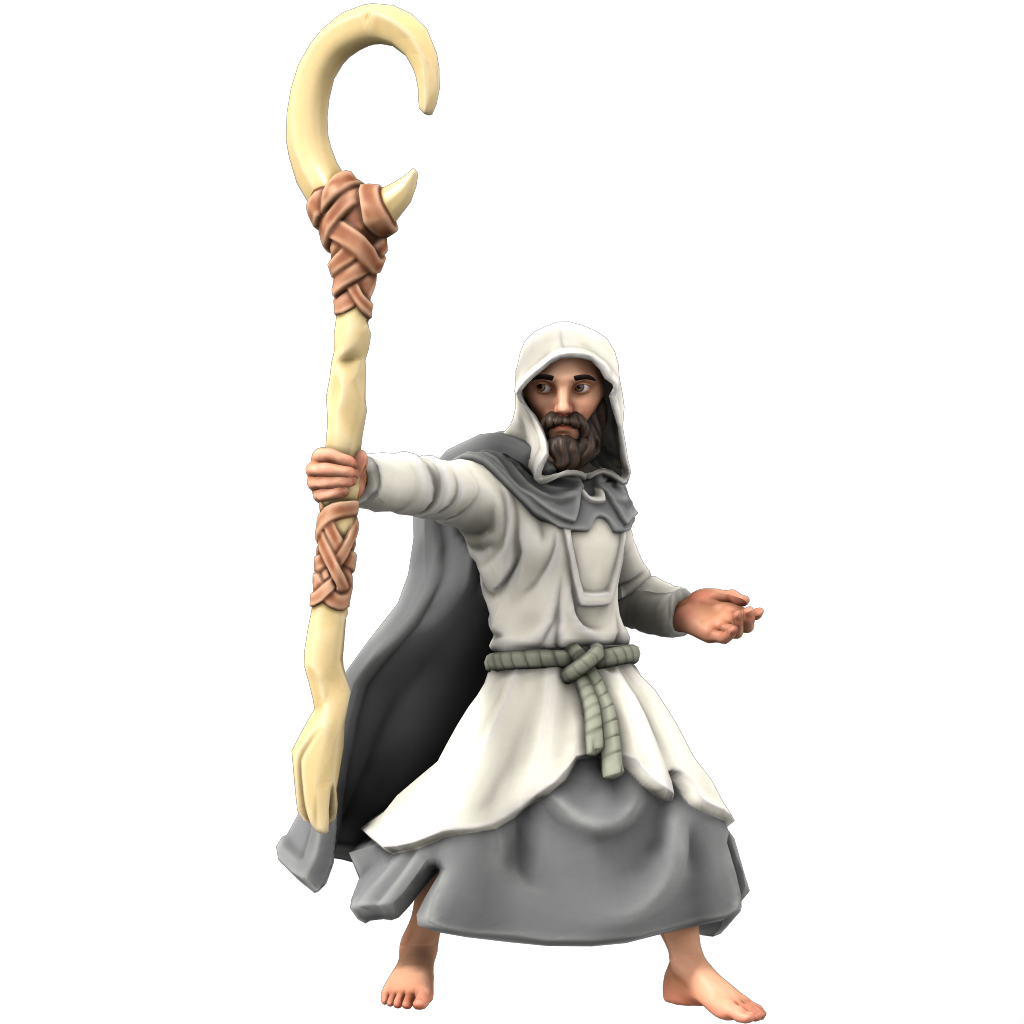
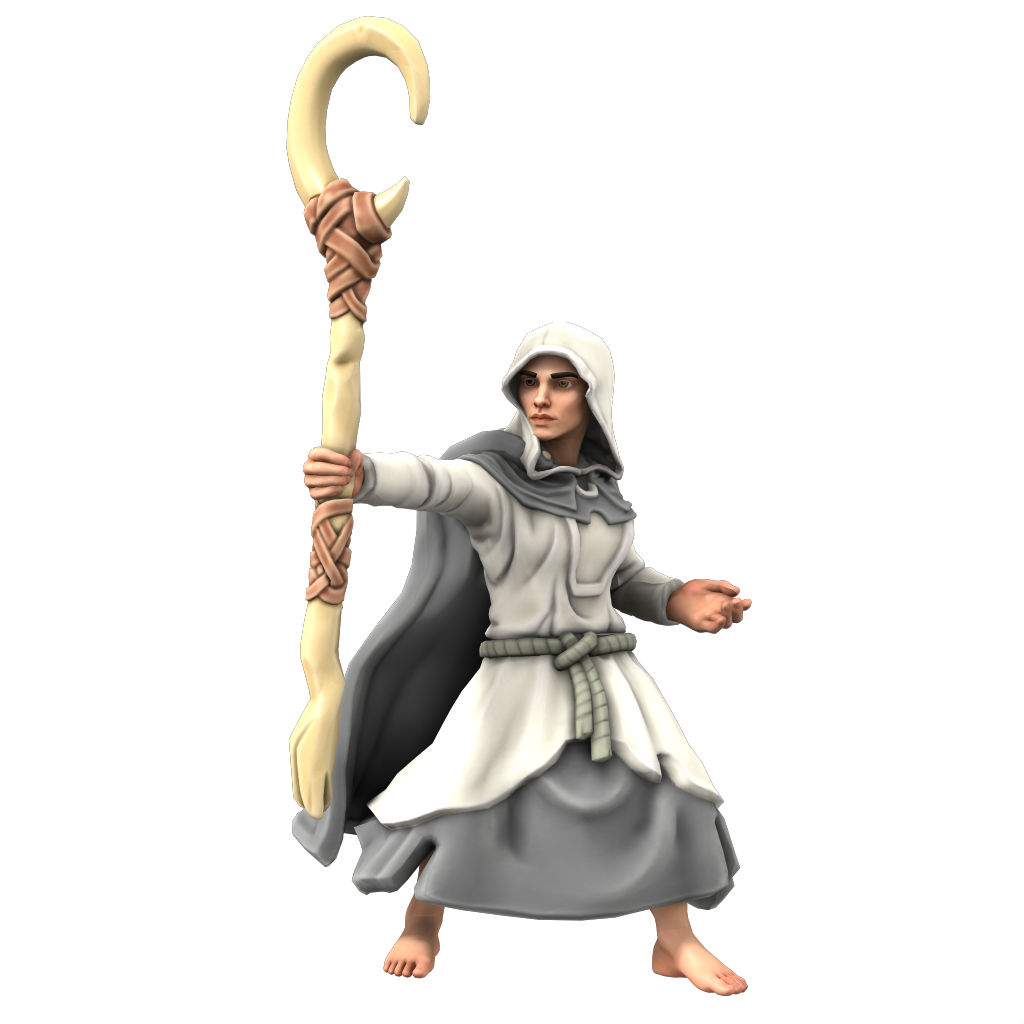
Get that first Temple built and you’ll be able to train Druids (10 Fd, 50 G, 2 Pop). These white-garbed men and women were equal parts priest, healer, scholar, and lawgiver, and here, they serve similar functions, appeasing the gods and healing the injured… and of course, collecting Relics and battling myth units.
Much like the Egyptian Priest, the Druid is an early-game Hero that can serve as a capable scout, heals units, and has a ranged divine attack, courtesy of their mistletoe staff (design may vary). And, like the Japanese Miko, they also are responsible for Favor generation – in this case, by constructing Druid Groves near pristine natural places, namely forests and/or bodies of water. While under the influence of a Druid Grove, trees will slowly grow taller, adding to the amount of Wood they yield while generating Favor (see above).
But that’s not all: the Druid can also convert most enemy units over to your side, if given enough time, of course. They’re sort of a jack of all trades!
At any Druid Grove, you’ll be able to research Sacred Oaks (100 Fd, 20 W, 5 Fv) – pick it up during the Archaic Age to increase the rate at which the trees in your Druid Groves generate Favor.
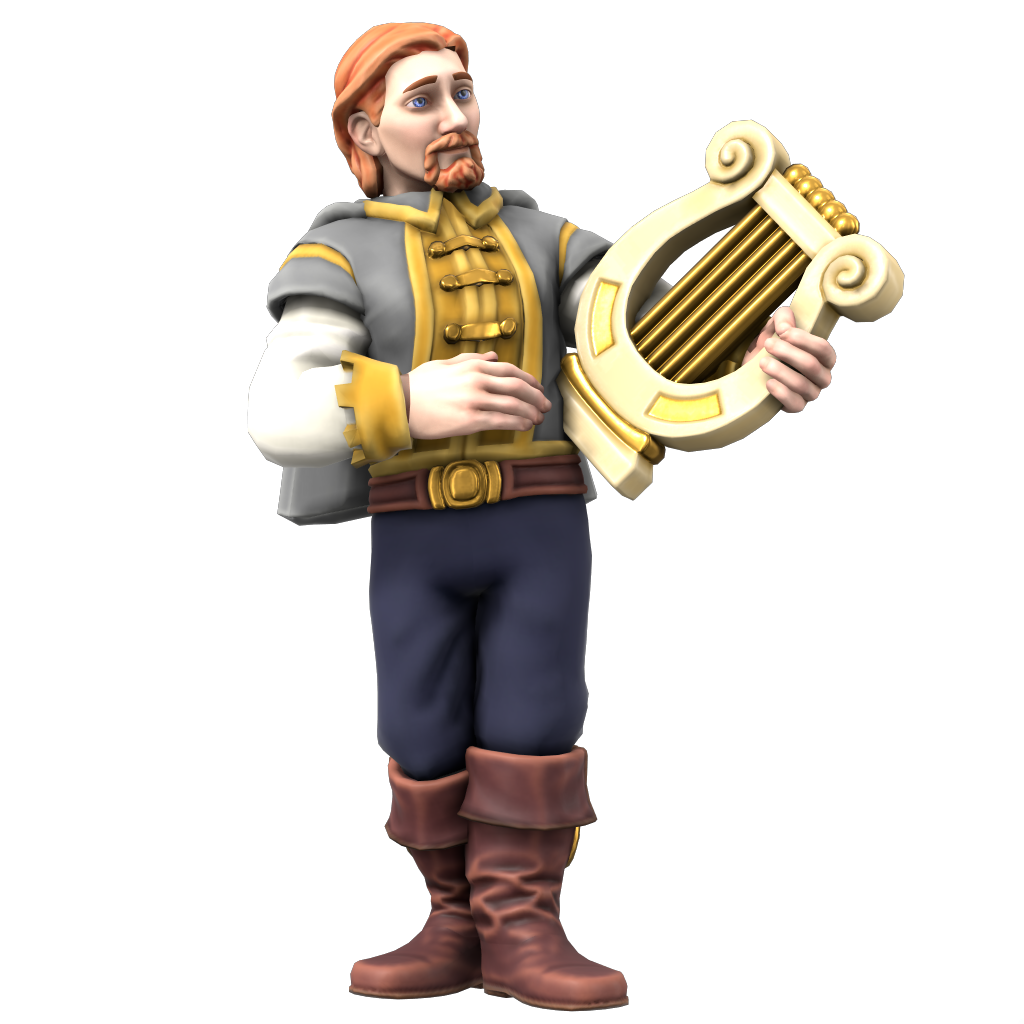
(I’d love to make icons for all my technologies one of these days, but currently that’s a bit beyond my skills. Frankly, these HeroForge mockups are really just proofs-of-concept for what I’d actually want the units to look like.)
CLASSICAL AGE
Attaining unto the Classical Age unlocks access to the Bard (50 Fd, 30 G, 2 Pop) at your Town Center. Bards were traveling storytellers, musicians, and historians throughout the Celtic sphere, and they, along with Druids, were responsible for sharing grand tales and keeping safe the knowledge and history of their people. Bards in AoM are ranged Hero units (they attack much like Orpheus does), and in addition to being able to collect Relics, they can bolster the attack power of nearby allied units with their rousing music. They’ll likely prove to be your frontline combatants against enemy myth units while your Druids provide healing and conversion support. Bards can be trained from the Town Center and from the Dún, which we’ll go over momentarily.
Also unlocking at the Town (and Village) Center in the Classical Age is the technology Blood of Failinis – Failinis being the dog of the god Lugh Long-arm. This tech increases the hack and pierce armor, as well as the attack, of your Cú Faoil, helping them stay around longer to serve your civilization loyally.
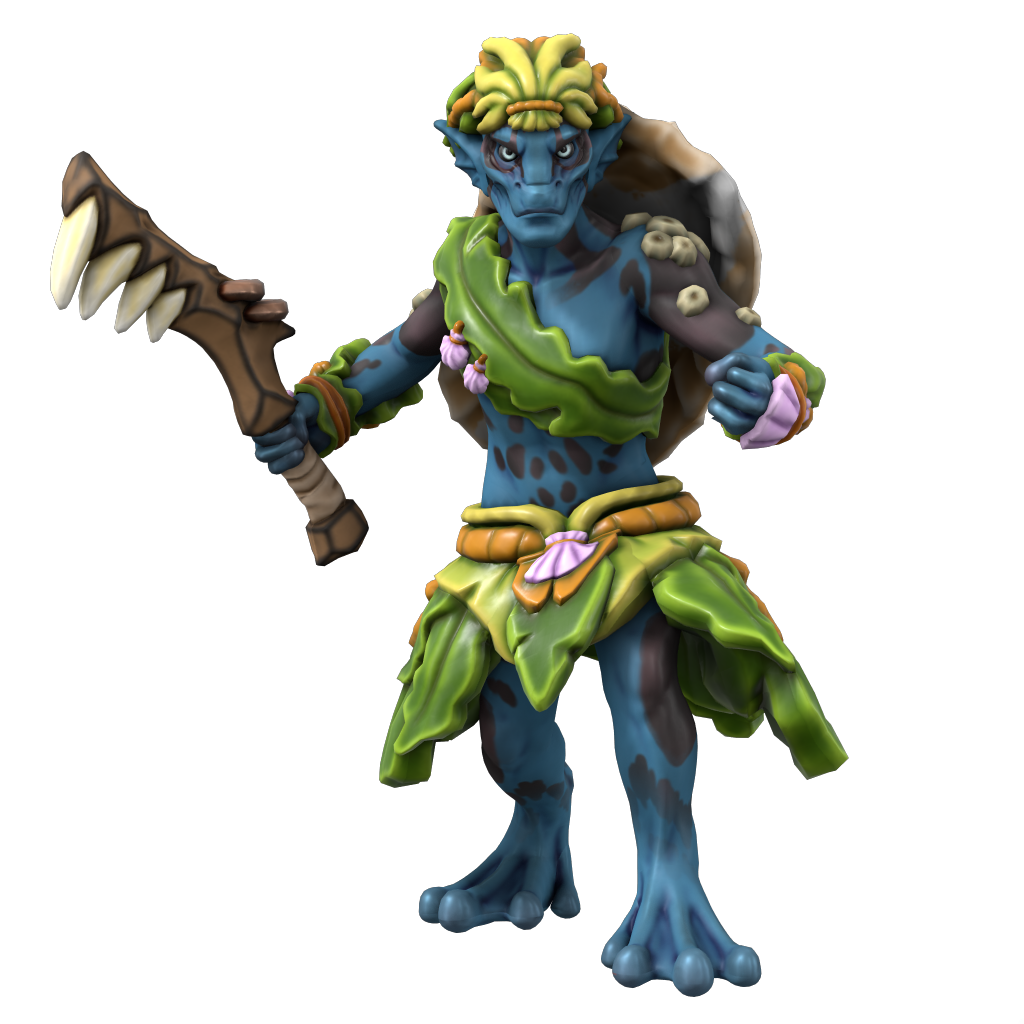
Before we move on to the bread and butter of Gaelic armies, the human soldiers, we should first stop by the Temple to take a look at two interesting Myth Units that all Gaelic players unlock: the Fomorian Grunt (100 Fd, 10 Fv, 2 Pop) and Fomorian Hunter (70 W, 10 Fv, 2 Pop).
Fomorians (Fomóire in Old Irish) were the primordial dwellers of Ireland – while we don’t have time to dive into the rich mythology of the island (I highly recommend doing your own research, it’s fascinating), in essence, they were said to live beneath the sea or earth, and were the mortal enemies of Ireland’s first settlers, the Tuatha Dé Danann (“the children of the goddess Danu”), the gods of this pantheon. Much like the Olympian gods fought the Titans, the Tuatha Dé and the Fomorians fought for many long years before eventually one side won out… you can safely guess who that might have been.
The Fomorians were traditionally portrayed as monstrous beings, frightening to look at, and with various physical features, though some Fomorians were said to be darkly beautiful and were capable of having children with the Tuatha Dé Danann. For the purposes of consistency here (and in the spirit of AoM establishing beloved designs for mythical creatures), I’ve chosen to portray the Fomorians as water-dwelling, fish or amphibian-like people… with one notable exception we’ll get to later.
The Fomorian Grunt and Fomorian Hunter are meant to be fairly cheap myth units that can be massed and serve alongside your human infantry and ranged soldiers, adding a little bit of kick to your raiding parties. All Fomorian units are amphibious, but they cannot attack while swimming.
(Note: Here, I’d had the paint on the shell shield or the color of the seaweed being the thing that signifies player affiliation, though the markings on the Fomorians themselves could easily change as well.)

The Gaels recruit their human soldiers from two buildings: the Muster Grounds train lower-quality troops levied from the peasantry – elite troops train from the fortress we’ll see in the Heroic Age.
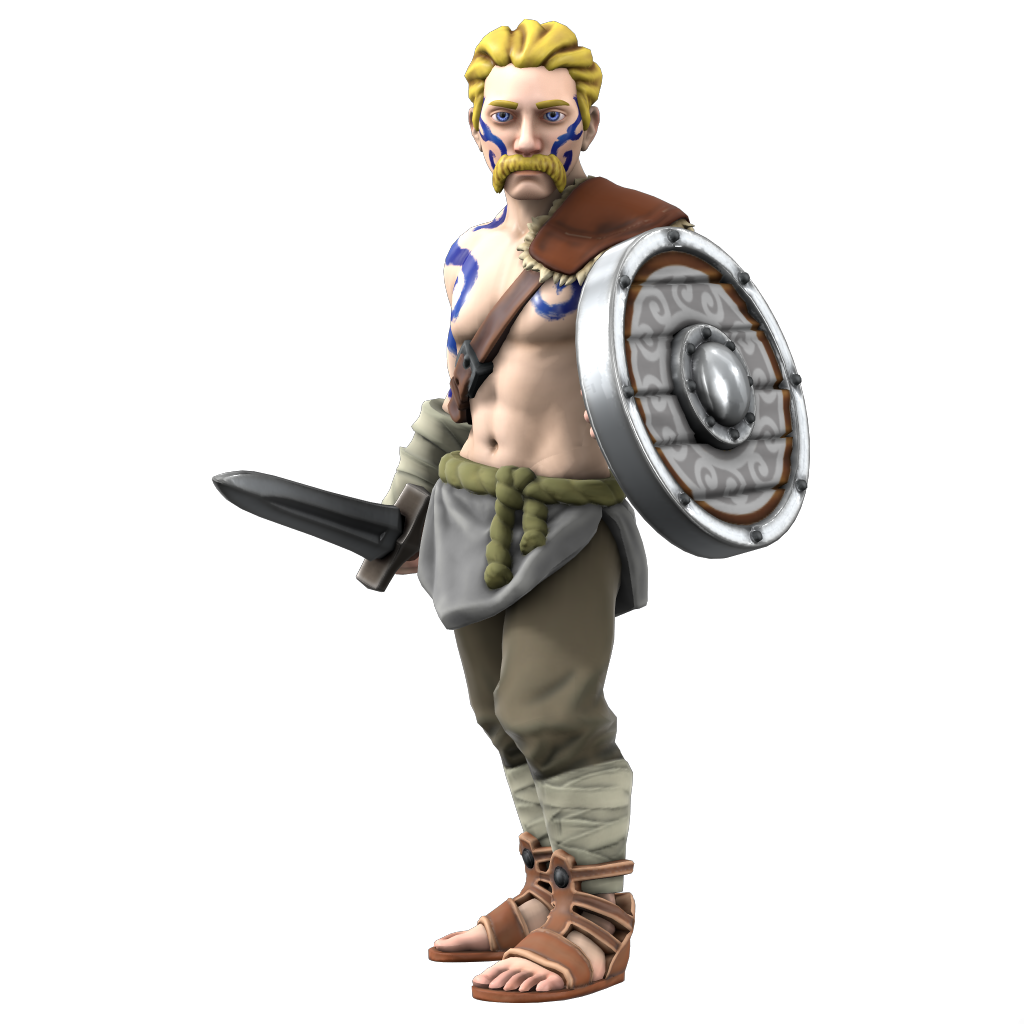
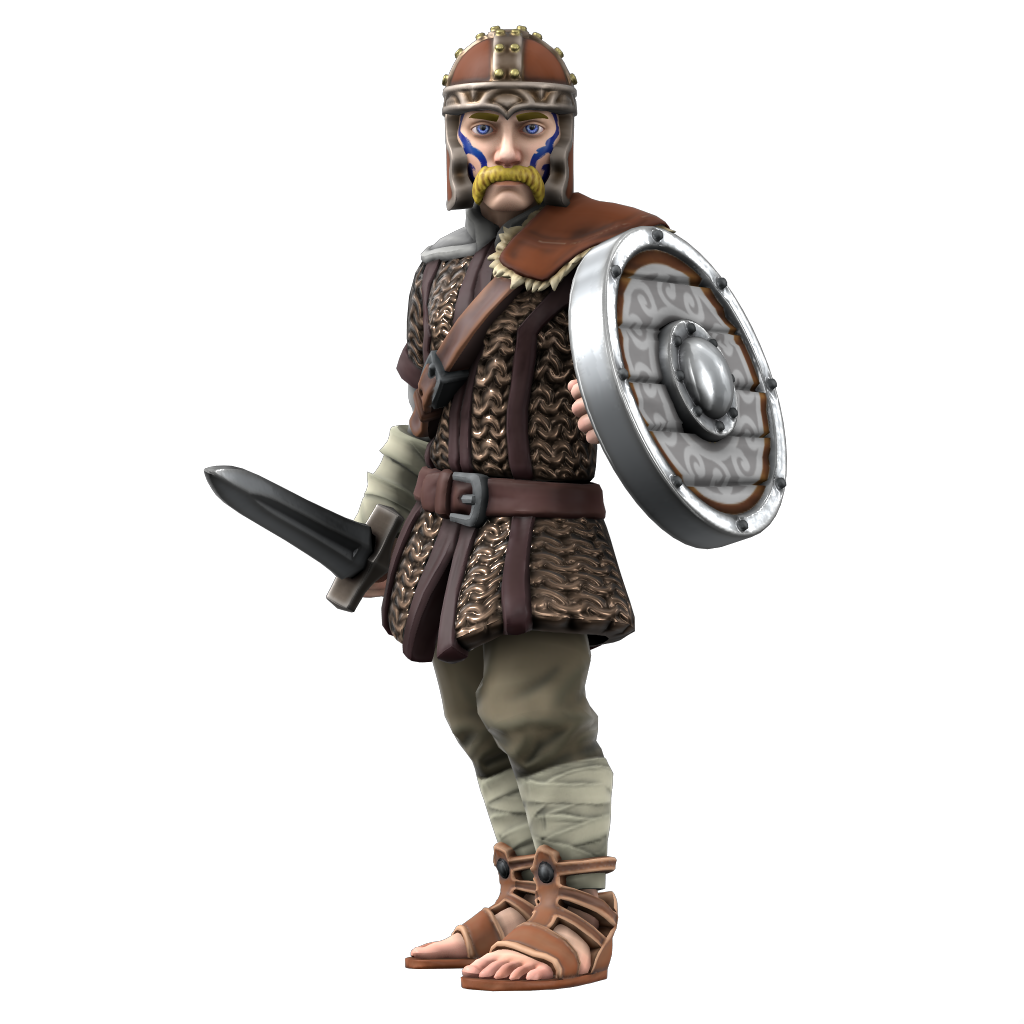
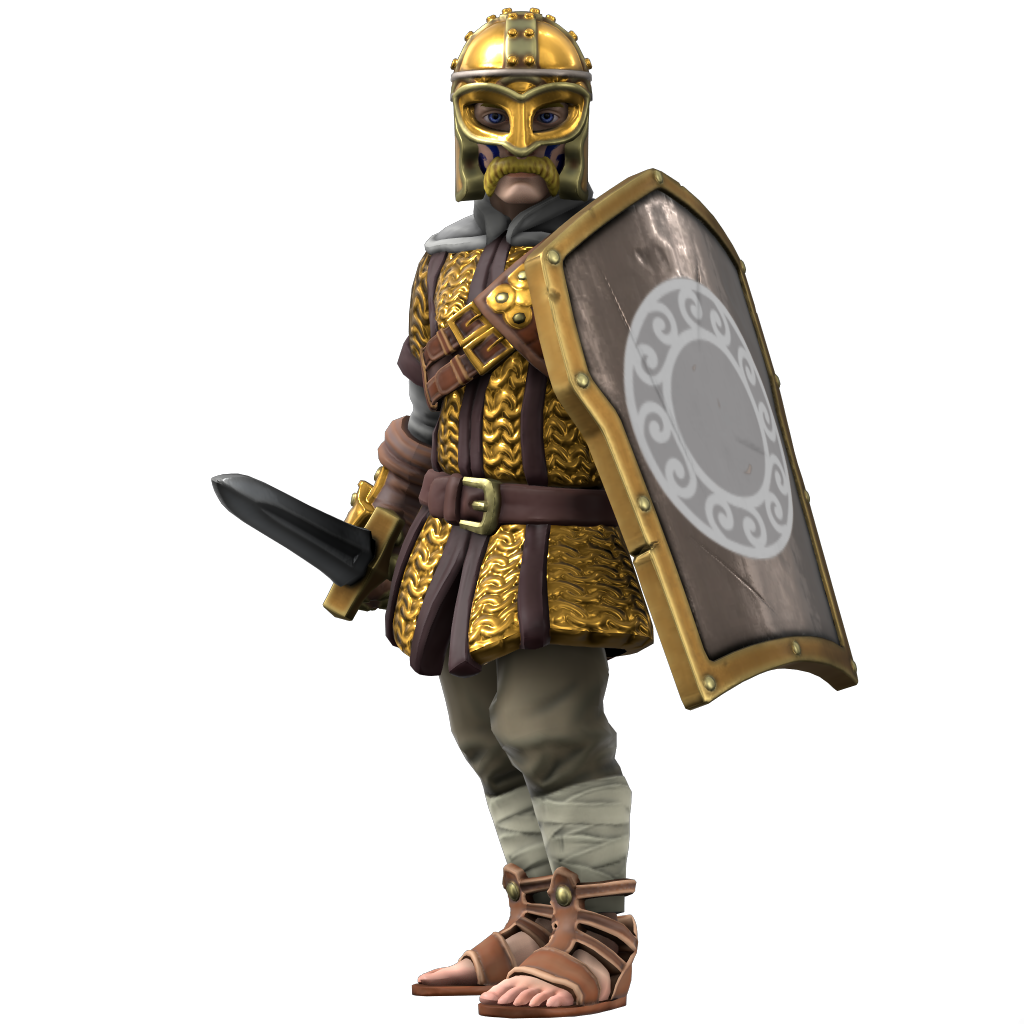
First up is the Curadh (60 Fd, 40 G, 2 Pop). Simply meaning “warrior”, it’s a swift counter-infantry unit good at blocking ranged attacks with its shield and closing the distance to dispatch enemy ranged units.
(From left to right, the base, Medium, and Champion Curadh. I simply imagine the Heavy version being of a silvery color and having gear similar to the Medium, or between the Medium and Champion. This post is already going to have too many pictures to include everything!)
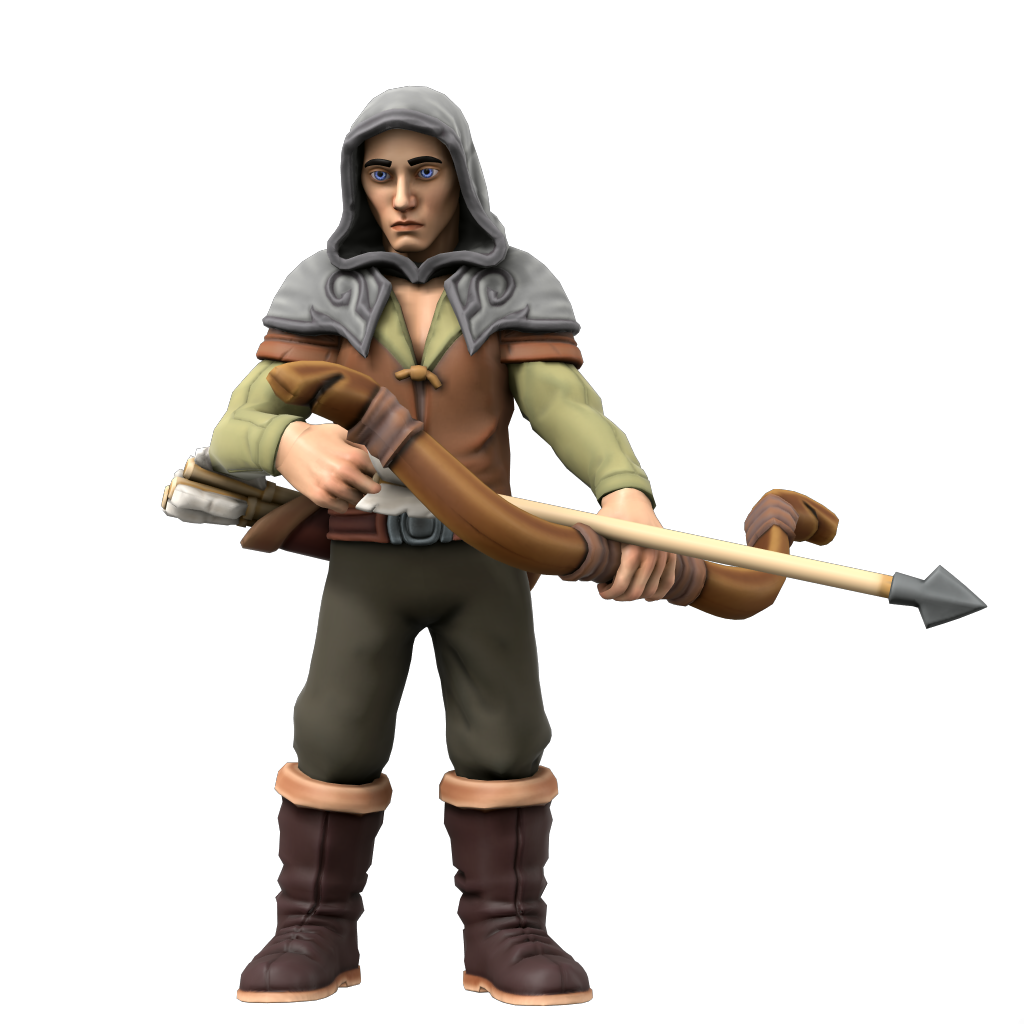
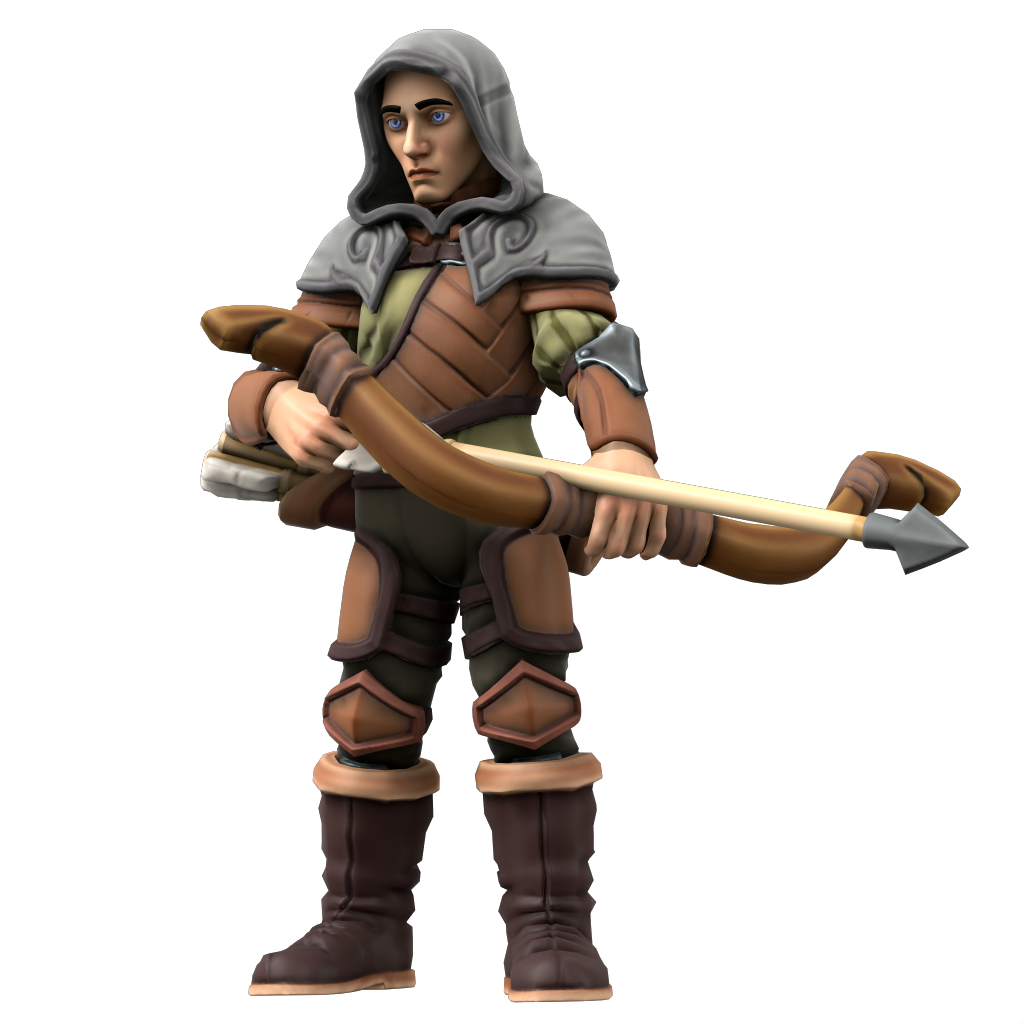
Your basic ranged unit is the Saighdeoir (50 W, 20 G, 2 Pop), a word which literally means “bowman.” Embodying the idea of a levied peasant archer who might be a skilled hunter (with perhaps just a smidge of Welsh longbowman mixed in), it fulfills the standard anti-infantry role of an archer.
(A hypothetical Heavy/Champion upgrade might actually look like a longbowman, as well.)
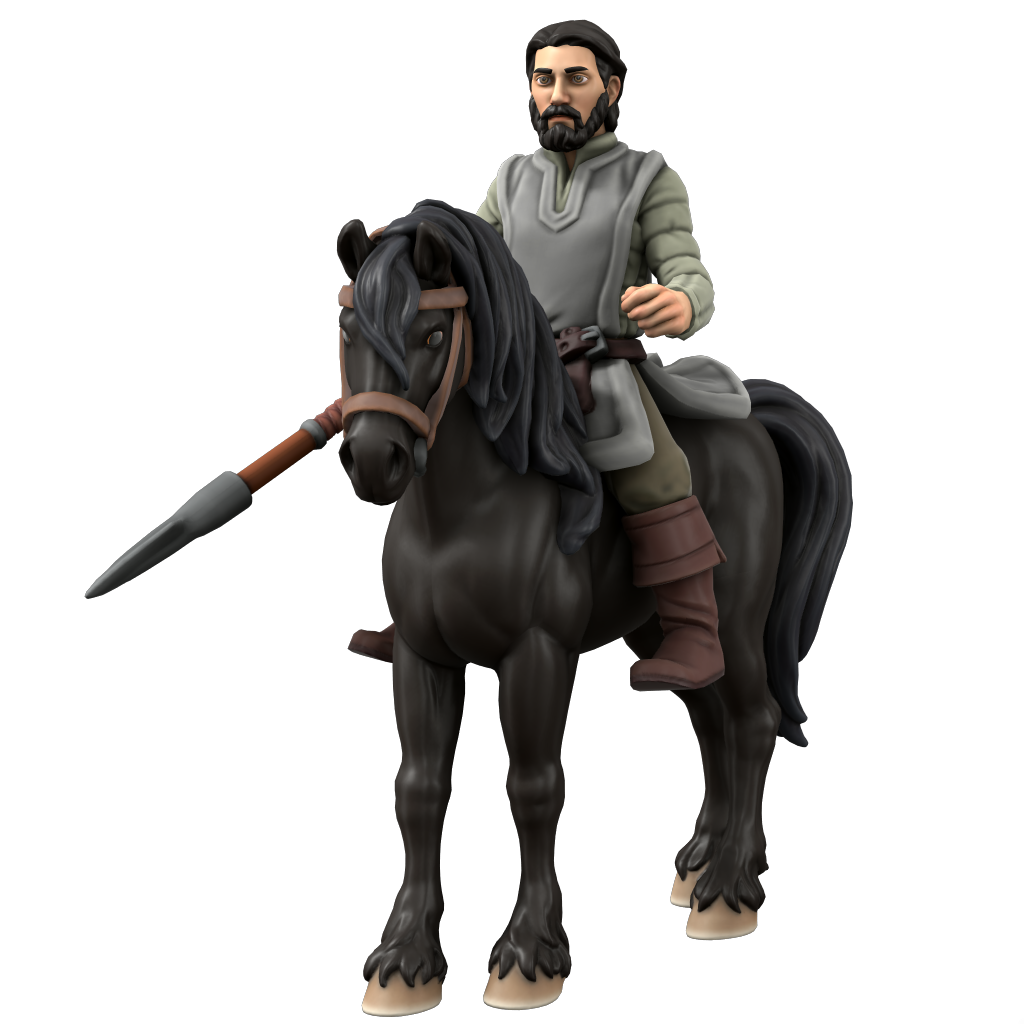
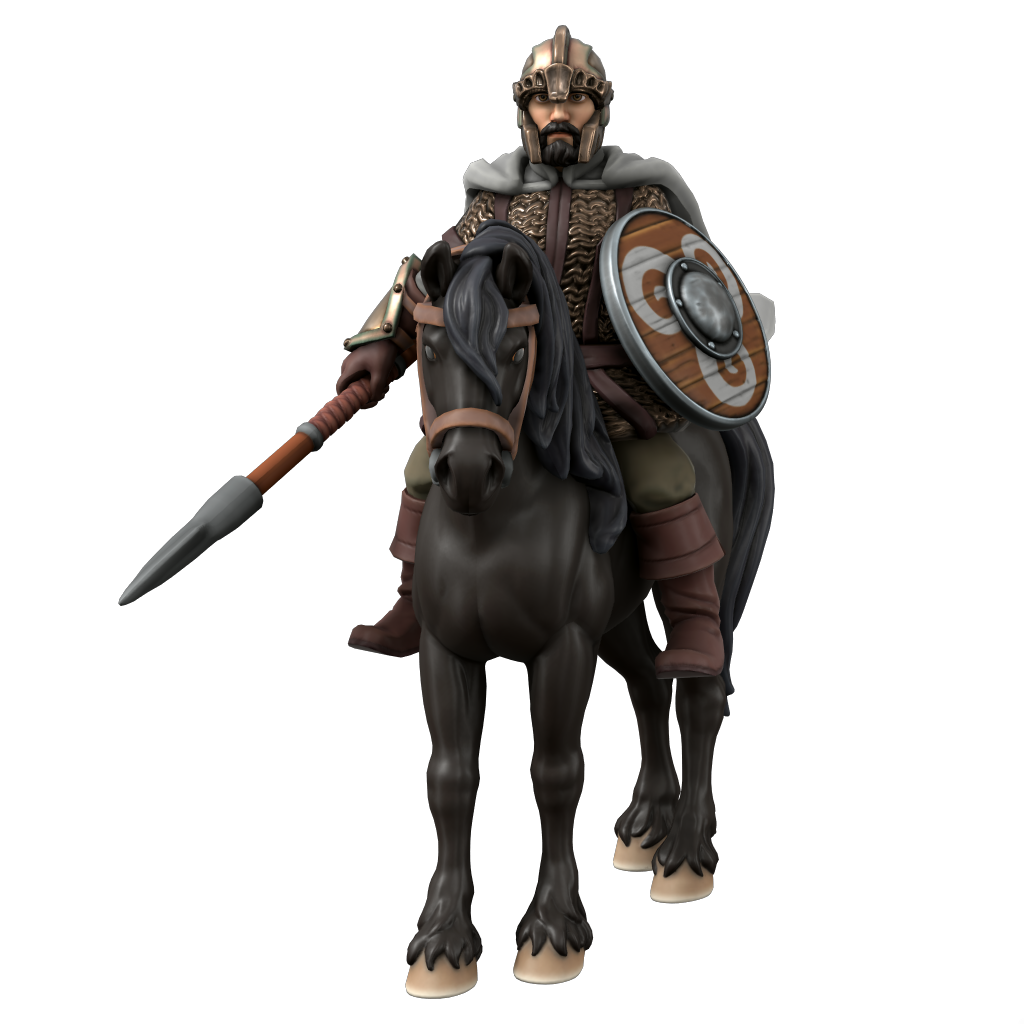
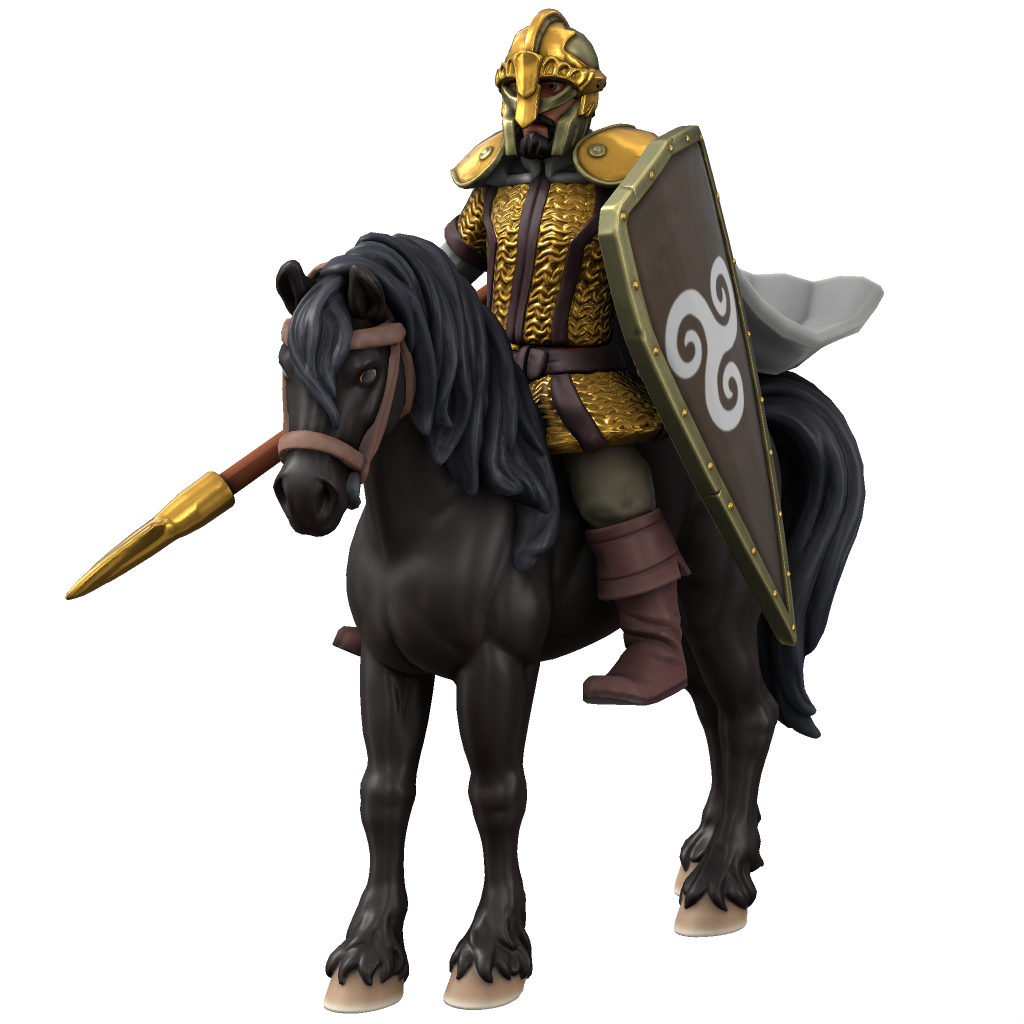
The Muster Grounds also give you your first cavalry unit, the Hobelar (85 Fd, 80 G, 2 Pop). Hobelars, known in Scotland as border-reavers, were outriders that conducted quick raids on enemy settlements and patrolled the borders atop “hobby horses” (hence the name), and here they’re envisioned as quick-moving light cavalry that use less resources and Population space than other mounted units. They counter infantry units instead of the other way around.
(The horse would likely also get some small amount of armor as it levels up, but alas, that’s beyond the capacity of HeroForge at the moment.)
Moving on to the Dock, suffice to say designing the Gaelic navy proved quite a challenge. The ancient/medieval Irish weren’t exactly known for their naval warfare, and most of the stuff I found talked about the Hiberno-Norse invaders/settlers bringing their longships with them (which the Kingdom of Man & The Isles would put to very good use.) So, as with many navies in AoM, it was time to get a little creative.
As previously mentioned, the Gaelic warships are cheap, but not very strong, which will force a reliance on their numerous aquatic myth units, to be mentioned.
The Gaelic arrow ship is the War Currach (30 W, 80 G, 2 Pop). A currach (related to the word “coracle” but not the word “carrack”) was a small oblong or circular wooden-frame boat with a hull made out of stretched hides, thus explaining its low Wood cost. Historically, they were small craft for transporting just a few people, though modern currach have been made that can support up to eight oarsmen. Here, to create a ship fit for war, we’re going to have to dive into a bit of fantasy, taking the basic canoe-like currach shape (though, I suppose a circular warship could prove quite a sight) and making it much larger, enclosing it with more wood, including a protective canopy for the oarsmen and passengers, and cladding it with shields.
The Gaelic close-combat ship is the Casúr Long (50 W, 70 G, 2 Pop). Again, not based on any historical craft, those two words literally mean “hammer ship.” Simply affix a corvus or similar device to the front of our War Currach, perhaps with its shape slightly altered for ease of identification, and you’ve got it.
The Gaelic siege ship is the Léigear Bád (100 W, 60 G, 3 Pop), or literally, “siege boat.” It would be the largest of our three ships, obviously, and sport a big honkin’ ballista on the front (though, for flavor, I’d probably prefer some kind of ballista-shaped stone thrower, or maybe a small torsion catapult) but otherwise be visually similar to our other Gaelic ships.
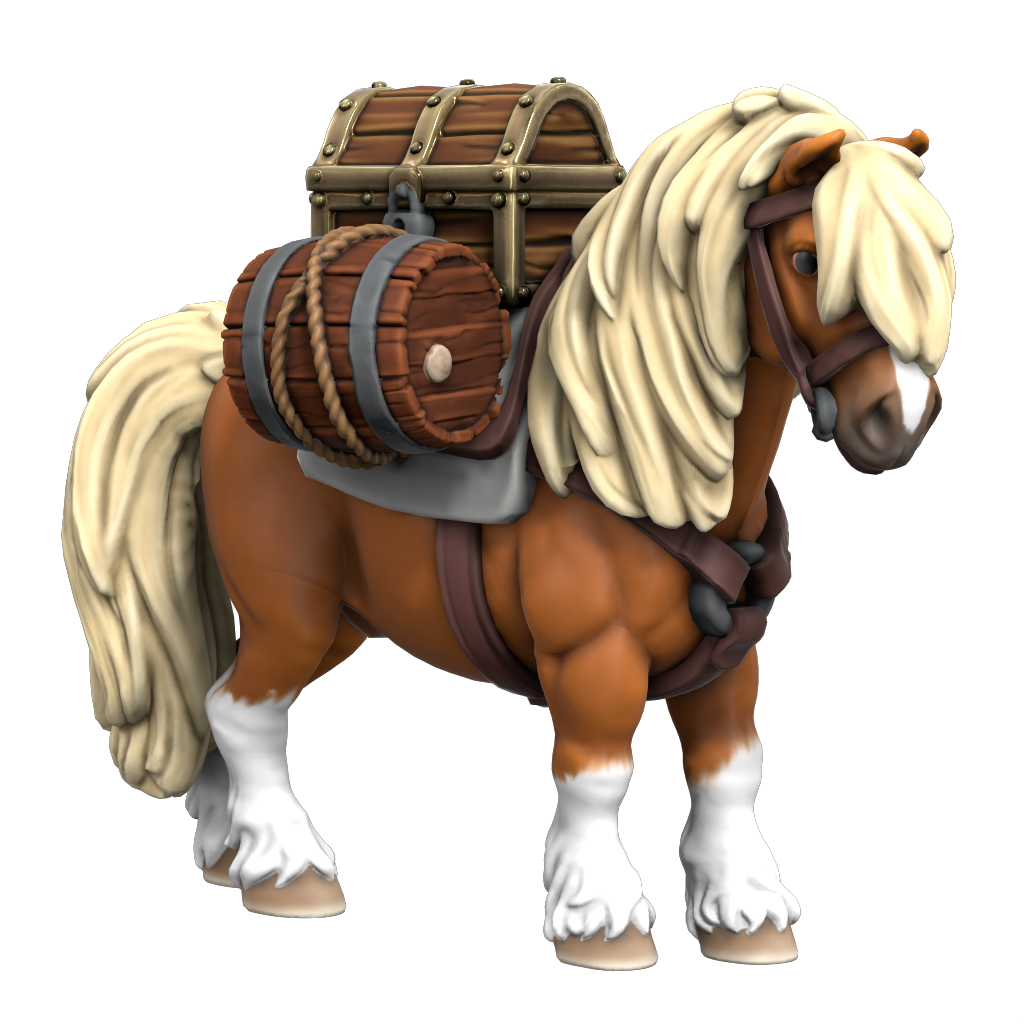
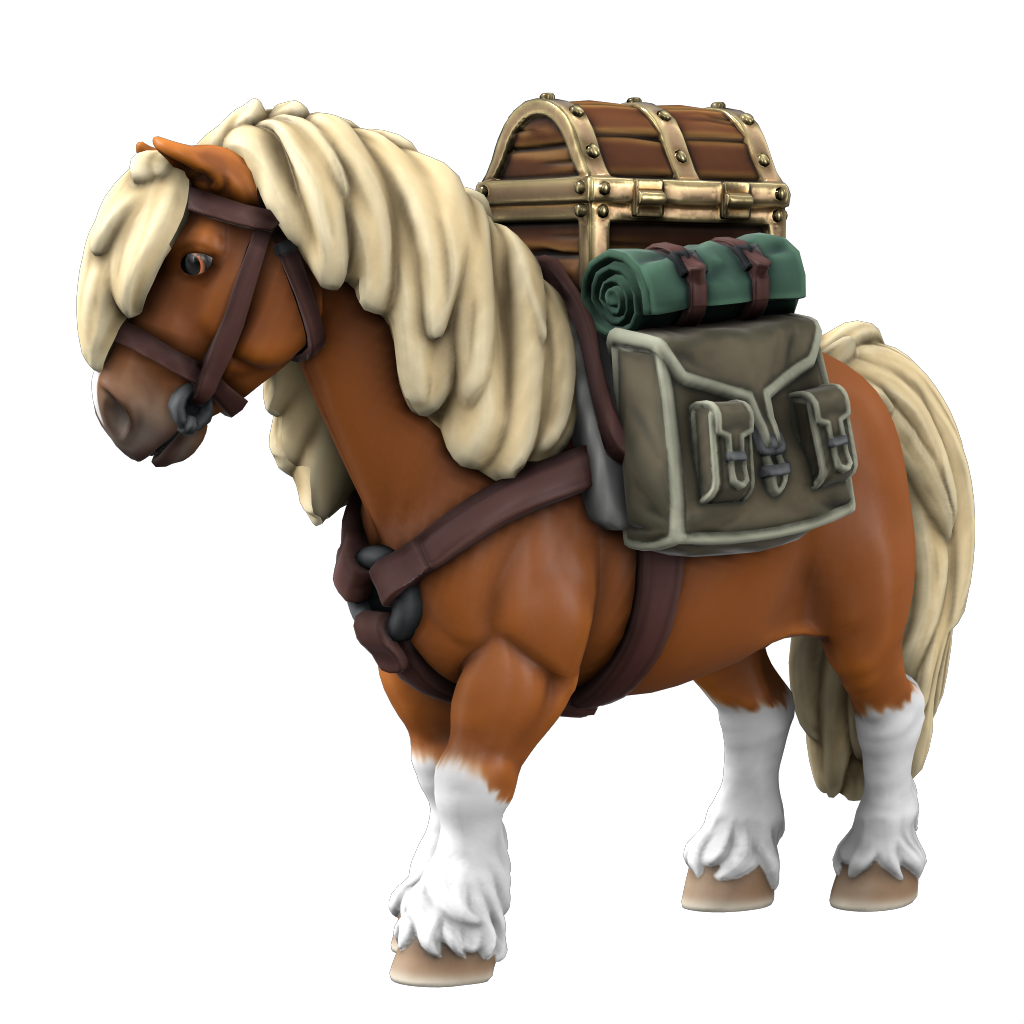
Rounding out the Classical Age, the Gaels have all your usual technologies at their Towers, Armory, Walls, etc., though I will go ahead and reveal their Market’s ever-faithful pack animal: the Pony Caravan (100 F, 50 G, 2 Pop)! Based upon the Kerry Bog Pony, these sturdy little trotters will dutifully ferry riches between yours and your allies’ Town Centers as fast as their little hooves can carry them – be sure to research Coinage to lighten the load!
HEROIC AGE
Let’s advance to the next age, shall we? The Gaels unlock stock-standard technologies at the places everyone else does, but they get a unique Temple tech called Éraic (230 G, 20 Fv). This is essentially the Irish version of weregild, or “blood money” – the gods have ordained that you will get a small amount of recompense for each unit you lose in battle. This is probably no more than a few Gold per unit, but it can add up over the course of a game. Losing a Titan would probably net you a significant kickback.
Jumping back over to the Dock, your free Myth Unit just spawned! In the Heroic Age, you get an Oilliphéist (190 Fd, 15 Fv, 3 Pop)! Meaning “great worm,” this sea serpent-esque creature possesses a monstrous appetite for livestock and humans, and legends abound of heroes and saints fighting them off. Given the context of this pantheon/expansion, there’s probably a certain cryptid that could provide good visual inspiration for this unit. The Oilliphéist is good at sinking enemy ships, and its magical hide renders it completely impervious to enemy God Powers. No Bolting this water-friend!
Also at the Dock in the Heroic Age, the technology Spawn of Caoránach (230 Fd, 180 G, 20 Fv) upgrades your Oilliphéists (or… Oilliphéisteanna?) to Ravenous Oilliphéists, with increased hitpoints and attack. Caoránach was an Oilliphéist and mother of demons who once attempted to eat all the cattle in Ulster before being slain by a hero named Conan (no relation, I can only assume.)
Importantly, in the Heroic Age, the Gaels unlock their fortress-type building, the Dún (plural Dúna). Taking visual inspiration from both ringforts and motte-and-bailey castles, this is where you can train both siege engines and the strongest human units available to Gaels. However, it should be noted that the Gaels are very lacking in the siege department and that their siege engines and upgrades for them don’t unlock until the Mythic Age, so you’ll probably be relying largely on bulky Myth Units and your siege ships.
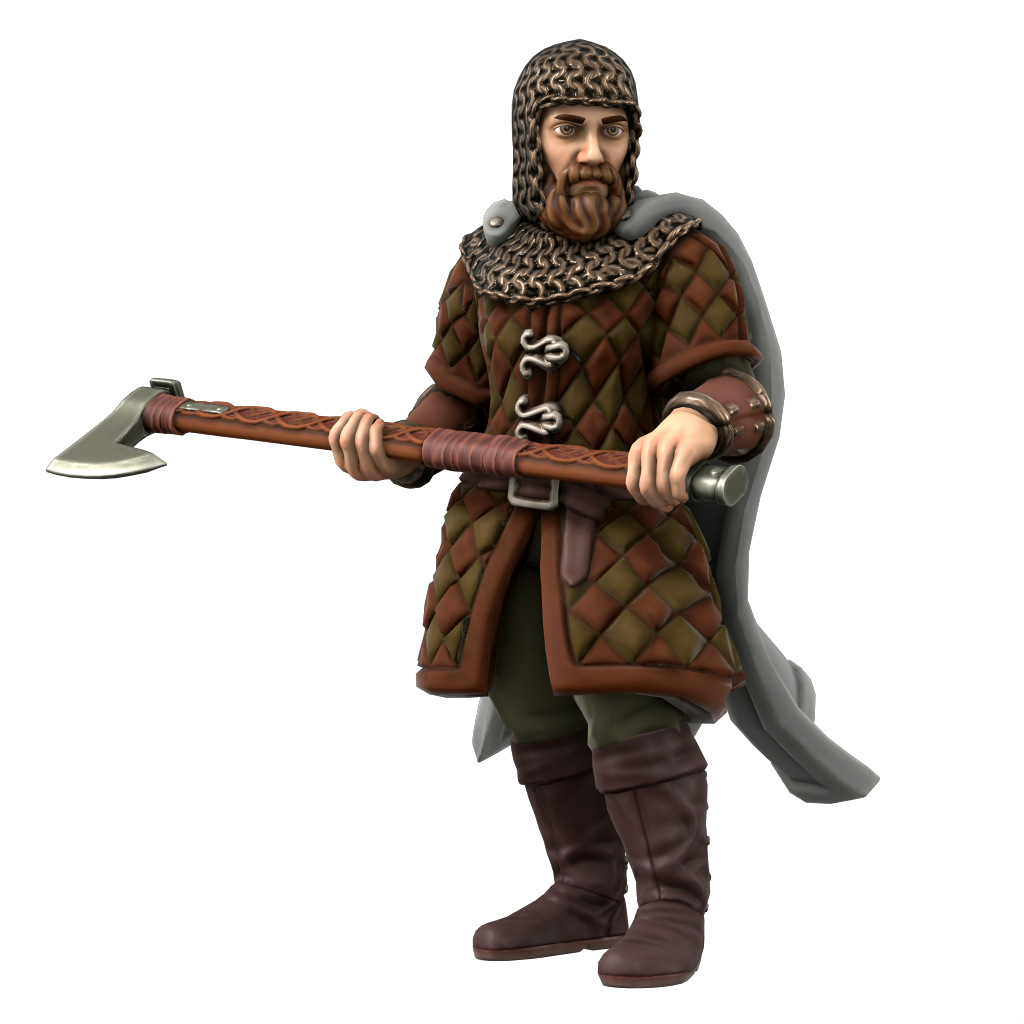
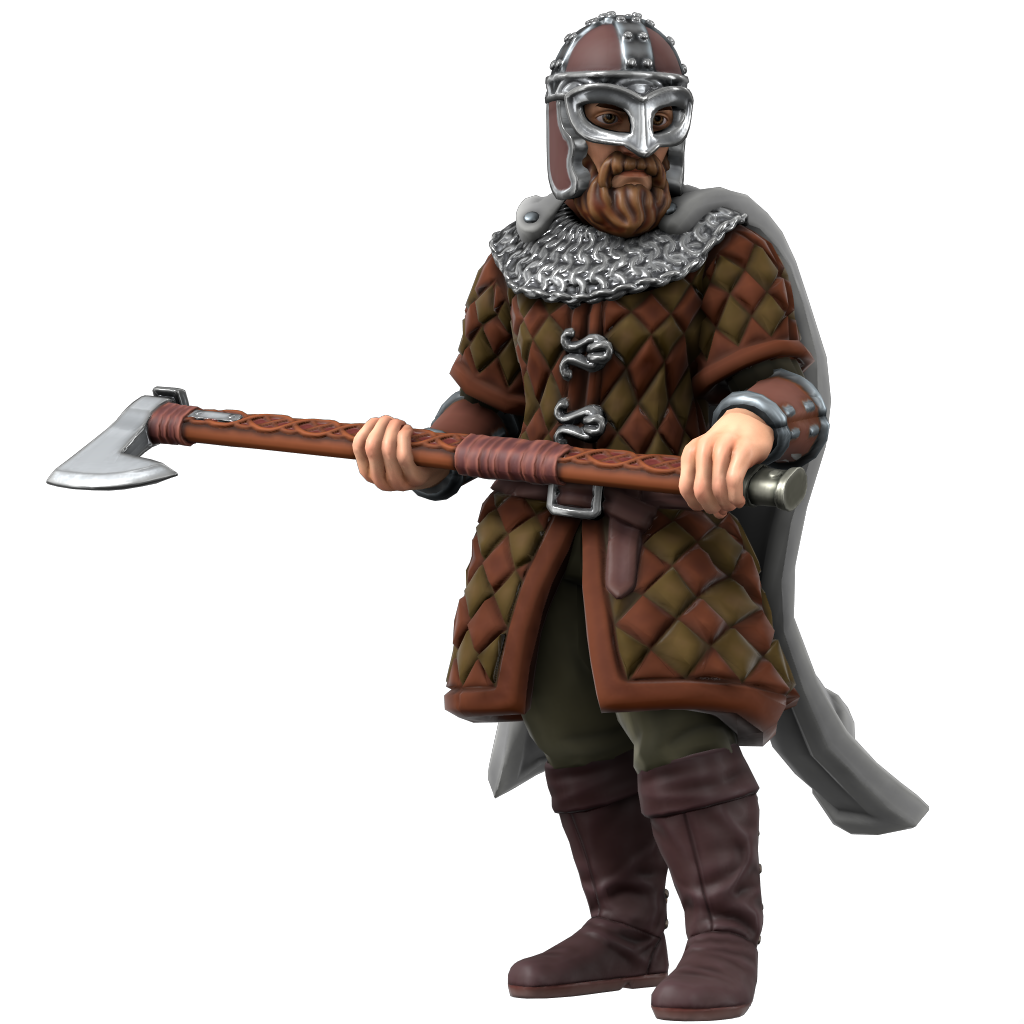
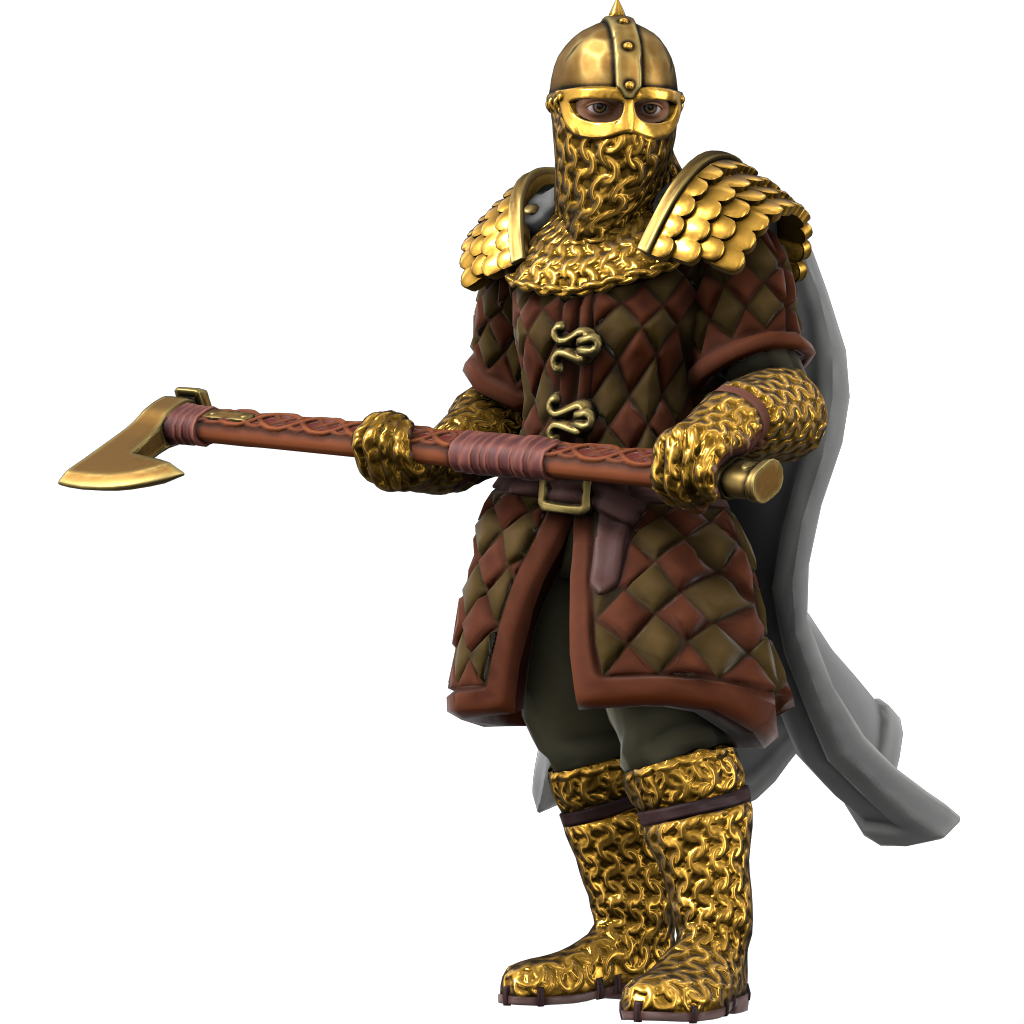
The first Dún unit to show off is the Gallowglass (100 Fd, 120 G, 3 Pop). This sturdy infantry unit hard-counters cavalry with its fearsome axe and is pretty good at tearing down buildings with it, too. Notably though, the Gallowglass is also one of those units I mentioned that can take a bit of the economic load off your Yeomen. The Gallowglass can also use that axe to gather Wood!
But that’s not all. You see, historically, Gallowglasses were elite foreign mercenaries drawn from among the Norse clans that settled in Ireland and Scotland. Because they still have a little of their homeland in them, the Gallowglass can construct buildings like Norse infantry! …Well, it can only build Walls, Towers, Dúna, and Town/Village Centers, but still.
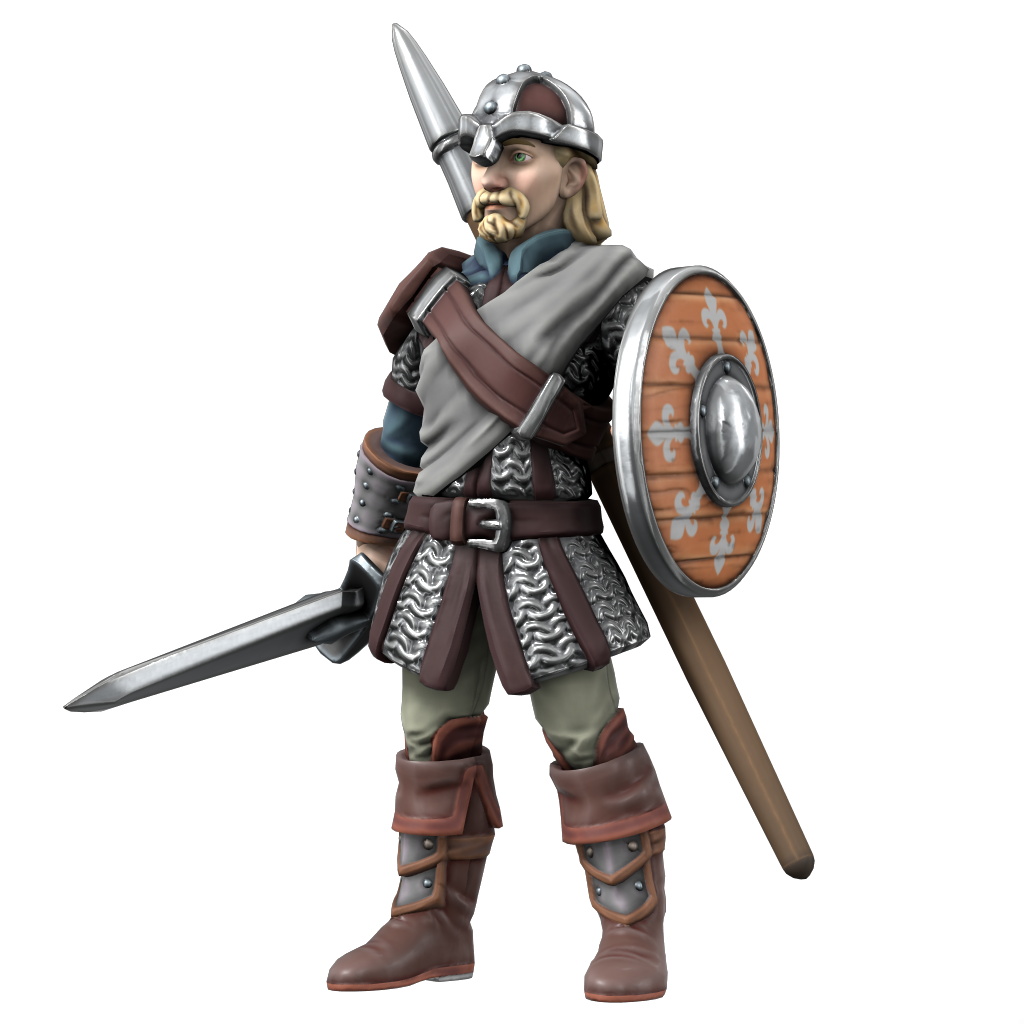
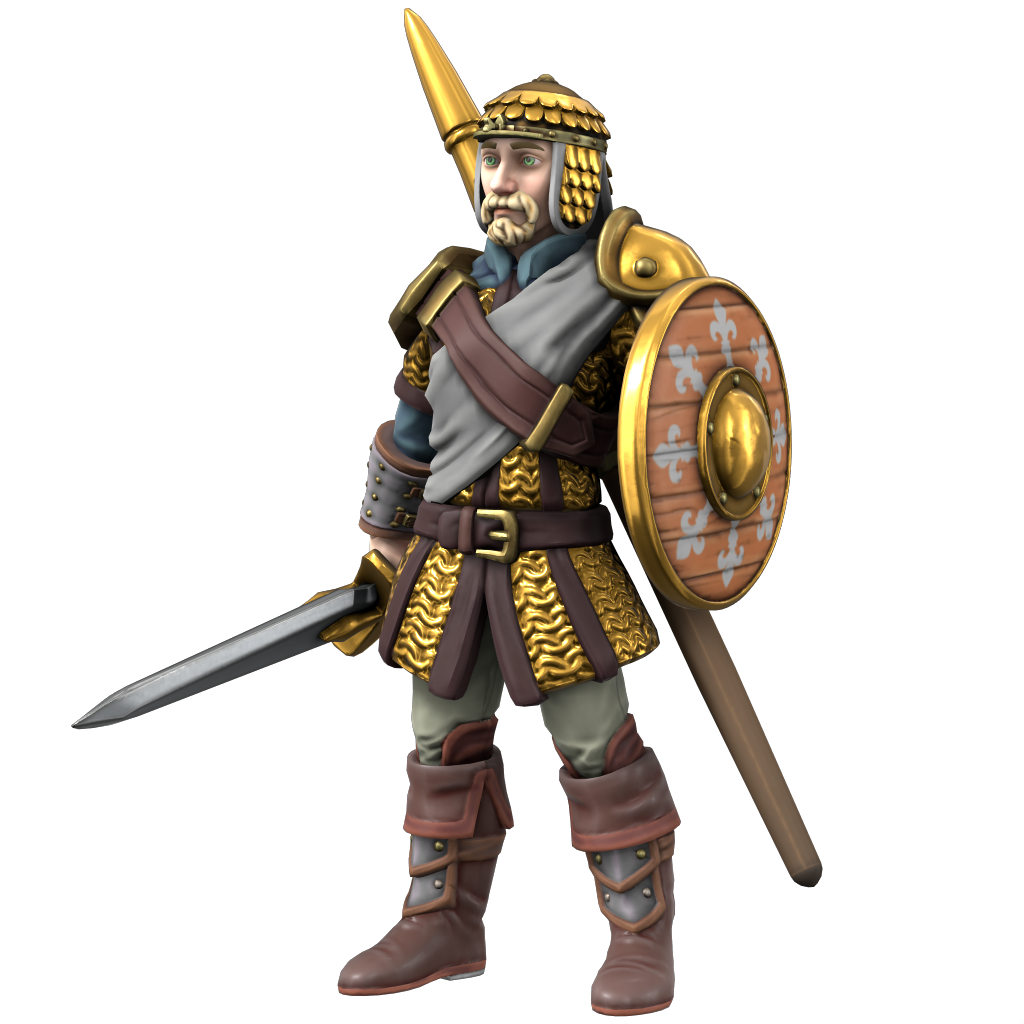
(The three tiers of Gallowglass: base, Heavy, and Champion. Because my brain is spicy, I always kind of disliked that fortress units always started at Medium, or else just skipped that upgrade, but I get that it’s slightly convenient at that point in the game. I initially considered bucking that trend for my project here, but I’ll save it for a different one maybe. Anyway, look at that bedazzled armor! I forgot to have the axe get similarly fantastical, but you get the idea by now.)
Next up is the Kern (90 W, 80 G, 3 Pop), which is a term for a light infantryman in medieval Ireland; they frequently accompanied Gallowglasses and served as their light infantry counterpart and support. Here, they’re an infantry unit that, with the press of a hotkey, can switch to a ranged javelin attack – they’ll also do this automatically if ordered to attack flying units. They counter both infantry and ranged human soldiers.
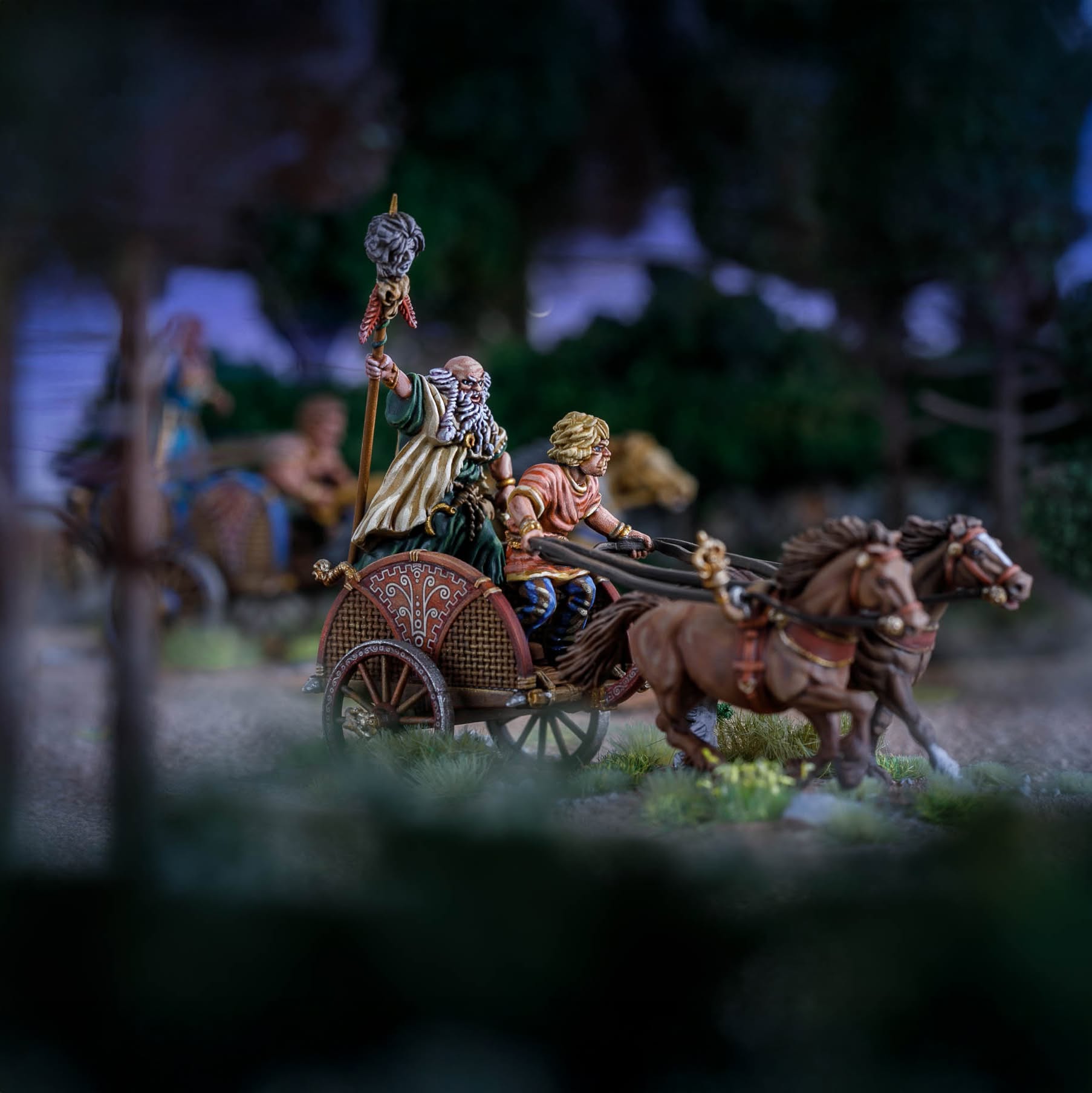
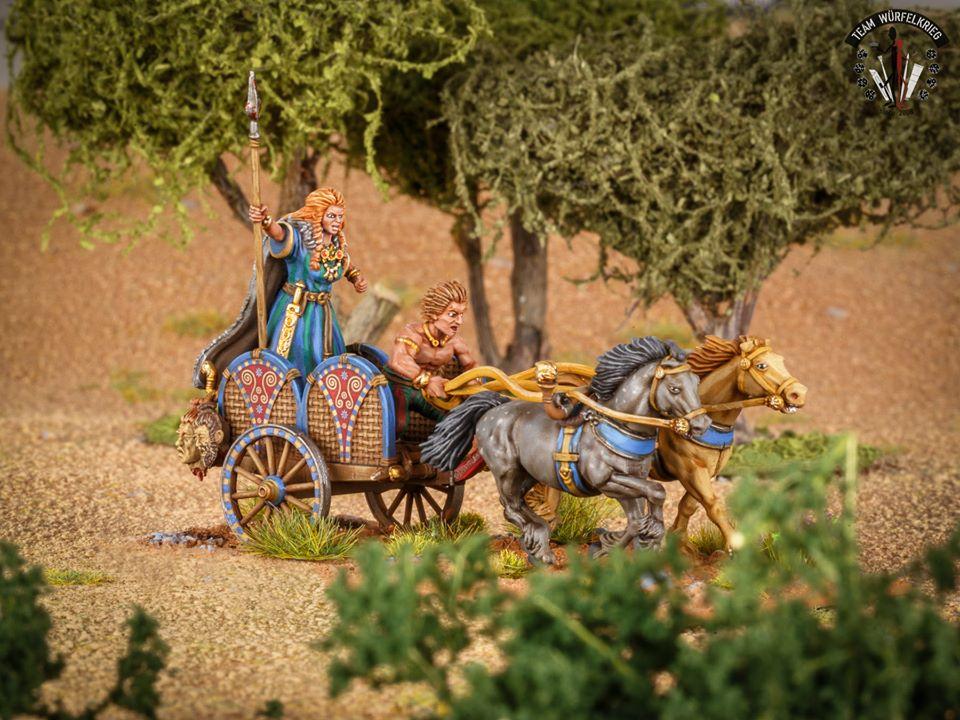
Lastly, your elite cavalry unit is the Carbad (120 Fd, 180 G, 4 Pop), from a word meaning “chariot.” It is, as you might have guessed, a chariot unit equipped with a long spear to run down foes! I’m not particularly pleased with how my HeroForge mockup turned out, so instead please refer to these images of a Celtic wargame chariot – sort of boxy and wicker-based (maybe with shield cladding) and with a driver and an actual combatant behind them. It might be a bit hard to keep all that legible and non-glitchy in game, but I’m sure it’s doable.
MYTHIC AGE
Not too much unlocks in the Mythic Age that isn’t tied to a specific god, or that isn’t shared between civs, like economic and troop upgrades, so let’s power through it.
The Gaels get two siege engines that unlock in the Mythic Age at the Dún – the first is the Springald (150 W, 150 G, 2 Pop). A torsion-based bolt-thrower, sort of like an alternate form of ballista, they’re thought to be among the only torsion siege weapons to survive into the medieval period. Here, they function well against units, ships, and only very lightweight buildings, and would probably look visually similar to how they appear in Age of Empires IV.
Secondly, we have the Reithe Coctho (300 W, 250 G, 4 Pop), which translates to “ram of war/battle.” Fittingly, it’s a large, covered battering ram on wheels, akin to those in Age of Empires II, except lacking the ability to garrison infantry for faster movement and attack. Even though it is quite slow and ponderous, it makes up for it by being heavily armored and having an attack that can make short work of even the beefiest buildings, especially in numbers. Just make sure it’s got an escort, because cavalry or Myth Units could easily surround and overwhelm it.
Also at the Dún, we have the technology Fianna (150 Fd, 200 G, 30 Fv), which increases the movement speed of your elite human soldiers (Gallowglass, Kern, Carbad) and gives them an attack boost when fighting near each other. Throw a Bard into the mix and you’ll really be hitting hard – one might even say making new legends.
Fianna (singular fian) were roaming bands of warrior-hunters in Iron Age and early medieval Ireland composed of freeborn young men, often the children of nobles. Similar traditions existed since the Stone Age in various other Indo-European cultures. They would live in the wild, hunting game, raiding other clans’ cattle, training for war and serving as mercenaries, all as sort of a rite of passage. Given your Dún units are meant to be such nobility, it seems only a fitting upgrade for them.
Lastly, the free Myth Unit granted at your Dock is the Coinchenn (220 Fd, 20 Fv, 4 Pop), a large squid-like beast that bristles with spines. Good against both ships and buildings, it has a melee attack with its barbed tentacles and a ranged attack where it launches its deadly spines, allowing it to attack flying units or those on the shore.
…Oh, but we’re not done yet, are we? All Gaelic players, of course, may construct a Titan Gate (likely to incorporate stone circles, maybe a pool into which offerings have been placed), and the creature that comes out…? Who else could it be but Balor of the Evil Eye?
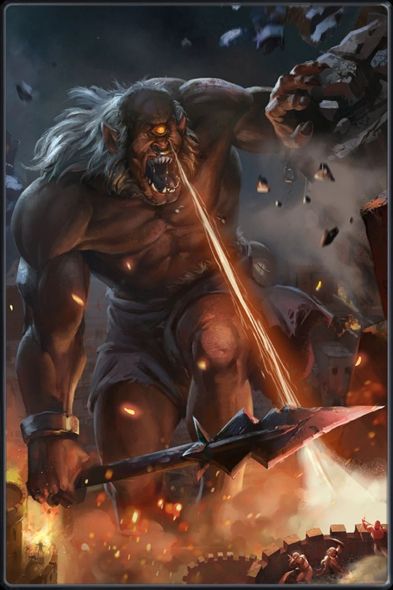
I haven’t decided whether I would portray Balor as a cyclopean humanoid, per the above, or as some kind of cyclops-fish-Fomorian to stick with my theming, but either way, I couldn’t quite get a design I liked by my own hands. In any case, Balor was the chief/king of the Fomorians, described as a giant with a single eye that, when opened, “wreaked destruction” through “some power of poison” – most artists choose to interpret this as an awesome fiery eye laser, and so shall I. However, Balor couldn’t open his own eye; his eyelid was so heavy, it was said to take the strength of four warriors to lift it, and they did so by pulling a chain attached to it. During the Second Battle of Mag Tuired, Balor slew the king of the Tuatha Dé Danann, Nuada Silver-arm, but was in turn slain by his own grandson, the god Lugh, who shot him in his eye with a sling-stone before he could use it; the eyeball it said to have shot out the back of his head and landed on the Fomorian army!
I don’t ultimately think Balor will function too differently from any other Titan, other than having a short-range EYE BEAM special attack that just annihilates whatever’s in the way. The heat from his eye will actually cause a visible glow from behind his eyelid, which, when it’s time to use it, will be lifted up by two very large Fomorians (still small to Balor!) riding on his head – potentially, they’d sit up in his crown like it’s a parapet and lift his eyelid with a chain, per the source material. It would certainly look interesting in the game! At other times, they’d jeer at enemies from on high and, at least in concept, act as Balor’s seeing-eye mooks while you command him.
I don’t have much to say about the Gaelic architecture set, other than it should be based on historical Irish/Celtic architecture – probably wood or wattle-and-daub with thatched roofs. The major god statues I imagine as being carved from stone, but rather roughly, much in the way the wooden Norse statues are, and perhaps have a bit of moss starting to grow on them, as if they’d previously been menhir (standing stones.) Maybe they actually did have to repurpose a once-smooth menhir into a now-freshly carved statue when you told them to build that Temple.
Please join me in Part 2 to cover the Gaelic pantheon proper! – TyrannusRex