Heroic Age Minor Gods
Goibniu
God of Smithing and Hospitality
Focus: Armory Upgrades
“You have advanced to the Heroic Age through the labors of Goibniu!”
(Available to The Dagda & The Morrígan)
Goibniu was the metalsmith of the Tuatha Dé Danann and closely associated with two other craftsman gods, Creidhne the gold/silversmith and Luchtaine the carpenter, together forming the Trí Dée Dána (“three gods of art”) and forging the weapons used to fight the Fomorians. When the king of the Tuatha Dé, Nuada, lost his right arm in battle against the Fir Bolg (the fourth wave of Irish settlers, more on them later), Goibniu forged him a new one made entirely of silver, thus earning him the epithet Airgetlám, “silver-arm.” Goibniu also furnishes the feasts of the Tuatha Dé along with his magical cow; some also theorize that Goibniu is the same character as Culann the smith, from whom the hero Cú Chulainn earned his moniker. He is brother of Dian Cécht and Nuada, at least per some traditions.
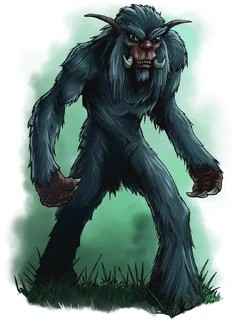
Myth Unit: Buggane (250 Fd, 15 Fv, 3 Pop) – Hulking, hairy myth unit that sends foes flying with a swipe of its claws. Good against human units, decent against buildings.
(The Buggane is an ogre-like creature native to the Isle of Man; while able to change shape, it was described as being covered in coarse, black hair, having glowing eyes and sharp tusks, and being strong enough to tear the roofs off buildings. Below is a depiction I rather like for this hypothetical expansion.)
God Power: Fled Goibhnenn – Target one of your Town Centers to host Goibniu’s otherworldly feast, healing all units within its radius, making nearby villagers work faster, and granting temporary invulnerability to your nearby Heroes. (200 Favor to recast)
(Goibniu’s Feast was said to be healthy and restorative to the Tuatha Dé Danann. Goibniu’s cow, Glas Gaibhnenn, was very fertile and gave profuse quantities of milk; she was stolen once by Balor but rescued by a hero who may have been Cian, father of Lugh.)
Technologies:
Uncanny Hide (300 Fd, 150 G, 25 Fv) – Goibniu improves the pierce and hack armor of all your myth units. (Temple)
Ceárta Dé Danann (350 W, 350 G, 15 Fv) – Goibniu employs his forge to greatly reduce the research time of Armory technologies. (Armory)
(Ceárta Dé Danann roughly translates to “forge of the gods” and refers both to Goibniu’s smithy and the craftsmanship of the gods in general.)
Iron-Rimmed Wheels (250 W, 100 G, 5 Fv) – Goibniu improves the hitpoints and speed of your Carbad. (Armory, Dún)
Gae Assail (200 W, 250 G, 15 Fv) – Goibniu improves the accuracy and damage of your Kerns’ ranged attack, as well as granting them divine damage. (Armory, Dún)
(Lugh’s spear, Gae Assail [“spear of Assal”], had five heads and was said to thirst for blood. Its haft was made from yew, and Lugh could throw it without missing and recall it to his hand by invoking the name of the wood. It was used to great effect in the war against the Fomorians.)
(In retrospect, I accidentally gave this tech to a god that Lugh cannot access.)
Dian Cécht
God of Healing
Focus: Druids and Human Units
“You have advanced to the Heroic Age through the acumen of Dian Cécht!”
(Available to The Dagda & Lugh)
Dian Cécht was (potentially) the son of The Dagda, the grandfather of Lugh, and the wizened and skilled healer of the gods. Most of his children followed him into the profession, though he often found himself intensely jealous of his children’s achievements – for instance, after giving Nuada his silver arm (crafted variously by Goibniu, Creidhne, or Dian Cécht depending on the story), Dian Cécht’s son Miach later was able to give Nuada a new flesh-and-blood arm, and Dian Cécht killed his son out of professional envy. When his daughter Airmed wept over her brother’s grave, new healing herbs grew; she collected and catalogued them, but her jealous father scattered and destroyed her work, and thus, no human knows the healing properties of every plant.
Myth Unit: Cat-sìth (270 Fd, 25 Fv, 4 Pop) – Large, mystic feline that leaps into battle. Can see units in stealth mode. Good against human units, especially cavalry.
(The cat-sìth [Scottish Gaelic, plural cait-shìth] or cat sí/cat-sidhe in Irish, is a fae creature from Celtic mythology resembling a large black cat, traditionally able to walk on its hind legs when no one is watching, though I didn’t design mine that way… or maybe it just knows that you’re watching. Mine also looks a good bit more like a big cat than a house cat. It was said to be able to steal the souls of the deceased that hadn’t yet crossed over, thus resulting in the tradition of the wake.)

God Power: Tipra Sláíne – Target an area to summon Dian Cécht’s well of healing, which will restore the hitpoints of any nearby allied units for a limited amount of time; it sticks around longer in later Ages. (120 Favor to recast)
(Dian Cécht and his children maintained a curative well near the battlefield of the gods and the Fomorians so that the injured could be quickly treated. The well could allegedly even heal those who had been beheaded, which Dian Cécht himself could not do. I didn’t just want this to be identical to Forseti’s well, however, so this one is more temporary.)
Technologies:
Irusan’s Fierceness (150 Fd, 300 G, 25 Fv) – Dian Cécht has your Cait-shìth trained by Irusan, King of the Cats, increasing their speed, leaping distance, and attack. (Temple)
(Irusan, son of Arusan, serves as the King of the Cats in an Irish folktale, in which he hunts down a bard who had cursed cats for not keeping the mice in check.)
Feline Vision (150 Fd, 150 G, 15 Fv) – Dian Cécht and his son Miach replace the eyes of your Yeomen and human soldiers with those of cats, improving their line of sight. (Town/Village Center)
(Dian Cécht and/or Miach is said to have healed the eye/s of The Dagda’s son Midhir by replacing it/them with those of a cat.)
Herbal Medicine (200 G, 10 Fv) – Dian Cécht teaches your Druids the art of herbal medicine, greatly improving their healing rate. (Temple, Druid Grove)
(Dian Cécht ground medicinal herbs near his well on Lusmag, the “herb-plain”, for use in his treatments.)
Ogma
God of Language and Learning
Focus: Temples and Economy
“You have advanced to the Heroic Age through the eloquence of Ogma!”
(Available to Lugh & The Morrígan)
Ogma or Oghma is a scholarly god, said to have invented Ogham script (pronunciation varies), the earliest known method of writing the Irish language; while it’s natively written vertically, carved into stone or wood, Ogma’s name is written as ᚑᚌᚋᚐ in it. Despite being brainy, he’s far from lacking in brawn: one of his epithets was Trenfher, “strongman” or “champion”, he fought well against the Fomorians, served as Nuada’s champion, and was only shown up in tests of strength by his half-brother Lugh. Per some traditions, he is also The Dagda’s full-brother, which would potentially also make him Lugh’s great-great-uncle… I never said divine genealogy was simple!
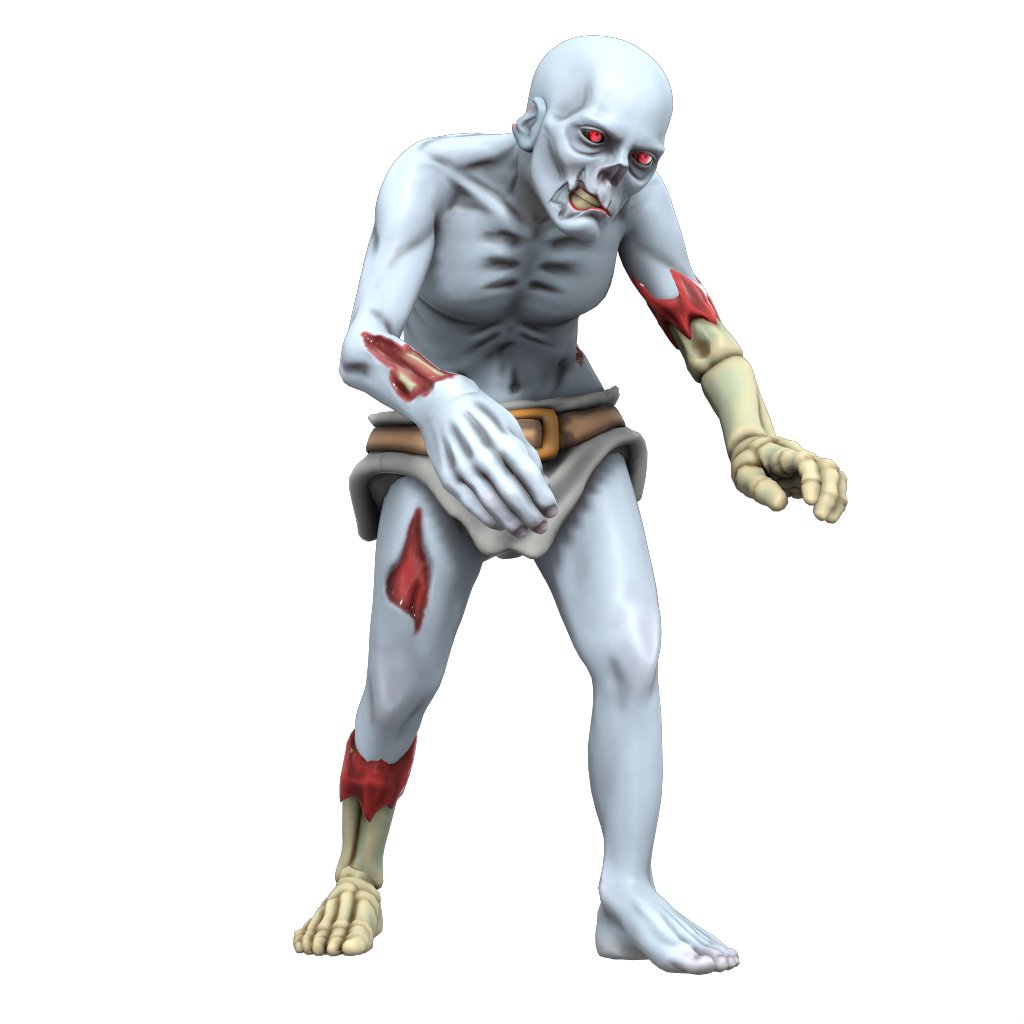
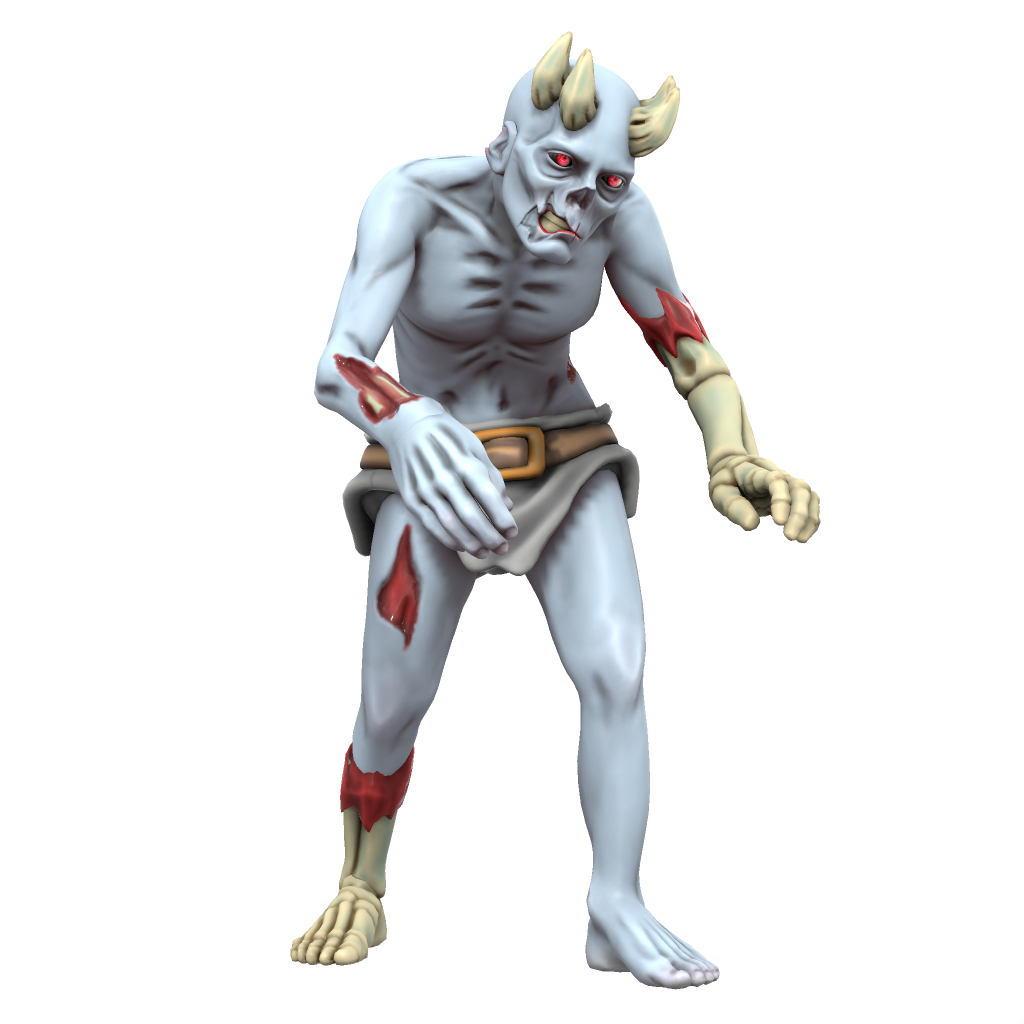
Myth Unit: Fear Gorta (250 Fd, 25 Fv, 3 Pop) – Undead myth unit that can convert slain human units to its side. Good against human units, especially villagers.
(The “man of hunger” is a starving phantom that resembles an emaciated human. During famines, it would wander the road and ask for alms, and those who gave to it would be blessed with good luck. They were sometimes said to be created by patches of “hungry grass” or “fairy grass” which grew in the proximity of an unshriven corpse; walking over the grass doomed someone to perpetual, insatiable hunger. I chose to lean in an undead/zombie direction with this creature [perhaps it’s started eating its own flesh?] and subtly referencing the true form of the wendigo… though I admit, it would also look pretty cool with horns! Not sure which one I like more for this one.)
Myth Unit: Nuckelavee (300 Fd, 30 Fv, 5 Pop) – Amphibious myth unit whose special attack can instantly destroy Farms and kill villagers and Fishing Ships. Benefits from cavalry upgrades. Good against human units, especially villagers. (Temple, Dock)
(An equine demon from Orcadian mythology, often depicted as a skinless/fleshless horse with a single eye, fins on its legs, and a similarly flensed human torso [from the waist up] with longer than normal arms emerging from its back. Be careful when googling this creature! Its breath was capable of wilting crops and sickening livestock, thus allowing it to spread famine and pestilence on land despite being a sea-dweller.)
God Power: Inspiration – Target a building to temporarily boost the rate at which all your buildings of that type train units, research improvements, and are repaired. The specific building targeted does all these things the fastest. (75 Favor to recast)
Technologies:
Sluagh na Marbh (350 Fd, 40 Fv) – Ogma’s research upgrades your Fear Gorta, improving their hitpoints, armor, and the rate at which they can use their special attack. (Temple)
(Meaning “host of the dead,” this refers to the swathes of unforgiven, wandering souls in Irish and Scottish folklore who would fly through the air at times such as Hallowe’en, abducting the unwary.)
Ogham Script (250 W, 30 Fv) – Ogma shares the secrets of writing with your people, decreasing the research time of all Temple technologies and the cost of recasting your God Powers. (Temple)
Salmon of Knowledge (200 Fd, 15 Fv) – Ogma sends the Salmon of Knowledge into your fishing nets, increasing the amount of Food your Fishing Ships and Selkies can carry and lowering the research cost of Dock technologies. (Dock)
(An Bradán Feasa in Irish; to again cut a long story short, this fish ate nine hazelnuts that fell into the Well of Wisdom, thus granting it all the knowledge in the world. The first person to eat the fish’s flesh would also gain this knowledge. Fionn mac Cumhaill [Finn MacCool] eventually got to cook and eat this fish and could call upon all the world’s knowledge by biting his thumb, which was the first part he’d burned.)
Mythic Age Minor Gods
Nuada
God and King of the Tuatha Dé Danann
Focus: Heroes and Unit Upgrades
“You have advanced to the Mythic Age through the eminence of Nuada!”
(Available to The Dagda & Lugh)
Nuada Airgetlám (“of the silver arm”) was the first King of the Tuatha Dé Danann. A proud warrior, his most famous tale is the one in which he earned his nickname: Ireland had initially been inhabited by, among others, the Fir Bolg, a race of humans. The Tuatha Dé sought half the island for themselves, but the Fir Bolg refused and a war broke out. During the First Battle of Mag Tuired, Nuada lost his right arm at the shoulder in battle with the champion Sreng. The Fir Bolg were defeated, but because the Tuatha Dé required that their king be physically whole, Nuada had to abdicate, and the throne was filled by Bres, a cruel half-Fomorian ruler who enslaved his people and made them pay tribute to the Fomorians. Nuada received a working arm of silver (see above) and was restored to the throne after a rebellion, but Bres went to the Fomorian chieftain Balor and rallied an army. This time, at the Second Battle of Mag Tuired, the Tuatha Dé were led into battle by Lugh, who was also half-Fomorian, and, in fact, Balor’s grandson (as previously mentioned, not all of the Fomorians were monstrous!) Nuada was killed in battle by Balor’s evil eye, but quickly avenged by Lugh, who, having proved himself capable while staying at Nuada’s court, ascended to the throne of the Tuatha Dé Danann.
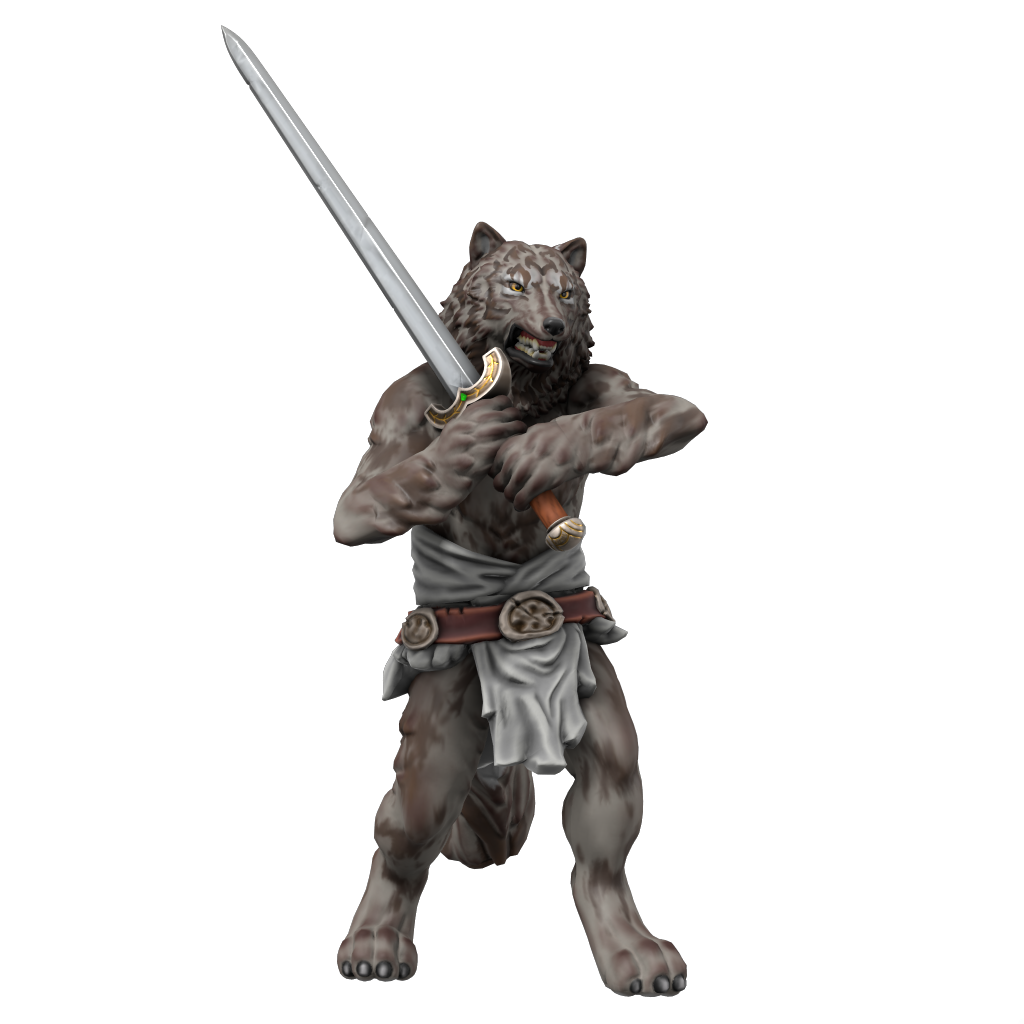
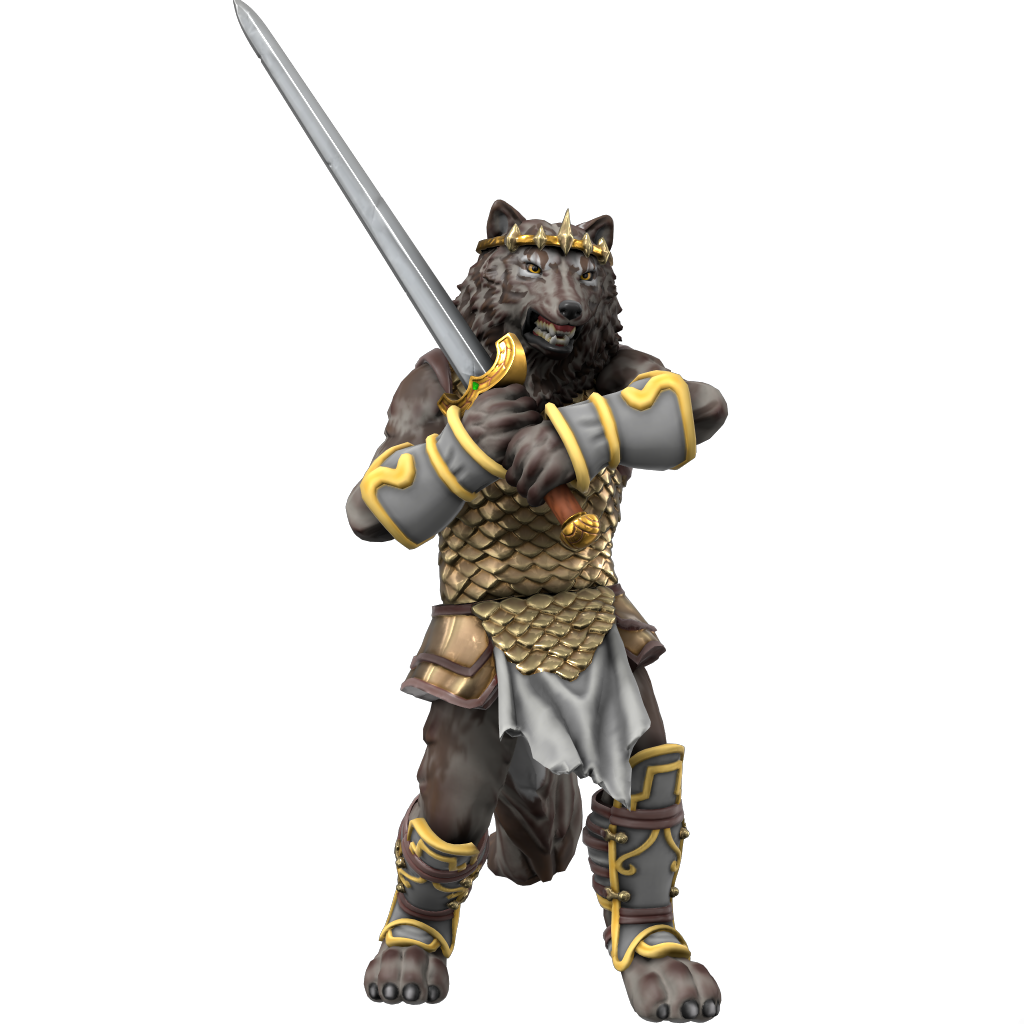
Myth Unit: Faoladh (300 Fd, 120 G, 50 Fv, 4 Pop) – Half-man, half-wolf myth unit that returns half of its Favor cost on death. Can howl to demoralize enemies. Good against human units and myth units.
(Faoladh is an Irish term for “werewolf.” The Werewolves of Ossory were said to be shapeshifting warriors of noble blood that protected the medieval Kingdom of Ossory. I had to redesign my original draft of this unit for being far too similar, at least visually, to the Alpha Lykaon. This time, I decided to play more into the fact that they’re warriors, rather than the fact that they’re wolves.)
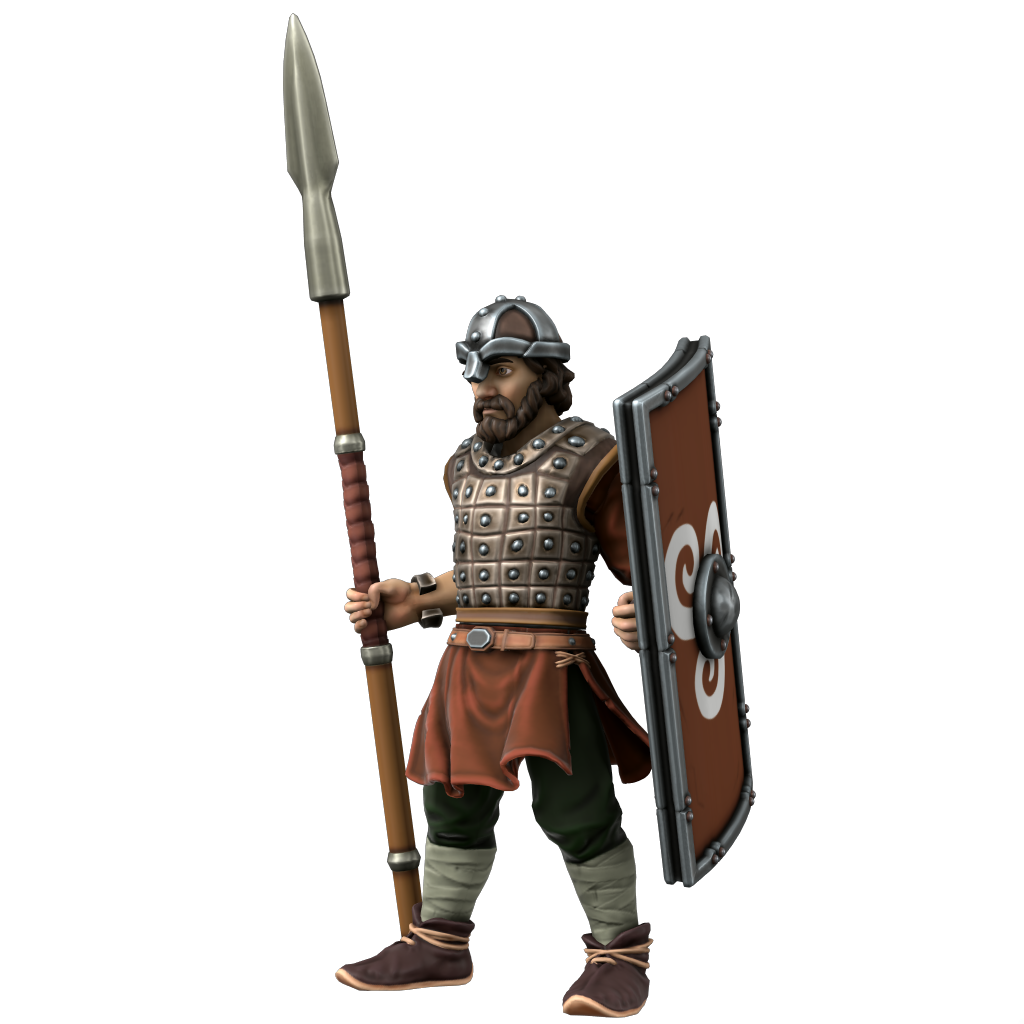
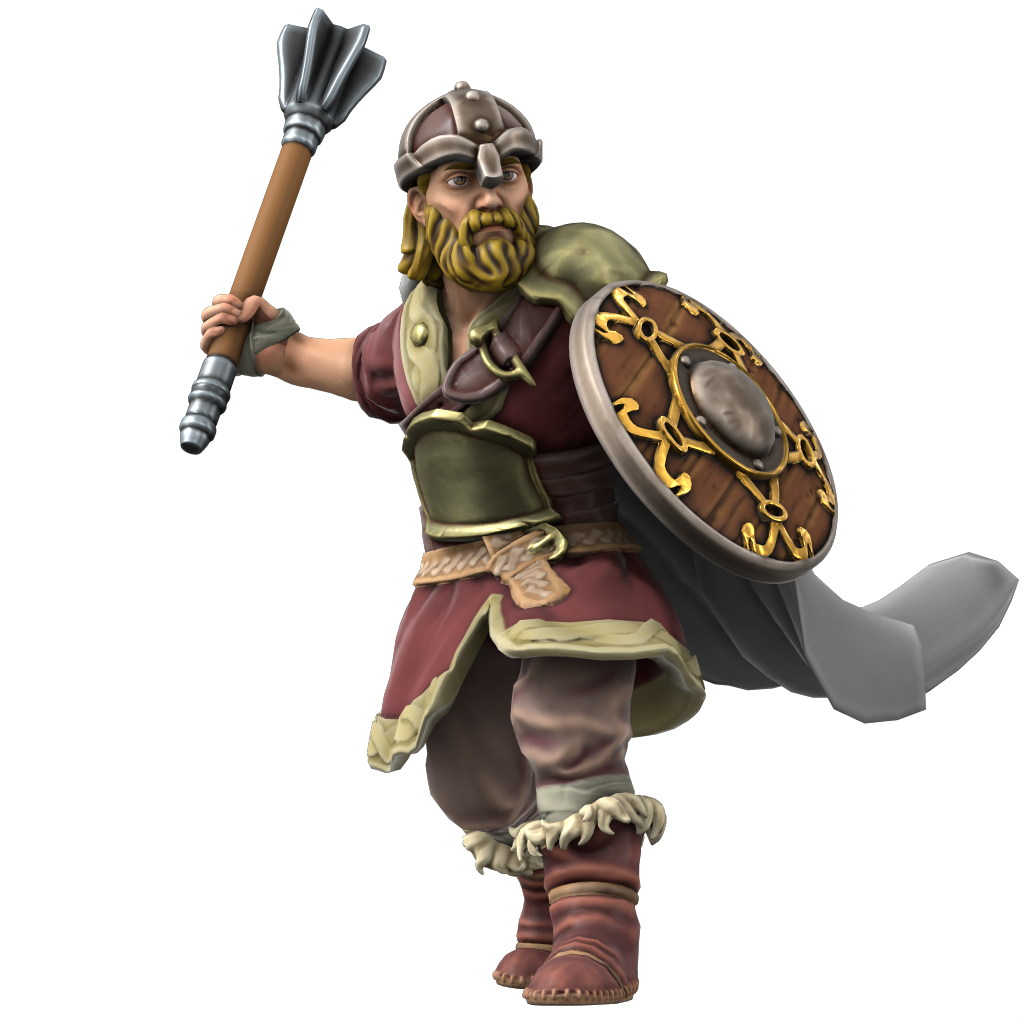
God Power: Cath Maighe Tuireadh – Target an area to summon a small number of Fir Bolg Warriors, led by their champion, Sreng. These exceptional fighters are good against anything they can reach, but especially enemy Heroes; they can only be resummoned once they all have died. (300 Favor to recast)
(Literally “Battle of Mag Tuired.” Each Fir Bolg Warrior, of which there would probably be no more than four or five, is considered a regular human soldier while possessing the stats of a minor Hero, including a resistance to Myth Units; they do not, however, deal divine damage. Sreng is a full Hero, divine damage and all, and quite sturdy because of it; he will probably consistently be the last one standing. None of them had ranged attacks in my mind, but I might have Sreng switch to a javelin to attack flying units, just because so many Heroes in Retold have such an ability. I also imagine the Fir Bolg Warriors to have much squarer shields, rather than tower shields.)
Technologies:
Protectors of the Throne (300 G, 25 Fv) – Nuada, through fierce training, upgrades your Faoladh to Ríoga Faoladh, improving their hitpoints, armor, and attack, and allowing them to use their special attack more often. (Temple)
(Ríoga means “royal”; the Werewolves of Ossory were said to be of the line of Ossorian kings.)
Creidhne’s Forge (450 G, 25 Fv) – Nuada enlists the goldsmith Creidhne to remove the Gold cost from Armory and siege engine upgrades. (Armory)
(As mentioned, Creidhne worked gold and silver for the Tuatha Dé Danann.)
Furor Celtica (280 Fd, 20 Fv) – Nuada inspires a fierce battle-frenzy in your human soldiers and Heroes, greatly increasing their hitpoints, speed, and attack. (Muster Grounds, Dún)
(Yes, this is a reference.) 
Men of Lochlann (250 Fd, 50 G, 20 Fv) – Nuada inspires legends of your fierce Gallowglasses, improving the speed of their attack and the speed at which they gather Wood and build and repair structures. (Dún)
(“Lochlann” is a generic Gaelic term to refer to Scandinavia; the Gallowglasses were mercenaries from Norse/Hibero-Norse communities. The surname MacLoughlin [in its various spellings] means “son of the Viking,” the Irish word for which is Lochlannach or Uigingeach.)
Manannán
God of the Sea and the Dead
Focus: Myth Units and Navy
“You have advanced to the Mythic Age through the audacity of Manannán!”
(Available to Lugh & The Morrígan)
Manannán mac Lir, “Son of the Sea,” rules over the Otherworld regardless of its many names, as well as the great seas surrounding Ireland. After the final wave of human settlers arrived at Ireland and defeated the Tuatha Dé, he used the féth fíada, the Mist of Invisibility, to conceal the Tuatha Dé and the sídhe in which they live from mortal eyes, as well as allotting which gods were to live in which sídhe, though scholars believe that these late human invaders are likely an invention of medieval Christian writers. He had a self-navigating boat, a horse that could run over land and water, and a sword that sapped away the opponent’s armor. It is generally accepted that the Isle of Man is named after Manannán.
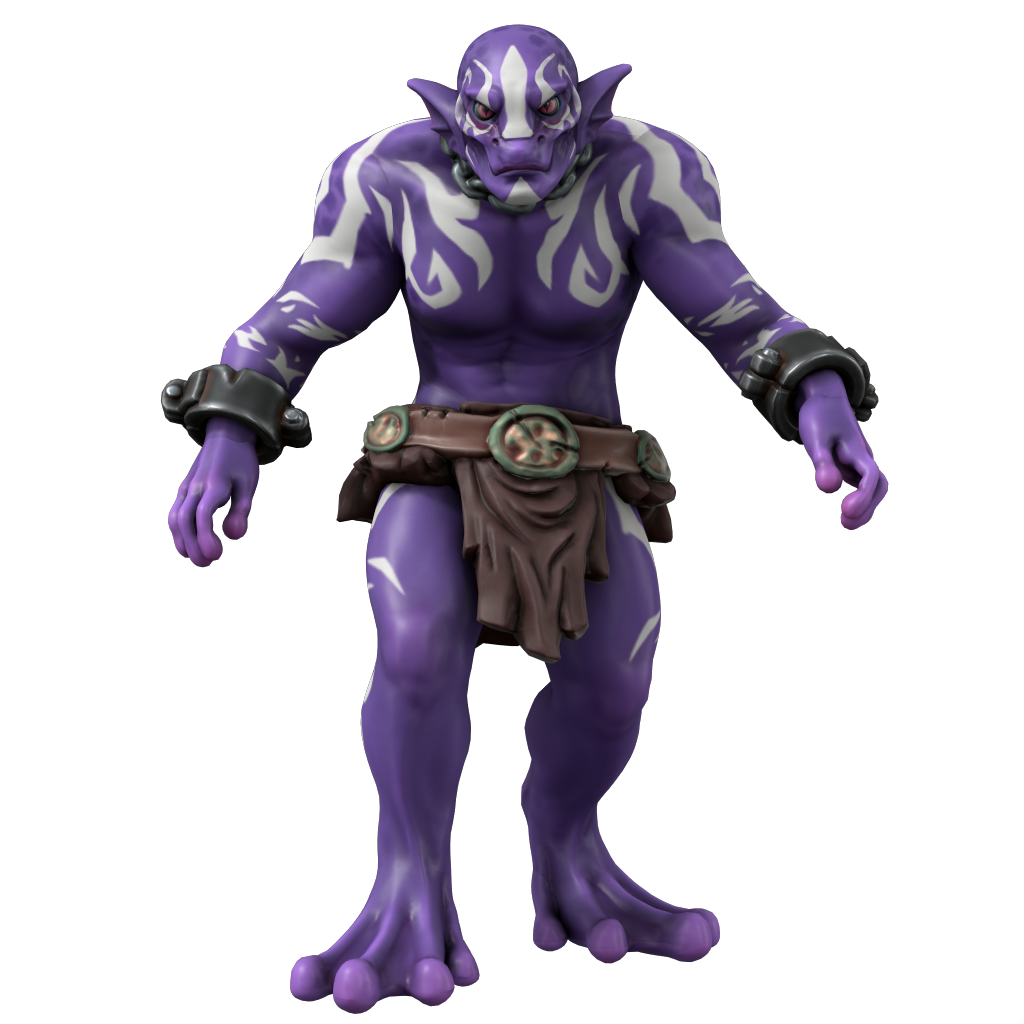
Myth Unit: Fomorian Brute (380 Fd, 35 Fv, 5 Pop) – Massive, slow-moving Fomorian strong against buildings and anything in its way. Amphibious, but cannot attack while swimming.
(These fellows are almost too strong for their own good – you can even see where their fellows had them chained up. The fact that they can’t attack while swimming is only fair: not only would they wreck any boat, but they also have to focus on keeping themselves from sinking! Otherwise, they’re perfect for tearing through walls, punching monsters, or lifting up their boss’s eyelid so he can fire his face laser!)
God Power: Lakeburst – Target an area of land on the map to temporarily create an implosive aquatic sinkhole which can launch and damage enemies, sink buildings, and block passage. (200 Favor to recast)
(A tomaidm/tomhaidhm is a mythological phenomenon where a previously non-existent lake comes into being, occasionally giving rise to flood myths. In theory, this might be a bit difficult to program; I don’t know anything on the technical side of it, but it would need to be a temporary body of water that actually deforms the land and that can damage/destroy units and buildings, but can’t be built on or crossed, presumably even by amphibious units… otherwise, you’d need to figure out what would happen to units within the lake when it disappears. A real pickle, that one.)
Technologies:
Balor’s Vengeance (350 Fd, 200 G, 30 Fv) – Manannán upgrades all your Fomorian units to Deep Fomorians, improving their hitpoints and attack. (Temple)
(This would likely be signified by a change in their skin color; for the little blue ones, at least, I’m imagining they turn from blue to sea green. [Un]fortunately, this tech does not affect the Titan Balor.)
Fir Bolg Shipwrights (250 W, 150 G, 25 Fv) – Manannán employs Fir Bolg craftsmen at your Docks, improving the hitpoints, armor, and training times of all ships. (Dock)
(The Fir Bolg were an earlier wave of Irish settlers, considered mortal humans but present before the modern Gaelic/Irish people. They were said to have arrived as part of a great fleet after being slaves in Greece for 230 years.)
Féth Fíada (500 G, 65 Fv) – Manannán grants your warships and aquatic myth units the Mist of Invisibility, disguising their presence from the enemy until they enter battle. (Dock)
(I chose to only have this affect warships, not Transport Ships, to hopefully keep things at least a LITTLE bit fair to the poor person you get to sneak up and invade. I fully acknowledge that this tech may just need a complete rework, since “make a significant portion of your units completely invisible to all enemies on the map until they attack” is, even on paper, potentially quite overpowered.)
Clíodhna
Goddess of Love and Beauty
Focus: Human and Myth Units
“You have advanced to the Mythic Age through the beauty of Clíodhna!”
(Available to The Dagda & The Morrígan)
Clíodhna, despite her fair beauty, is a queen of the banshees. Banshees, of course, are just another type of fairy (and as we’ve seen, many things, including gods, get lumped under “fairy” in this mythology), and Clíodhna is also associated with County Cork and the medieval Kingdom of Desmond. She was said to have three brightly colored birds whose song could heal sickness and who ate apples from trees in the Otherworld (one of the Otherworld’s names is Emain Ablach, the Isle of Apple Trees.) Her relationship to the rest of the Tuatha Dé Danann is unknown, and her role, relationships, and aspects differ depending on the story, but she is usually depicted as fair-haired and exceedingly beautiful. One story credits her with the creation/discovery of the Blarney Stone itself.
Myth Unit: Banshee (280 G, 25 Fv, 4 Pop) – Ghostly maiden whose shriek deals heavy damage to nearby enemies. Good against human units.
(Banshee comes from Old Irish ben síde [Modern Irish bean sí], meaning “fairy woman” or “woman of the fairy mound.” She is a ghostly maiden whose shrieks of grief herald the death of a family member. She has long, flowing hair, and her eyes are continually red from weeping. Some say they originate from maidens who die young and are tasked after death to warn their families of approaching doom. I imagine her as a pale, floating specter, whose dress is ragged at the hem and trails behind her almost like fire as she moves.)
God Power: Curse of Aoife – Target a group of your own or enemy human units to transform some of them into Swans. If you target your own units, the Swans can heal and boost the defense of nearby allied units with their song. If you target the enemy, they just become ordinary Swans. (150 Favor to recast)
(Aoife was the vengeful second wife of Lir [father of Manannán] who, in another wonderful story I don’t have space to share, turned her four stepchildren into swans. However, Lir recognized his children by the swans’ beautiful singing, and Aoife was punished. This story is from the post-Christianization of Ireland, material from which I have generally taken pains to avoid [I won’t spoil the ending for you, but it’s interesting.] But in addition to such material being difficult to avoid, since much of what we have of Irish mythology was preserved by Christian monks [hence “gods” being reduced to “faeries”], but also… c’mon, it’s swans, it’s fancy geese. That would be hilarious in-game. Plus, it differentiates itself from Aphrodite’s Curse by being useful to the player that casts it. This also heralds the creation of a new type of herdable in the game, obviously.)
Technologies:
Resonant Grief (250 Fd, 30 Fv) – Clíodhna upgrades your Banshees to Weeping Banshees, increasing their speed, hitpoints, and the damage of their special attack. (Temple)
(It took me a surprisingly long time to find an adjective to tack onto “Banshee” that didn’t feel too hackneyed.)
Otherworld Apples (350 Fd, 35 Fv) – The apples gathered by Clíodhna’s colorful birds reduce the cost of recasting your God Powers. (Temple, Druid Grove)
Keening (150 Fd, 250 G, 15 Fv) – Clíodhna teaches your Bards a mournful dirge for the dead, improving the combat boost they give to nearby units as allied units die around them. (Town Center, Dún)
(Keening, from Irish caoineadh [to cry/weep], is a traditional form of vocal lament for the dead among Gaelic cultures. The singer typically improvised from a selection of musical motifs that could be shortened or extended as needed, with no rhythmic meter.)
Fairy Queen’s Blessing (350 Fd, 100 G, 25 Fv) – Clíodhna blesses your human soldiers with improved armor, hitpoints, and resistance to myth units’ special attacks. (Muster Grounds, Dún)
AI Player Names
- Ard Mhacha – “Macha’s Height”, the Irish name of Armagh, Northern Ireland
- Béal Feirste – Irish name of Belfast, Northern Ireland
- Caiseal– Irish name of Cashel
- Corcaigh– Irish name of Cork, one of Ireland’s oldest cities
- Doire – Irish name of Derry/Londonderry, Northern Ireland
- Duibhlinn – ancient name of Dublin, capital of Ireland and one of the country’s oldest cities
- Dún Gaillimhe – “Fort Gaillimhe”, the original name of Galway
- Luimneach – Irish name of Limerick
- Port Láirge – Irish name of Waterford, one of Ireland’s oldest cities
- Teamhair – From Old Irish Temair, the name of the Hill of Tara, site where Irish High Kings were believed to be crowned
Relics
- “By wielding Orna, the sword of Tethra the Fomorian, you can see what enemy buildings are training or researching by selecting them.”
- “By mounting the Stone of Fál within your Temple, the divine right of kings lowers the Favor cost of all technologies.”
- “By wielding Gae Assail, Lugh’s five-pointed spear, the accuracy of your ranged units and fortifications is greatly improved.”
- “By wielding Claíomh Solais, Nuada’s Sword of Light, all your Heroes deal increased divine damage.”
- “By feeding your men from Coire Ansic, The Dagda’s cauldron, the hitpoints of all human units are increased.”
- “The music of Uaithne, The Dagda’s harp, increases your units’ resistance to divine damage and their resistance to conversion.”
- “You have found a Lantern of Caer Thened, increasing the line of sight of your towers, fortresses, and Docks.”
- “Fragarach, the Retaliator, the sword of Manannán, overcomes foes’ armor by raising the hack and pierce damage of all your units.”
- “You have found Glas Gaibhnenn’s cowbell, increasing the amount of Food your villagers gather from livestock.” (or perhaps, magical bridle, since that gets mentioned specifically)
- “By kissing the stone blessed by Clíodhna, your Heroes can use their special attacks more often.”
- “Water from Clíodhna’s Wave increases the attack and armor of your Docks.”
- “You have recovered Áillen’s timpán, increasing the damage your units do against buildings.”
(Again, please keep in mind I am not a game developer, and a lot of this territory has been covered already!)
Dialogue
The Gaelic units in-game speak Old Irish (Sean-Ghaeilge/Goídelc) to represent the various Goidelic languages spoken by the people broadly referred to as “Gaels.” This took a LOT of digging to put together, and I’m very proud of it. To the best of my knowledge, it is mostly grammatically correct (despite not being complete sentences), and I’ve tried to provide an IPA pronunciation guide based on what Wiktionary could teach me.
Yeomen
Select 1: Cid? – What? (/kʲið/)
Select 2: Cía? – Who?/What? (/ˈkʲiːa̯/)
Select 3: Ellam – Ready (lit. “at hand”) (/ɛɾʲˈlaːm/)
Select 4: Forngaire? – Order?/Command? (/ˈɸoɾ.ŋɡə.ɾʲe/)
Move 1: Tíagu – I go (/tʲiəɣu/)
Move 2: Óentach – Agreed (/ˈoi̯n̪ˠθax/) (Not sure what part of speech this is)
Move 3: Dogén – I will do (it) (/doˈɡʲeːn/)
Move 4: Ingnad – Wonderful (/ˈiŋ.ɡnəð/) (Used here to be something like “very well”)
Build: Conutaing – To build (/konˈu.d̪əŋʲɡʲ/)
Chop: Bongaid – To cut (/ˈboŋ.ɡəðʲ/)
Farm: Ásaid – To grow (/ˈaː.səðʲ/)
Forage: Doinóla – To gather ( /d̪oˈhi.noː.la/)
Herd: Augaire – Shepherd/herdsman (/ˈauɣarʲe/)
Hunt: Adclaid – To hunt/fish (/aðˈklaðʲ/)
Mine: Claidid – To dig (/ˈkla.ðʲəðʲ/)
Attack: Don cath! – To (the) battle! (/d̪on/)_( /ˈkaθ/)
Military (includes humans and some myth units)†
Select 1: Cid? – What? (/kʲið/)
Select 2: Ellam – Ready (lit. “at hand”) (/ɛɾʲˈlaːm/)
Select 3: Forngaire? – Order?/Command? (/ˈɸoɾ.ŋɡə.ɾʲe/)
Move 1: Tíagu – I go (/tʲiəɣu/)
Move 2: Óentach – Agreed (/ˈoi̯n̪ˠθax/)
Move 3: Dogén – I will do (it) (/doˈɡʲeːn/)
Attack 1: Don cath! – To (the) battle! (/d̪on/)_(/ˈkaθ/)
Attack 2: Indsaig! – Attack(s)! (/ˈiṋ.s̪ax/) or (/ˈiṋ.s̪aɣ/)
Attack 3: Marbaid! – To kill! (/ˈmaɾ.βəðʲ/)
Attack 4: Cocad! – War! (/ˈkoɡað/)
Attack 5: COCAD! COCAD!‡
†(Some units, such as the Gallowglass, also have dialogue for performing certain villager actions)
‡(Not all units would use this, and yes, it is a reference.)
And… that’s it! Thanks for sticking with me throughout all this. I hope you enjoyed it! I sure enjoyed making it. Be on the lookout for more from me in the future, because my ideas are far from spent. Feel free to nerd out with me in the comments!
Devs… you know where to find me. 
– TyrannusRex