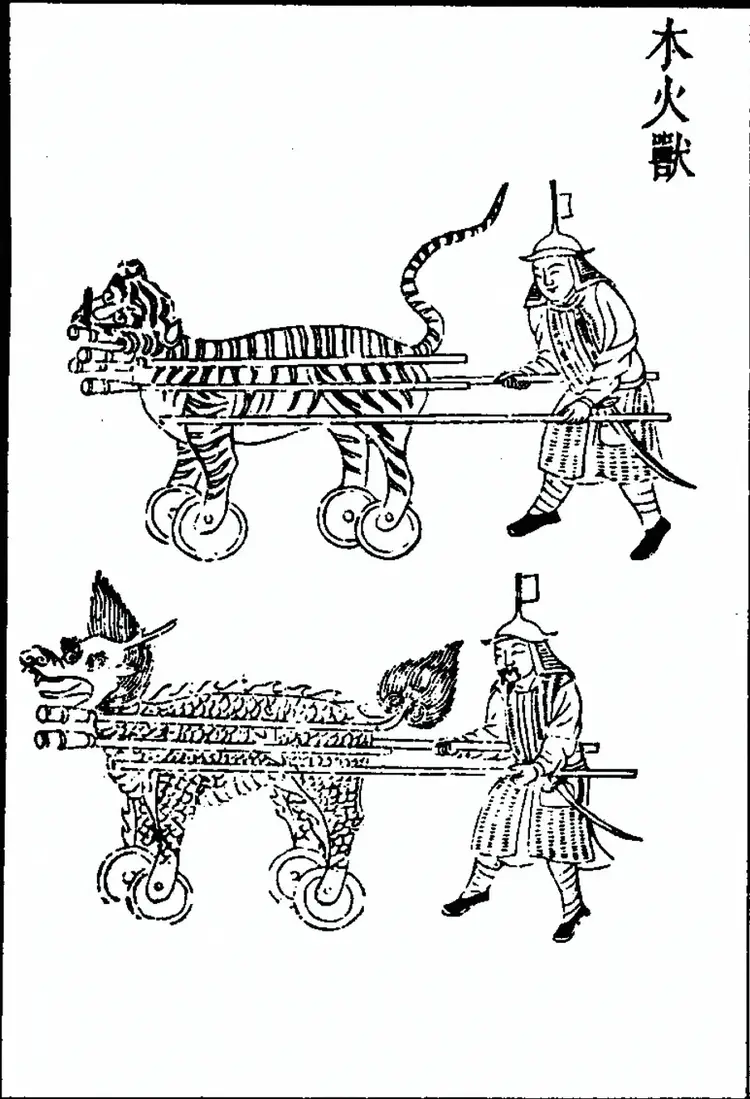
Mostly in the sense that Hwacha was just a designation of weapons platforms the Koreans had for anything that was mounted on a wagon.
That includes the Rocket Carts.
But it also includes these Organ Guns.
It also includes Organ Guns with mounted flamethrowers.
And no, it’s not outdated, the schematics are from the 18-19th century.
See, this is what I’ve been alluding to since the thread started. Koreans had LOTS of really weird weapon designs. The issue is many of them may have seen little to no actual use in combat, since Joseon simply didn’t engage in that many international conflicts.
You’re saying that the Japanese inspired them to abandon older forms of firearms but that’s not quite correct. You see, they kept iterating on the firearms they had to make them more… let’s say refined.
So there were Hwacha both in the 15th century and the 19th century, but they were drastically different. (Rocket Launcher vs Organ Gun thing) The also invented the legendary War Wagons in the 18th century, as in they had a wagon mounted on top of it. Hell, they still were producing Turtle Ships right until the end of the dynasty.
Were most of these designs practical?
Well, we simply will never know, they never had an opportunity to be used, or sometimes just folded during the first conflict they saw in reality.
The gist of the issue is that you could give them loads and loads of cool and weird siege units with the caveat that most of them weren’t truly used in reality. So you’ve got the cool factor vs the reality of Korea simply not being that relevant nor participating in that many conflicts.
When I say it’s outdated, I mean the Flamethrower part, not the guns. Using the volley guns is perfectly fine.
The schematics in the 19th century just show that they were documenting old weapons at the time. If I see a picture of a catapult in a book from the 21st century, that obviously doesn’t mean people were still equipping catapults in the 21st century.
That’s exactly what I was talking about. Within the timeframe, Chinese books also documented their old weapons, even though those weapons were very likely no longer in use by the time the books were written. If the Koreans can have access to a flamethrowing unit simply because a 19th-century book contains illustrations of a flamethrower, then there’s no reason the Chinese should lose access to Flamethrowers.
That kind of slippery-slope argument doesn’t really make the discussion any more meaningful. I can understand it as an emotional reaction, but it’s not really an argument.
China was historically a major source of firearms technology in East Asia, especially for Korea and Vietnam. The Hwacha was not undamentally different from China’s rocket-based weapons.
And there’s little evidence that these early East Asian rocket weapons were especially reliable in actual combat. Once China encountered European firearms, and Japan adopted matchlocks, these older types were largely replaced by Western-style guns and artillery.
So let’s just discuss the historical facts rather than turning it into a nationalist argument.
It clearly isn’t because they were using it within the timeframe of the game. It is hard to pinpoint when the original design is from, but the fact that they upgraded it with more advanced organ gun modules indicates it’s probably not earlier than the 16th century which is in the game’s timeframe.
It isn’t based on a 19th century compendium, I’m going off the dating in the museum descriptions and the fact that it is a more derived design with the added multi-barrel firearms. It very likely was not used in the 19th century but almost certainly was used somewhere in the 16th-18th centuries.
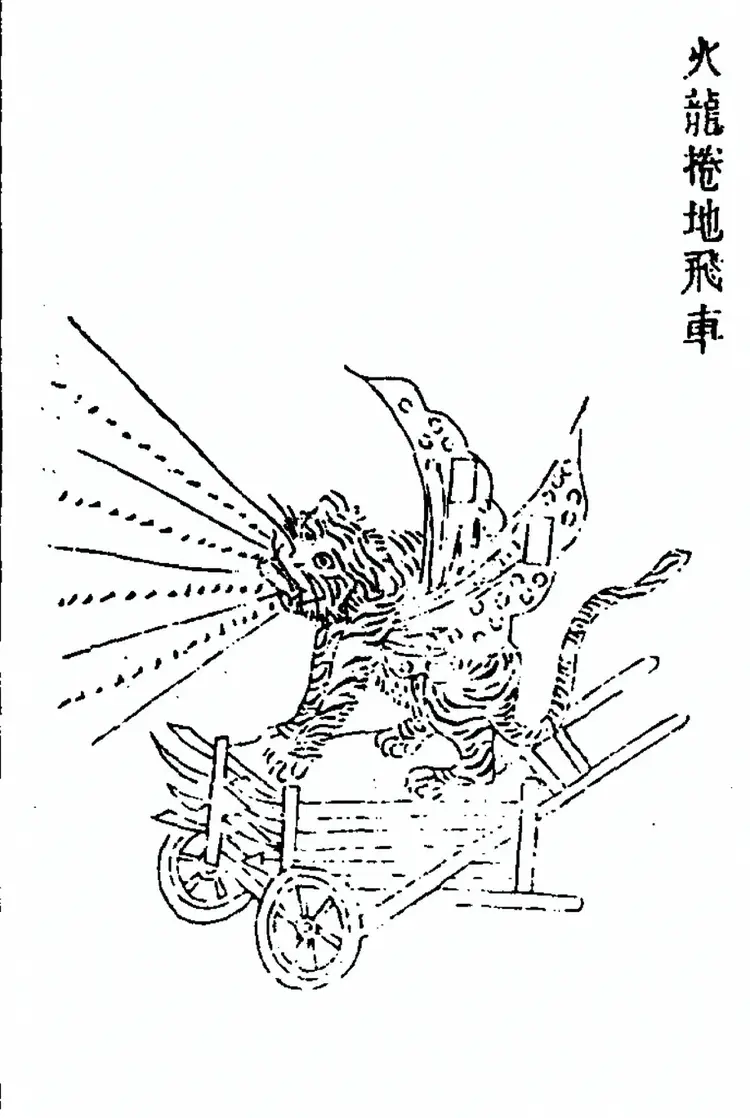
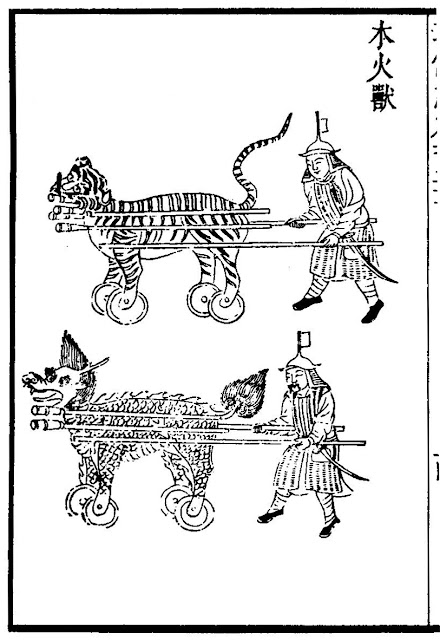
The weapon is based on earlier Chinese designs. But whether or not it is accurate for China to have a flamethrower depends on if those were used during the game’s timeframe or before. At the very least, the current depiction of the flamethrower based on Song era flamethrowers is wrong.
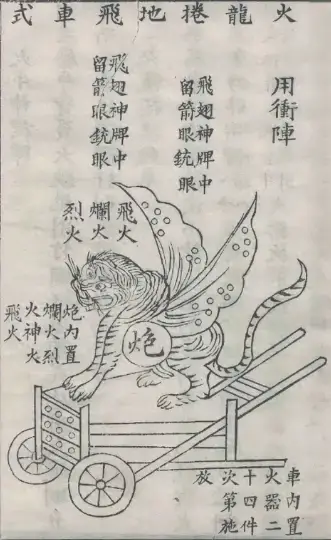
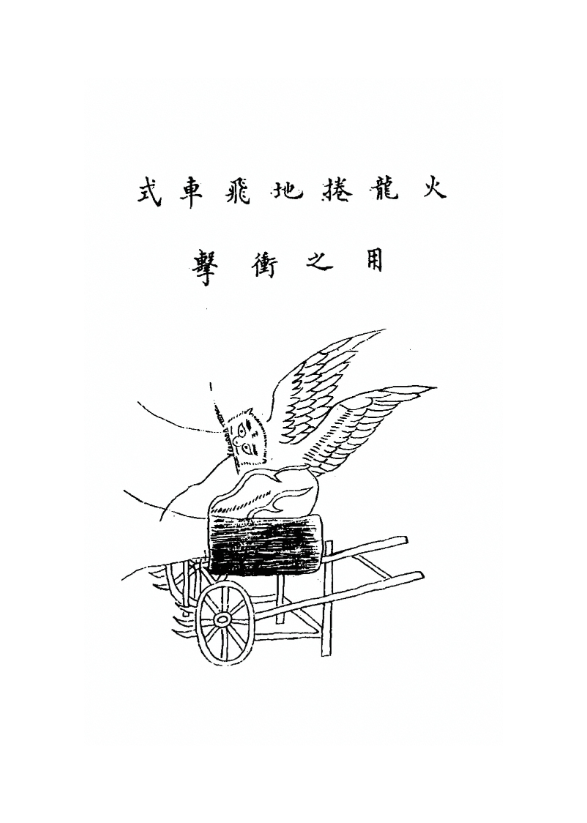
Yes, it appears you are correct. I was able to find quite a few descriptions as well as a couple other variants. The question would be; are these earlier weapons recorded later, or were they used during the game’s timeframe? Those manuals also describe the way more ancient Fierce-fire Oil Cabinet so it is hard to tell for sure. Given the number of unique descriptions and the fact that the later Koreans copied the design and iterated upon it, I would say it is very likely to be a contemporary weapon of the 16th or 17th century.
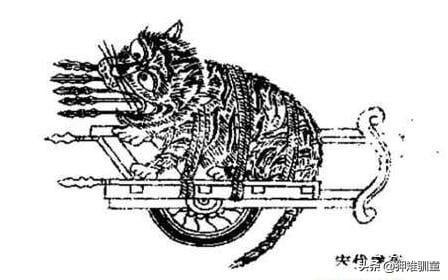
So China having flamethrowers isn’t entirely inaccurate. It’s just that instead of being depicted as the syphon style from the Song dynasty, they should look like these tiger carts. For Koreans, I think it could work as a consulate unit, and then they could have a card that upgrades them to have an organ gun attack. That would make them pretty strong, but being restricted by costing export could keep them in check.
They are though, it’s not just a nationalist argument, it’s you failing to see the underlying argument.
Yes, China probably invented this kind of cart based firing platform. Koreans kept iterating over it.
Hwacha are fundamentally different from China’s rocket based weapons because they made them modular and in many different varieties that weren’t fielded in China.
You are right that there’s little evidence of them being effective in battle, but that’s an argument that myself brought up.
The real problem is not that Korea “just used chinese weapons”; it’s that, although they invented their own variations, there might be a real chance they never got to actually use them in battle.
I didn’t look closely at your whole debate, and I could probably continue discussing this topic, but I don’t want it to seem like I’m trying to keep the argument going, so I’ll leave it there.
Maybe we can agree on one thing: compared with the Western firearms and artillery of the period represented in Age of Empires III, these East Asian gunpowder weapons were quite underdeveloped.
I just think there’s no real point in turning this into a fight. There’s no meaningful winner or loser here. It’s probably better to focus on the game and the historical facts themselves.
Yeah I agree, like from how I see things what set apart China (and the Manchu) and Japan from Korea is that while the former 3 adopted western style of casting cannons… Korea just kept iterating on increasingly ludicrous rocket platforms and weird smoothbore cannons.
Some of the Korean sources literally say it’s a variant of a Chinese design.
Realistically I’d be all for both China and Korea having it. The current Chinese Flamethrower could be reskinned to the Ming era tiger cart instead of the Song era siphon version (the age 1 version of that could even be repurposed for a Greek revolution). Korea could have that unit available via a Chinese consulate. And Korea could have a card that ships a few and upgrades them to the jacked up version with an organ gun. As long as it’s locked behind an export costing consulate army could have bonkers stats because you’d never be able to mass it.
火龍捲地飛車 literally means Fire Dragon Land-sweeping Flying Cart, sounds like a name you would only find in a fantasy story. This weapon has no record of using in conflict, and no one knows whether it ever really existed.
Ancient East Asian firearms often had names with this kind of fantastical flair.
In fact, even the flamethrowers of the Song dynasty were not siphon-based too. They were double-piston pump-based. It seems that Chinese flamethrowers were never siphon-based. The flamethrowers of the Ming era had more advanced technology that made them more efficient to use, such as better-made components, the addition of tiger-shaped protective casings, and a design that was better suited for mounting on carts, but mechanically speaking, there may not have been many fundamental changes to the underlying mechanism since the Song era.
Strictly, even Greek fire does not really qualify as a siphon in physical terms, as it is described as one largely because the word “siphon” itself comes from the ancient Greek word for a tube or pipe specifically used for transferring or drawing liquids.
If the complaint is that the unit looks too Song-dynasty-like, that’s fair. Giving it a tiger-shaped casing could probably fix the issue quite easily, although that would make it inconsistent with the Year of the Dragon card.
Not gonna turn this thread into a discussion about how the Korean civ should be designed. I just feel that, in the first place, there probably shouldn’t be any Asian civs as allies in the Consulate. For one thing, that feels more like something that was for the campaign’s storyline out of necessity. For another, the Consulate represents the modern diplomatic system that originated in the West, so in theory, it would make more sense for it to consist of Western civs (while an Isolationism means expelling foreigners from the Consulate building). The relation between Chinese and Koreans would be better represented through something other than the Consulate.
The reason why Korea retains these firearms actually stems from the country’s lack of war needs and the absence of pressure for equipment renewal. In fact, Qi Jiguang, the inventor of the mandarin duck formation, once commented on the firearms popular in the Ming Dynasty and Korea during this period, considering them impractical and a waste of resources because they were very inefficient in terms of power. Some firearms could only be used as hammers, and some could even spontaneously ignite and injure friendly troops if not handled properly, causing a series of side effects. In fact, during the subsequent higher-intensity wars of the Ming and Qing Dynasties and the Qing Dynasty’s Dzungar War, China basically abandoned these early firearms and turned to European-style cannons
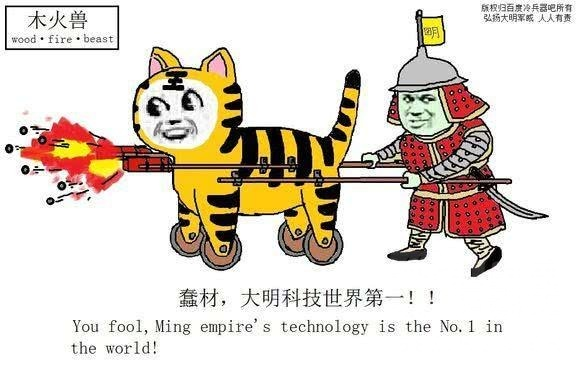
 what am i looking at here?