The agricultural populations centered around Huaxia culture formed the core of Chinese civilization, and this culturally central group has historically been referred to as the Han. This identity appears to have been substantially established as early as the Han dynasty.
The problem lies in the fact that the ethnic and historical concepts used by the People’s Republic of China today are projected backward onto the past as if they had always existed in the same form.
The worldview of past Chinese dynasties was fundamentally based on the Hua-Yi distinction—that is, the distinction between the civilized center and the surrounding non-Han peoples—and groups outside the Han were clearly perceived as foreign or non-Han. Historically, the lands beyond the Great Wall, especially those north of Shanhaiguan, were referred to as Guanwai (“outside the pass”) and were strictly distinguished from the Han sphere. Ignoring this context and retroactively applying today’s political concepts of ethnicity and territory to the past is closer to historical reconstruction than to historical interpretation.
Furthermore, the fact that the CCP refers to non-Han groups as “ethnic minorities” reveals that, while outwardly professing to be a multi-ethnic state, it still operates on an underlying Han-centric perspective. In this sense, the current system can be seen as an extension of the traditional Hua-Yi worldview.
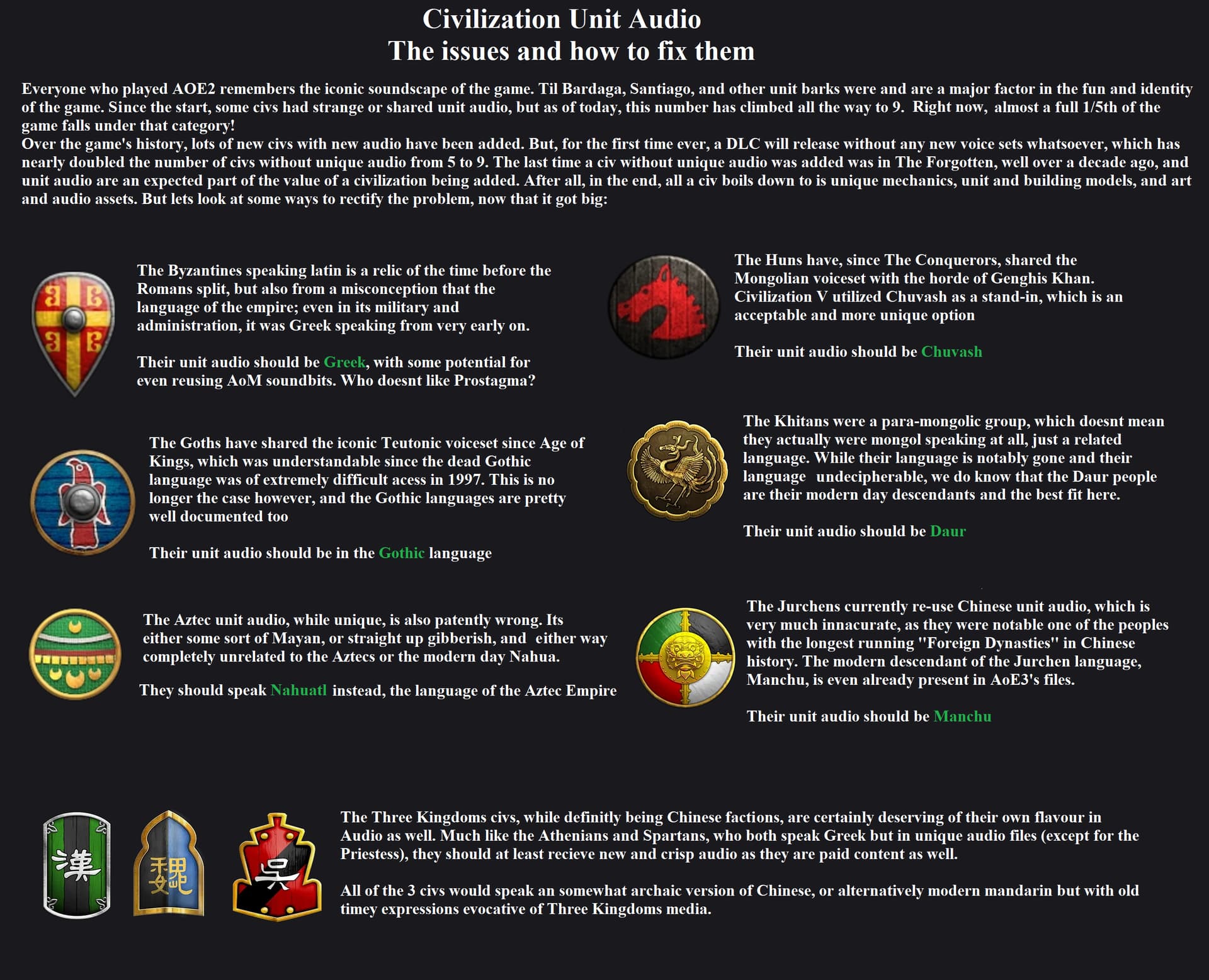
The Qing dynasty serves as a prime example of this distinction. As a conquest dynasty centered on the Manchu people, the Qing discriminated against the Han and maintained a clear and separate identity.
They viewed themselves not as a mere part of Zhonghua, but as its rulers or possessors. The emergence of slogans such as Mieman Xinghan (“Destroy the Manchu, Restore the Han”) in late Han society demonstrates that the Han themselves perceived the Manchus as a distinct and alien group.
However, the CCP’s historical narratives tend to emphasize only instances of “ethnic fusion” while intentionally downplaying or ignoring the countless historical conflicts between the Han and non-Han groups. This can hardly be considered a balanced historical narrative. Throughout history, countless Han people were killed and suppressed by non-Han groups.
Ultimately, the CCP’s modern historical perspective possesses a dual structure: internally, it emphasizes the Han as the centripetal force of Zhonghua, while externally, it attempts to subsume all ethnicities and past regimes within its current borders into the category of “Chinese history” as defined by the CCP.
In other words, it asserts Han-centrism for internal cohesion while adopting an expansionist narrative that absorbs the history of non-Han regimes and neighboring peoples in order to justify its current territorial reach.
If this logic is followed to its conclusion, contradictions also arise regarding the Taiwan issue. If the CCP insists on a territory-based view of history, it must explain why it unilaterally defines Taiwan’s history and identity as its own.
The claim that Taiwan is part of the PRC is strictly the political position of the CCP, and it cannot be presented as a universal historical truth.
Such contradictory ambitions on the part of the CCP are a grave matter and could potentially lead to military conflict with neighboring countries, including Japan, South Korea, and the United States.
Furthermore, while the CCP seeks to inherit the vast territory and geopolitical rights of the Qing dynasty, it has shown a selective attitude toward treaties and debts incurred during the Qing era.
It adopts a logic of “selective succession”—claiming the legacies that benefit it while disavowing those that are disadvantageous.
This contradictory stance has led to ongoing issues in the United States regarding the repayment of historical sovereign debt.
Such contradictory views on history and ethnicity inevitably lead to friction with neighboring countries such as Korea, Mongolia, and Vietnam. The CCP’s attempts to absorb the history and identities of neighboring nations into its own framework of “regional history” or “minority history” are not fundamentally different from the methods once used by imperialist powers that mobilized academia and historiography for political ends. This is also one of the reasons why neighboring countries remain wary of such efforts.