While Romans where definitely not the only society that practised wide spread slavery they were still very well known for that. The Roman economy was mostly based on slavery until the introduction of Christianity.
So it would make sense if the Roman villagers would be called “Slaves” since “Citizen” is already taken by the Atlanteans.
The Romans could have some mechanic where they can turn enemy units into slaves and maybe some way for the enemies to free slaves. Maybe slaves could be a secondary villager for Romans that works like sheep, so they can easily be stolen by enemies, but maybe that would be way to easy to exploit.
I think plebeian would be a better name for the roman villager. At best, slavery could be some kind of unique mechanic, but I’m not sure how to implement it in an interesting way.
Yeah but for Aztecs they had to released a separate DLC for the some of the “sacrifice” visuals, and they avoid using that word in-game and instead use “devote” lifeforce, and they can’t kidnap enemies, which was one of the sources of sacrifices.
If they add Romans and then wanted to represent slaves somehow they would probably use some kind of euphemism too. They try to avoid representing slaves in AOE III too
Controversial, considering that in AoE 3 they removed all mention of slavery…it would be funny if they left it in Retold as if to say “slavery in AoE 3 is wrong because it’s colonial, but in Retold it’s okay because it’s mythology”…
There is already a society in the game who employ a lot of slaves : The greek, 50% of slaves in Athens. Vikings, aztecs, egyptien also had slaves but there is no one in the game. So I think they will never add slaves in Age of Mythology and I don’t want to see slaves in this game.
It was 2005, and governments still wanted to hide things from the world for fear of political censorship.
In AoE3, precisely because of that fear, the creators self-censored and didn’t add Native Americans as playable civilizations, fearing that organizations (I assume left-wing) would cancel them.
However, things changed when they received many requests, including from Native Americans who said “they don’t mind having Native Americans in the game,” if it means they can play against European League of Legends civilizations.
Then in 2007, they released Warchief with Native Americans, and everything was normal.
Now 2026
By 2026, with the internet, political censorship is more difficult, and given that the USA is the land of opportunity and capitalism, "the customer is always right," there are video games of every genre and material.
The only thing to fear
Is that major production companies will no longer work to make games but rather “sell politics.”
We had the case of Baby Sweet Inc., where the Democratic Party poured enormous amounts of money into production companies (USAID) to sell ideologies within their games.
Although, in theory, Trump deactivated that USAID program, so for the moment we’re safe; otherwise, who knows, they might even have interfered with the development of the Aztec, Chinese, or Japanese DLC.
It’s true, the Romans went overboard with the whole slave thing.
Generally, in ancient times, a subjugated people was: 1) annexed, 2) made a vassal state, 3) plundered and then fled, or 4) destroyed if they became a nuisance.
And in all four cases, most slaves came from captured soldiers. To avoid the death penalty, or because the concept of demanding ransom was unknown, it was better for them to serve as servants or indentured servants. There were also raids by soldiers to kidnap people and sell them into slavery, but that was more pillaging than anything else.
But the Romans didn’t. They systematized slavery: Subjugated people = Burned, and 100% of its surviving inhabitants became slaves.
The capture of slaves reached such a point that many Roman citizens preferred not to farm or perform villager tasks, as these jobs became exclusively for slaves.
Romans (Mechanics)
They could do what the Norse did, which is to have two types of villagers:
Citizen: Gathers resources slightly slower, builds faster, and collects Fervor.
Slave: Costs gold, however, they are good at gathering food from farms, land, mining, and wood. They cannot collect Fervor (they do not worship the Roman gods).
Destroyed enemy buildings generate slaves: Houses (1), Town Centers (5), and Fortresses (5).
They had a huge slave percentage in their provinces while some Greek cities had little to no slavery.
The Romans deployed slaves on an “industrial” scale with massive estates having huge numbers of them. Also there was a famous slave uprising, something that very rarely happened in ancient times.
I don’t want to get into politics but this thread is not about conspiracy theories.
Also AoE/AoM main market is not the US because Americans don’t like playing strategy games. It’s more Europe and Asia.
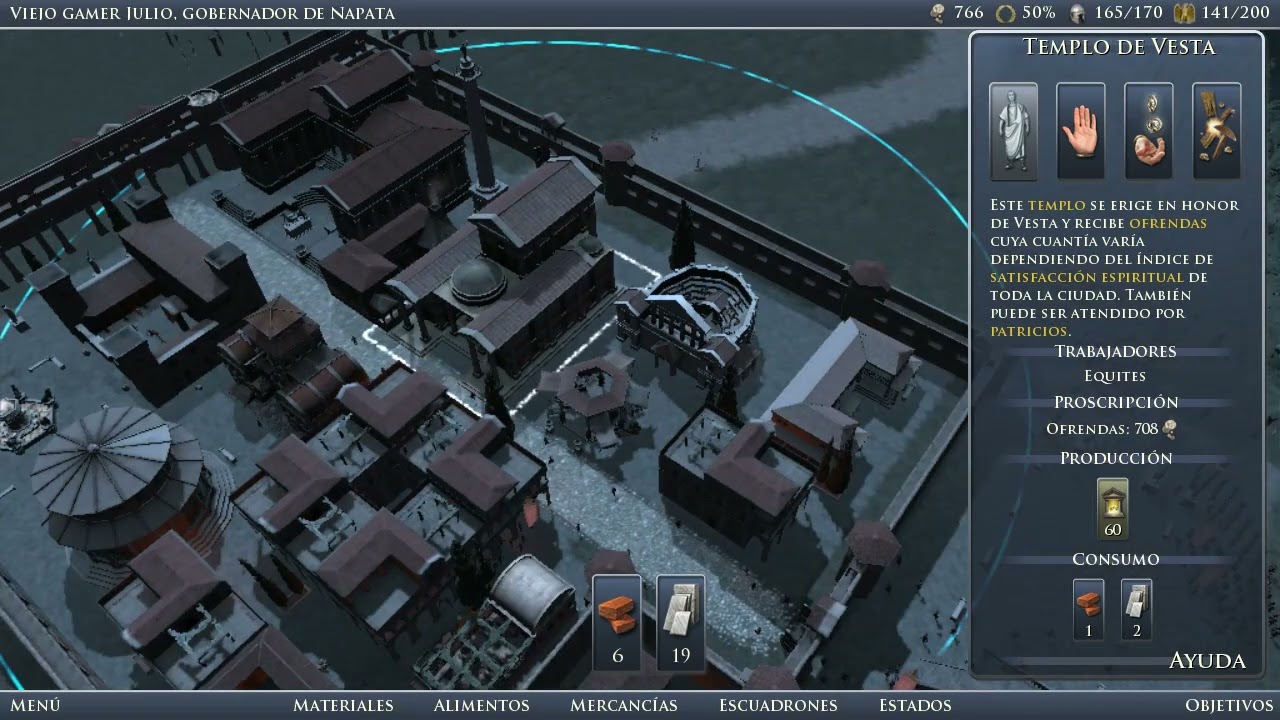
I though about something similar but I wouldn’t let their villagers generate favour, that should be a Greek only thing. I think favour should come from Vestals since they are a uniquely Roman thing that the Greeks didn’t have.
They can probably not be called “Citizens” and “Slaves” but maybe “Freemen” and something like “Serf”. Also you should be able to promote every “Serf” to a “Freemen” at an time for free.
Pretty much all work that villagers do in AoM (and AoE) is pretty much slave work so it is hard to say what they should be good at. The kinda work that would normally be done by free people is just done by buildings or different units (like traders) in AoM.
Doesn’t matter. You’re still using that word. We’re living in a time where you can’t even say “drug” on YouTube without getting demonitized. Also it had EFFECTS. Affects is a verb.
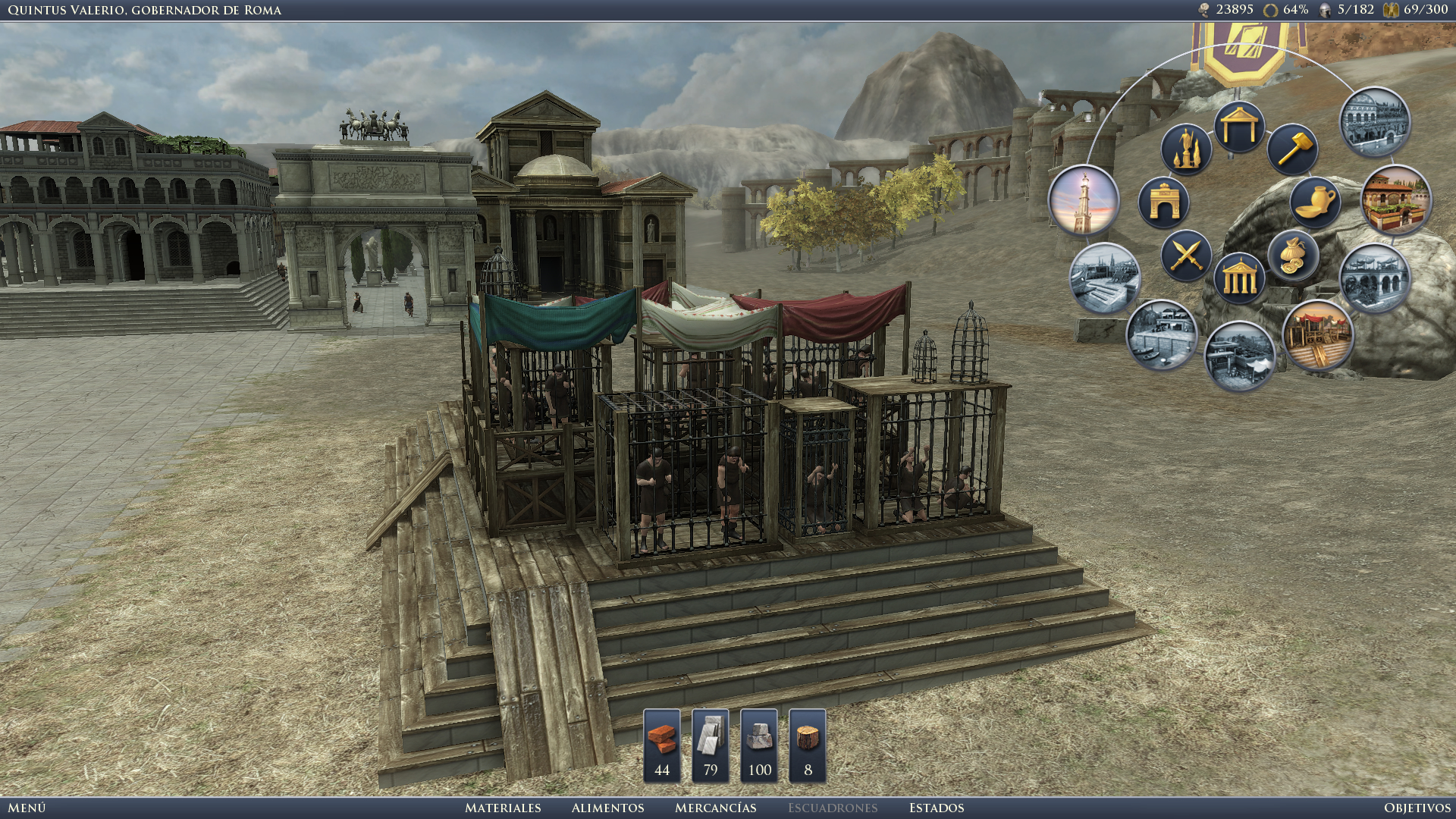
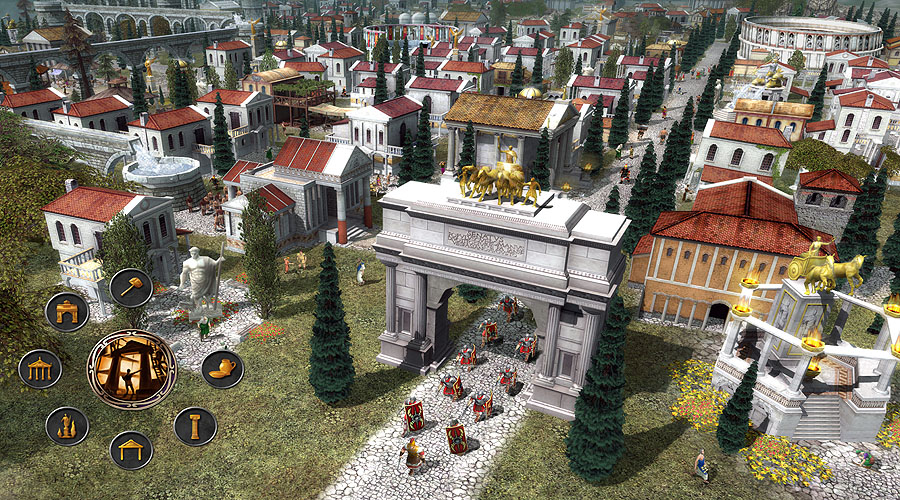
En Imperiwm Civitas III, a Roman City building game with RTS mechanics there is slave market mechanics, They essentially operate by producing cheap labor with minimal living requirements.
You can even choose a slave-owning family (Lucii) that leverages the synergy of abusing the mass production and purchase of slaves.
For Age of Mythology, if we’re talking about the mythological Roman period, it would be the “Ennead” (~1200 BC), with the migration of surviving Trojans to Italy, and then the myth of “Romulus and Remus” ( ~771 BC).
Most Roman mythology is very closely tied to its politics, and there’s little divine intervention. In their first Tribal period and the Monarchy period, there was not massive slave system, roman citizens cultivated their own plots of land. The massive slavery it’s more of a Roman Republic period thing (509 a.C. – 27 a.C.)
In that case, it would be better to discard that mechanic at least for the Roman of AoM.
In contrast, the Aztecs and Mesoamericans did have human sacrifice closely tied to their mythology and culture: Even their gods sacrificed themselves to create the 5th sun and wanted the humans to do the same. And well, since this is a game about “Mythology,” it was difficult to discard this mechanic. The slaves of Rome, on the other hand, aren’t as closely tied to its mythology, and even less so to its mythological period.
AoE2: Chronicles Romans
The idea of slave mechanic would be better suited to Age of Empires II: Chronicles, where the civilizations have more asymmetry between them (like in Age of Empires IV), perhaps for the Romans of the Republic.
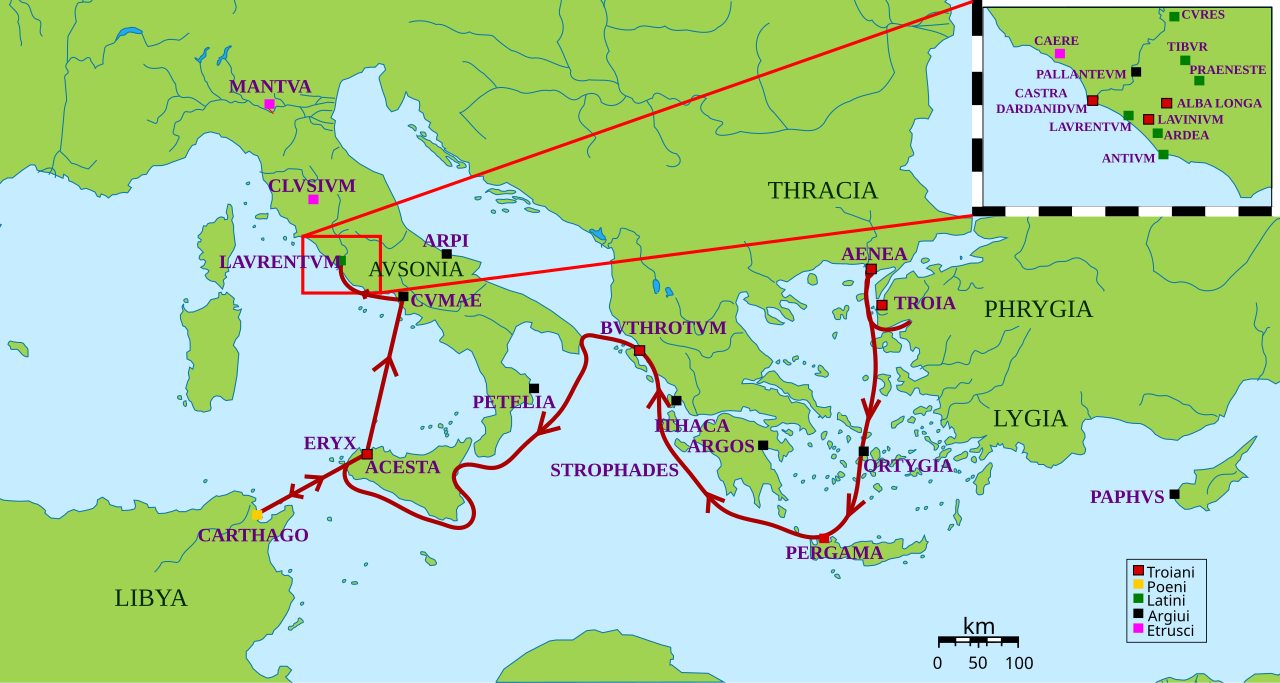
Yes, if they include the Romans, they would have to base the story on the Aeneid (each book would be a different mission, making a total of 12 missions)…that is, after the end of the Trojan War (in mission 6 of the Fall of the Trident campaign), Aeneas flees with the Trojan refugees to Italy, fighting with some Greek villages along the way in the Balkans and Sicily until reaching Carthage, where he would fight against Phoenician colonists (aka renowned Egyptians) of Dido, and from there he travels to central Italy where he would ally himself with the Sabines of Alba Longa and found Rome with his son Ascanius and his grandsons Romulus and Remus in 753 BC, and there he would begin a campaign of expansion against the neighboring peoples, who could be Norse or Celts if they include them at some point in the game…
Yes, in Chronicles it would be the founding of the Republic in 509 BCE and from there up to Caesar (60-44 BCE) and from there jump to the crisis of the 3rd century (235-284 CE)…
It’s about being able to have “slave” related game mechanics like having the ability to capture enemies or have enemies be able to free your “slaves”.
This would be a good way to tie it to the Fall of the Trident campaign.
We already know that the Trojans were not the bad guys since they were just used as a distraction in the story. So having them survive and flee to found Rome could be an interesting story.
Though without Phoenicians/Carthage it would be a little hard to retell the Aeneid. Though that would make a very solid base for an AoM campaign. It has a lot of fighting in various places that involves a lot of gods.
Fleeing the burning Troy
Story of Dido
Stop on Sicily
Visiting the Underworld
Arrival in Latium
Various battles
Maybe timeskip to the actual founding of Rome
But that’s a whole different topic. This thread is about slavery.