[Civ Concept] Bulgarians – The Balkan Empire of the Two Tsars
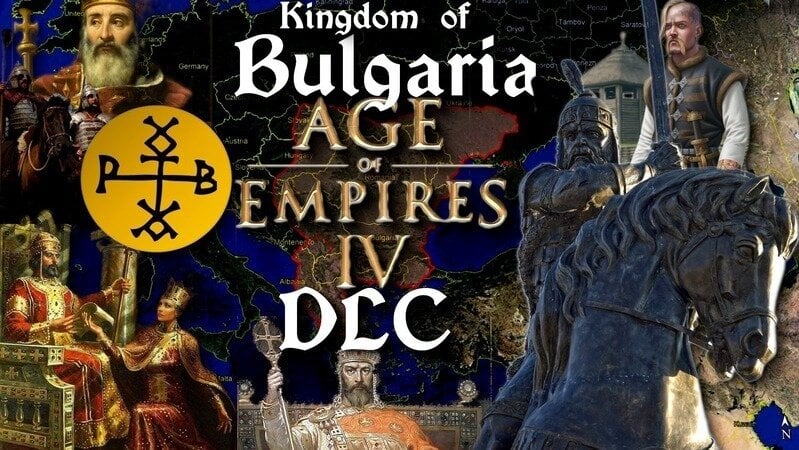
Images: Tsar Samuil, Tsar Simeon I, Sviatoslav I of Kiev, a Cardinal, Royal Knights, Bulgarian heraldry, Tsar Ivan Asen II
“A Rome away from Rome” – The First Bulgarian Empire (814 AD)
Source: MyCountryEurope.com
Images taken from Wikipedia: Tsar Samuil, Tsar Simeon, nephew of Tsar Simeon (founder of Kiev-Rus Sviatoslav I) Cardinal or a Catholic Pope, Royal Knights, Bulgarian symbol, Tsar Ivan Asen II
Bulgaria’s historical roots stretch far deeper than most modern European nations, predating the Asiatic migrations and remaining firmly grounded in the Balkan Peninsula. Contrary to popular misconceptions, Bulgaria is not a product of steppe nomads or far eastern tribes. Instead, it is a civilization indigenous to Southeastern Europe, occupying lands once inhabited by the ancient Thracians—widely considered one of the oldest European cultures, with archaeological evidence tracing their presence as far back as 10,000 B.C.
The Thracian-Bulgarian lineage spans regions once known as Scythia, Dacia, Moesia, and Mycenaea, extending from the Danube River to the Black Sea and through the Bosphorus into Asia Minor. These territories, rich in natural resources and strategically vital, fostered a dynamic civilization that traded and warred with Thracian cultural enrichment, Roman, and Anatolian powers. Long before the formation of Rus or the arrival of Mongol or Turkic forces, the proto-Bulgarians helped shape the political and cultural fabric of Eastern Europe, leaving a legacy that would ripple through the ages.
During the Roman conquest of the Balkans—especially after Macedonia sided with Hannibal of Carthage— this forced the Romans to conquer South Eastern Europe as an act of war. Nevertheless, Thracian cultural imprint remained. The Eastern Roman (Byzantine) Empire, for all its glory, owed much of its imperial structure and resilience to these Balkan foundations. Prominent Roman and Byzantine figures—including Emperor Justinian I and possibly even the general Flavius Aetius—had roots or connections in territories now considered part of modern Bulgaria. It is even argued in some historical circles that Attila the Hun, often mischaracterized as purely an invader, originated to Scythian God ritual and conversed in an early Bulgarian tongue and may have represented a broader union of displaced Balkan and Slavic peoples. How else can rule such tribes who speak dialects of one another!? The Huns, Goths, and early Slavs—many of whom settled in the areas that are now Ukraine, Romania, and Crimea—carried with them cultural and linguistic elements closely tied to Thracian and as evidently now known as Bulgarian identity.
Over time, as Western Europe consolidated under Latin Christendom, the papacy actively suppressed regional identities and languages to impose religious and political unity. Before even that, we must be clearly aware of the Hunnic and Gothic origins and their contributions in the west after Rome’s collapse. These people did not disappear. They built what you have today as Spain, Portugal and Germany. The transformation of Goths into Latin-speaking regions was not organic—it was enforced by law, aiming to erase competing cultural and linguistic roots. The same dynamic played out in the East, where both the Roman Catholic Church and the Greek Orthodox Patriarchate regarded Bulgaria with suspicion, labeling its people as barbarians despite their advanced society, strong literacy, and the development of the Cyrillic script—the first official Slavic alphabet. Originating in Bulgarian legacy and formalized during the First Bulgarian Empire, the Cyrillic alphabet would later become the written foundation for Russian, Serbian, Ukrainian, and many other Slavic languages.
Bulgaria’s significance was further obscured during its centuries-long occupation by the Ottoman Empire, a period marked by forced cultural assimilation and the destruction of many historical records. Even after liberation, Bulgaria’s role in the Balkans remained contested. During the 20th century, Soviet and Yugoslav geopolitical interests stifled Bulgarian influence. Leaders like Josip Broz Tito actively excluded Bulgaria from the Yugoslav federation, fearing the rise of a dominant Bulgarian-led Balkan union. Tensions between Tito and Bulgarian leader Georgi Dimitrov, compounded by broader Cold War pressures, fractured any hopes of regional unity and fueled the identity crises that persist in parts of the Balkans today.
Despite these setbacks, Bulgaria’s linguistic and cultural legacy endures. Variations of the Bulgarian language and alphabet are found across Eastern Europe, from Serbia and all of Macedonia to Slovakia, Slovenia, and even Poland, today’s fastest growing country with birth rates in all of Europe.. Yet much of this influence remains unrecognized in popular Western narratives. While history may have been written by its victors, the story of Bulgaria—a civilization of scholars, warriors, and kings—deserves its rightful place in the chronicles of medieval Europe.
#AgeofEmpires inclusion of Essential Civilizations #bulgaria #scotland #spain #kiev
Introduction
Greetings fellow strategists and Age of Empires enthusiasts,
As a long-time fan of the Age franchise and a historian at heart, I’d like to humbly propose the inclusion of a long-overlooked yet essential civilization in Age of Empires IV: The Bulgarians.
With the recent release of the Sultans Ascend and The Dynasties of the East DLCs, the diversity of civilizations has certainly expanded—but one major regional power of the medieval era still remains absent. Despite being the oldest country in Europe by continuous name and borders, Bulgaria has yet to make its entrance in AOE4, even though it played a central role in shaping the medieval Balkans and Eastern Europe.
Why Bulgaria Deserves a Place in AOE IV
 Geopolitical Influence
- The First Bulgarian Empire (681–1018 AD) and Second Bulgarian Empire (1185–1396 AD) were two of the most dominant states in Europe during their respective eras.
- At its peak under Tsar Simeon I, Bulgaria’s territory spanned from the Adriatic to the Black Sea and from the Carpathians to the Aegean.
- Bulgaria was a true rival to Byzantium, and the majority of Byzantine wars were fought not with the Arabs or Western Crusaders—but with the Bulgarians.
 Military Legacy
- Bulgaria consistently held military superiority over its neighbors for centuries.
- Famous leaders like Knyaz Tervel, Tsar Simeon I, Tsar Samuil, and Tsar Kaloyan led Bulgaria to victory against Arabs, Byzantines, Crusaders, and Magyars.
- Tervel, one of the few non-Romans to be granted the title Caesar by the Byzantine Empire, saved Constantinople from the Second Arab Siege in 718.
“What is Basil II without his greatest nemesis – Bulgaria?”
Civilization Overview
| Feature | Description |
|---|---|
| Name | Bulgarians |
| Type | Infantry-Cavalry Hybrid, Religious-Military Synergy |
| Time Period | 7th – 14th Century |
| Region | The Balkans, Eastern Europe |
| Culture | Slavic with Byzantine and Steppe influences |
| Unique Architecture | Balkan-Krepost Style – Orthodox domes, stone kreposts, fortified monasteries |
Unique Mechanics & Features
 Unique Landmark: Krepost
- A fortified hybrid structure serving both defensive and military functions (like a castle).
- Replaces keep; comes with a passive faith or armor aura to nearby infantry.
- Integrates Church and Barracks functionalities in later ages.
 Unique Unit: Konnik
- A heavily armored cavalryman wielding a single-handed flail.
- Upon death, dismounts and continues to fight as infantry (like in AOE2).
- Strong against ranged units, versatile across terrains.
 Religious Bonus
- Bulgarian Orthodox clergy inspire nearby units with aura buffs (movement speed, morale, or armor).
- Bonus for relic gathering: “Liturgical Scholarship” speeds up techs when relics are garrisoned.
Campaign Potential
While I do not propose a campaign DLC, Bulgaria’s rich storylines are campaign-worthy:
- Tsar Simeon I – Defeating Byzantium at Achelous (917 AD), establishing the “Golden Age” of Bulgarian culture.
- Knyaz Tervel – Saving Constantinople from the Arab Caliphate.
- Tsar Kaloyan – Defeating the Latin Crusaders at Adrianople (1205), capturing a Latin Emperor.
“Ivan Asen II was titled ‘Tsar of Bulgarians, Greeks, and other nations’ – a Balkan ruler as influential as any Western king.”
Cultural Contributions
- Cyrillic Alphabet – Developed by disciples of Saints Cyril and Methodius, formalized in Bulgaria under Tsar Simeon I. It later spread to Serbia, Russia, and Ukraine.
- Orthodox Church Expansion – Bulgaria served as a bridge between Byzantium and the Slavic world, establishing liturgy, education, and scripture in Old Church Slavonic.
Without Bulgaria, there would be no Rus, no Slavic literacy, and no Cyrillic script used by hundreds of millions today.
Current Gaps in AOE IV
Despite AOE IV’s depth, Eastern Europe and the Balkans remain underrepresented. Here’s a look at existing civs:
- Byzantines – Added recently, but their Balkan conflicts are underexplored.
- Rus – Featured, but their cultural and linguistic roots are tied closely to Bulgaria.
- Ottomans – Late medieval focus, long after Bulgaria’s prime.
Adding Bulgaria would balance the map, introduce unique units, and offer non-Western narratives that are currently lacking.
What the Community Wants
Other frequently requested civs:
- Scotland
- Spain
- Kievan Rus (as variant)
- Hungary
- Poland-Lithuania
- Bulgaria (this thread
 )
)
Final Thoughts
Age of Empires II gave the Bulgarians their rightful place—with Kreposts, Konniks, and immersive design. It’s time for AOE IV to carry that tradition forward.
To leave out Bulgaria from AOE IV is to ignore one of the most important empires of medieval Europe—militarily, culturally, and politically.
Let’s give the Balkans their spotlight. Let’s bring Bulgaria to Age of Empires IV.
 Media illustrations / Sources / Further Reading:
- A Rome Away From Rome: The First Bulgarian Empire (814 AD)
- YouTube: Tsar Samuil – The Last Defender of Bulgaria
- YouTube: The Battle of Achelous (917 AD)
- YouTube: Kaloyan’s War Against the Crusaders
A memorial inscription on one of the columns of the Church of the Holy Forty Martyrs recorded Ivan Asen’s conquests.[38][19] It referred to him as the "tsar of the Bulgarians, Greeks and other countries
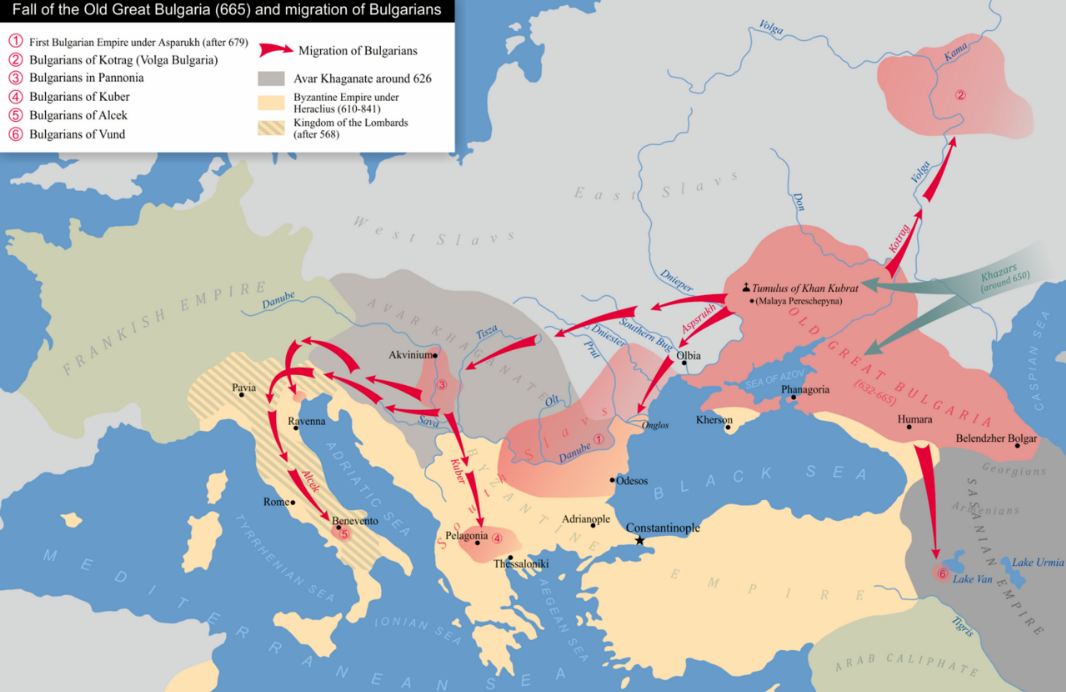
Map of Bulgaria according to British school text book
Source: " A Rome Away From Rome: The First Bulgarian Empire" 814 AD
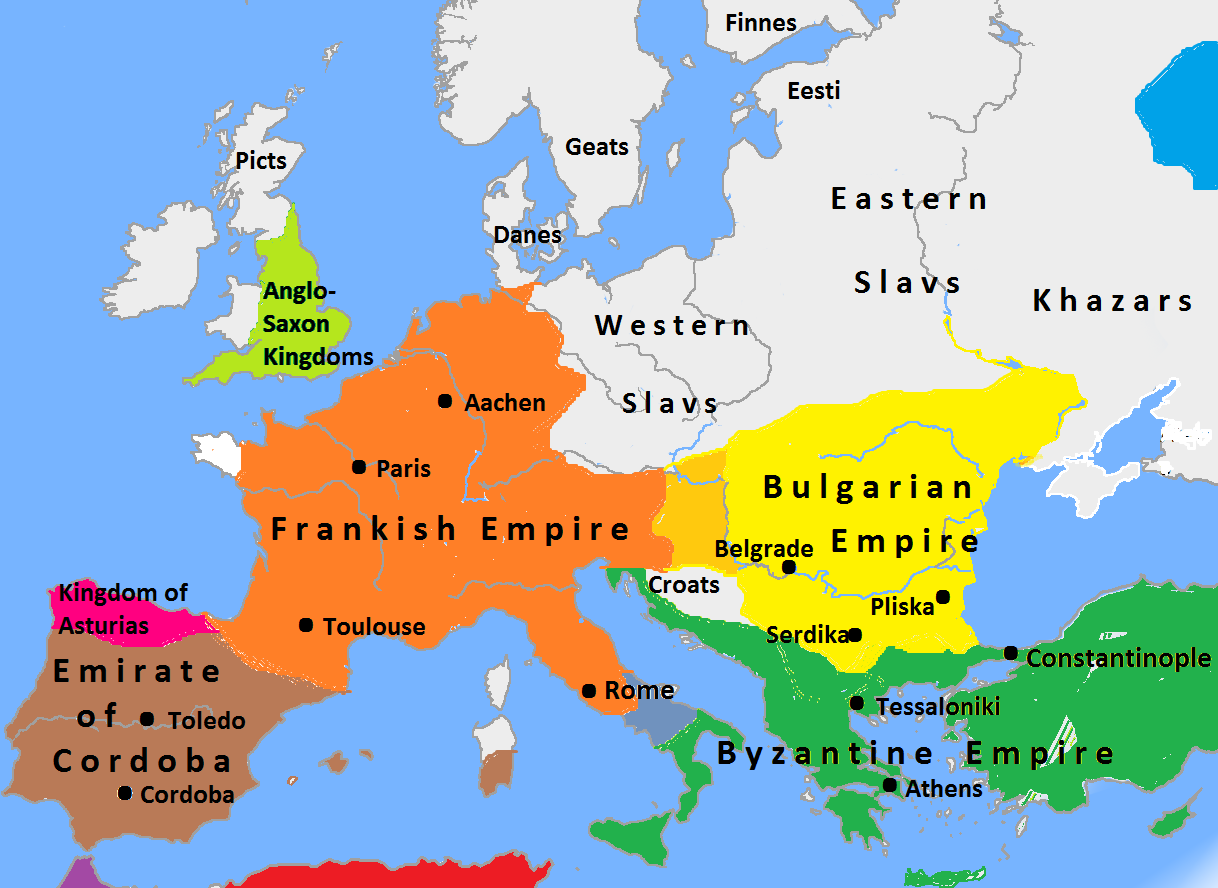
https://mycountryeurope.com/history/rome-first-bulgarian-empire/