Ah! So that explains things a lot better with them.
I still think there were better mechanics to interpret this (why do they HEAL of all things? And why would they be happy when one of their mummies is dropped?). But at least it seems to now be based on something real.
The Muisca wonder might actually be the building that appears on the “El Dorado” campaign teaser picture. If said building ends up being the Muisca wonder, then it would be the Temple of the Sun in the city of Sogamoso, Colombia, which was one of the holiest shrines of the Muisca people and home of the Iraca, which was some sort of Muisca “high Priest” according to the Spanish chroniclers. It’s appearance is based on a 20th century reconstruction made by anthropologists after the archeological site of the original temple was found.
Some of the new civilizations included in this DLC could replace some less appropriate civilizations in previous campaigns and scenarios, or be added into them, so as to make those more interesting. Some of the scenarios in which they could be included are:
A. Pachacuti Campaign
Scenario No. 4: “The Falcon’s Tent”: The Colla neutral faction could be represented by the Mapuche instead of the Inca, since the Colla peoples were a native group of northern Chile right between the Inca and the Mapuche and arguably more similar in terms of culture to the Mapuche.
Scenario No. 5: “Like Father, Like Son”: The various Chimú enemy factions could be represented by the Muisca. Of course, the Muisca are not at all related to the Chimú, but they could be used to represent northern Andean civilizations in general. The Muisca did trade and might have had contact with the Barbacoan peoples, who were neighbours of the Chimú to the north.
B. Historical Battles
Vinland Saga Scenario: The enemy Skraeling faction (currently represented by the Celtic civilization) could be more accurately represented with the new South American native architecture set, especially the feudal era architecture set. They could be represented by either the Tupi or the Muisca. Neither the Muisca nor the Tupi had a direct connection to the ancient indigenous inhabitants of Greenland and Canada that the Norse found, but their new native South American architecture set in the feudal era could be a much better fit than the Western European Celtic architecture and civilization.
Dos Pilas Scenario: Since all the factions in this scenario are based on the Maya civilization, the “Local Villages” ally faction of the scenario could instead by represented by the Muisca, to add a bit of variety to the scenario. Moreover, the Mayans had various southern neighbours in Honduras, NIcaragua and Costa Rica, that belonged to the Chibchan language family and were culturally and liguistically related to the Muisca. We don’t know if they actually knew each other, but they lived very close by nonetheless.
C. Victors and Vanquished
Karlsefni Scenario: Again, the same as the Skraelings factions in the Vinlandsaga scenario, they could be better represented as either the Tupi or the Muisca.
Drake Scenario: The “Natives” faction of the scenario, which is spread across Northern South America, Central America, the Caribbean and Florida an dis currently represented by the Mayans, could instead be split into three factions, with the Mayans remaining in Central America, the Muisca appearing in Panama, Costa Rica and Northern South America (representening the various Chibchan-speaking peoples such as the Tairona and the Ette Ennaka) and the Tupi could appear in the Caribbean and Florida (representing the various Carib and Arawak peoples), as well as in the Guyana regions.
I think we could see the following factions/civilizations, included on the three new campaigns that will be introudced on this DLC:
El Dorado (c. 1480–1540):
Playable factions: Either the northern Muisca chiefdom of Hunza or the southern Muisca chiefdom of Bacatá
Ally–Neutral or Enemy factions: The lesser Muisca chiefdoms of Sogamoso, Tundama, Ubaté, Chía, Guatavita (whose chief was the subject of the legend of El Dorado)
Enemy factions: The Spanish conquistadors and colonists under Gonzalo Jiménez de Quesada and Sebastián de Belalcázar (represented by the Spanish) and the German colonists under Nikolaus Federmann from Klein-Venedig (reresented by the Teutons) who famously entered Muisca territories at almost the same time as the Spanish, but were later driven out.
Arariboia (c. 1520–1589):
Playable factions: Termiminó Tribe (the Tupi tribe that allied themselves with the Portuguese and who were led by Arariboia), the Portuguese allies of the Termiminó.
Ally–Neutral or Enemy factions: Various other Tupi tribes of coastal Brazil that could become allies of the Termiminó.
Enemy factions: The Tamoio Confederation, a grouping of several Tupi tribes under the leadership of Cunhambebe. They allied themselves with the French colonists of France Antarticque.
Lautaro (c. 1534–1557):
Playable factions: The Mapuche peoples under the leadership of Lautaro.
Ally–Neutral or Enemy factions: Various other neighbouring tribes and peoples, such as the Moluches or the Pehuenches
Enemy factions: The Inca invaders that attempted to conquer Mapuche territory from the north and the Spanish colonists who attempted to conquer Mapuche territory from the sea but also from the north after conquering the Inca themselves.
You could argue that the Moon Temple at Chía or the Temple at Tundama were also as important as the Sun Temple in Sogamoso, but we don’t have archeological findings nor anthropological reconstructions of those, but they could very well be based of the architecture of the Sun Temple if they wanted to, with slight changes.
We also have very detailed information regarding the “cercado” or “palace” of the Zipa (“high chief”) of Bacatá (Bogotá) that, together with known arcehological remains, could be sort of “reconstructed” to be a Muisca wonder as well. In fact, the Muisca castle seems to be based on the “cercados”, which were interpreted by the Spanish as the “palaces” of the Muisca chiefs.
The Muisca “cercados” were palisaded settlements of concentric circular wooden maze-like walls that housed the residence of the chief and his “staff”, a small temple and storage for corn and other produce, they are similar in function to the new “Settlement” building in the sense that they had housing and storage. This kinds of structures had lots of first hand descriptions made by the early Spanish colonists and priest, as well as some archeological evidence as well.
Alternatively, they could have gone with the Observatory of El Infiernito, close to modern-day Villa de Leyva, which has the remains of various stone “columns” or pillars erected by the Muisca for astronomical purposes. (Perhaps they didn’t go with this as a wonder, since the stone pillars are shaped as giant… well… male private parts.)
We already have javelina and has been since The Conquerors. It’s just identical to wild boar in all but name. We could get a new more accurate skin for it but I doubt they think it’s worth the trouble. That’s why I only mentioned tapir as an elephant equivalent rather than a boar equivalent which javelina already is.
I feel like they’re going to change several of the scenarios in the Pachacutec campaign, or maybe even add another level.
The guy did so much for the Inca Empire that they only dedicate three levels to it, focusing solely on the conflict with the Chancas, dedicating the prologue to his father, and the ending to his son.
They could add another level to cover the Conquest of the Cañari, since Pachacutec reached as far as Colombia, so the Muisca could also appear.
Alternatively, they could add his son’s conquests in the South, against the Mapuche. Mapuche could appear in that level.
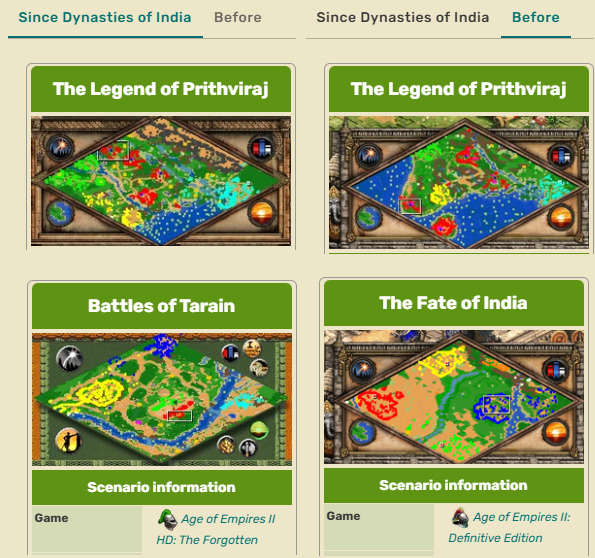
At least that’s what they did when they remade Pritviraj, twice (from Forgotten to HD, and when Indian Dynasties came out).
If they add another level, I hope it’s about Tupac Yupanqui’s expedition to the Pacific. Then, if Oceania civs are ever added, they can be used in that scenario.
They would have advertised new scenarios if they would have added them but the FAQ clearly says only 15 new scenarios. So I guess they haven’t added new scenarios only changed the factions around and fixed some bugs.
Yes, that’s true… I hadn’t thought of it that way…
Yes, according to history, Pacanchique led the Spanish to Somangoso, where the Muisca wonder was located, and because the Spanish betrayed him, they ended up destroying everything…
Yes, the developers already said they’ll rework Pachacuti to include the new civilizations… meaning we’ll see Mapuche in the southern scenarios and Muisca in the northern scenarios…
Yes, until they include North American civilizations (aka Hauds and Inuits), that’s all we have left in Vinlandsaga and Karselfni…
Yes, in Dos Pilas and Drake I would expect much more variety of civs, although they will probably change it again if they add more Mesoamerican and Caribbean civs (Purepecha, Tlaxalteca, Carib)…
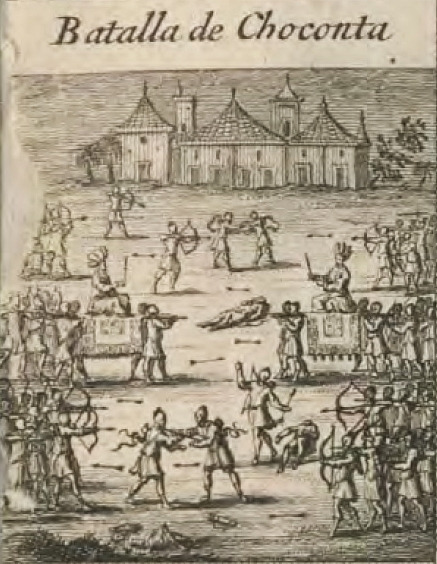
Yes, we know that the Battle of Chocontá (1490) would be playable in the campaign, but could we see the Battle of Pasca in 1470 before that…
Yes, they appear in the 4th/penultimate mission: The Battle of Tocarema (1538)…
Yes, they are playable in the German campaign of American Conquest…
Yes, basically it’s going to be a Tupi civil war with the Portuguese and French taking sides…in fact, there were never many wars between Portugal and France; Portugal basically did what its ally England/Great Britain did…Portugal only faced France in the Peninsular War during the Napoleonic Wars…
Sure, we can see the Battle of Maule in 1485 as a prologue/first mission and then the Arauco War with Lautaro itself…
Yes, the naval rework will come with the same South American expansion…
Yes, that’s true…
Yes, I agree…the simplest thing would be to include the Mapuche in the 4th scenario and then add a 6th scenario with the Battle of Maule in 1485, playing as Yupanqui against the Mapuche toqui…
It could also be a secondary objective in the 6th scenario…fight against the Mapuche in the scenario, which would be central Chile, while sending an expedition to Easter Island, which could have Polynesian natives (who for now would be Malays) (it could be like the 4th scenario of Gaja Mada but with more land in the east and more sea in the west)…
Yes, it would be a missed opportunity to bring Teutons into an American scenario…Although we wouldn’t see any castles or Teutonic knights (the Germans from AoE 3 would have fit better, but oh well, what can you do)…
Yes, that’s true…it’s most likely the new civs in Pachacuti, the 3 new campaigns, and nothing more…