They were a province within France, but the French did not consider them the same as them.
I read it ages ago, when this discussion came up before, as I looked it up. Can’t remember where it was.
They were a province within France, but the French did not consider them the same as them.
I read it ages ago, when this discussion came up before, as I looked it up. Can’t remember where it was.
It’s difficult to understand because it’s a political conflict.
And remember that politicians also intervene to often write history based on the narrative that best suits them:
Genetically and by tradition: Both the French of Armagnan and the French of Burgundy were French.
Burgundian-Netherlands (1384–1482).- In the midst of the Hundred Years’ War, some French nobles of the House of Burgundy decided to make arranged marriages with princesses of the Low Countries (Netherland). They “legally” seized control of the Low Countries, stripping the HRE of its dominion, with whom they entered into continuous war. Worse, they declared war on the very French of the House of Armagnan, the royal house, allying themselves with France’s enemies, the English, who, moreover, considered them a separate kingdom.
France, Royal family.- They were in serious legal trouble. Technically, the King owned the entire country, but for a terrible bad administration, his Dukes and lesser nobles could “buy” any land from each other or bequeath whatever they wanted to whomever they pleased “Without fear of Expropriation”. This freedom allowed for the creation of the County of Burgundy-Netherlands, which by acquiring territories of the HRE (Holy Roman Empire) that did not belong to the King of France, allowed these territories to not pay taxes to the Crown, a Phantom State by any measure. Therefore, when this house ally with the England Kingdom, and even Besieged Paris, they considered the Burgundians traitors, and the war against them a “Civil war” since the territories theoretically belonged to the French crown, of whom the Duke of Burgundy supposedly was vassal.
English.- For them, only two things existed: their lands and other people’s lands. They didn’t care about encouraging the creation of a Burgundian state separate from the House of France, or about refusing to recognize the heir to the French throne, the Dauphin. As long as they came out ahead, anything was acceptable.
And well, everyone learned something from all these socio-economic problems:
France: Once the Hundred Years’ War ended, the idea of France as a nation, and not as a collection of noble duchies, became more firmly established. Any new acquisitions by the kingdom belonged to the kingdom, not to some wealthy nobleman.
Burgundy: Burgundy, on the other hand, could not grow further because its last King/Duke attempted to expand in a war against Switzerland, which he lost, and then died in his last battle without male heirs. His territory was then divided between the Holy Roman Empire and France.
English: They lost their territories in France, and on top of that, they entered into a civil war between the noble houses of York and Lancaster.
strong alemannian dialects like swiss german, or even strong allgaeu dialects, are incomprehensible to bavarians, just as they are incomprehensible to northern germans. similarly a strong austrian or bavarian dialect will be incomprehnsible even to other bavarians
you are just repeating your claim without evidence.
exactly, it’s a political conflict. the burgundians were a subfaction of France, which used the war with England for gains in internal power struggles.
I don’t care. I have better things to do than constantly re-look for sources that I found before for an argument on a forum.
So is 3k factions.Not saying crusaders should be added but they can be.
There will be ways to make the tech tree different.
Normans classical romans and north italy you mean.
They are already covered by every European power that invaded. Franks, Sicilians, Teutons etc.
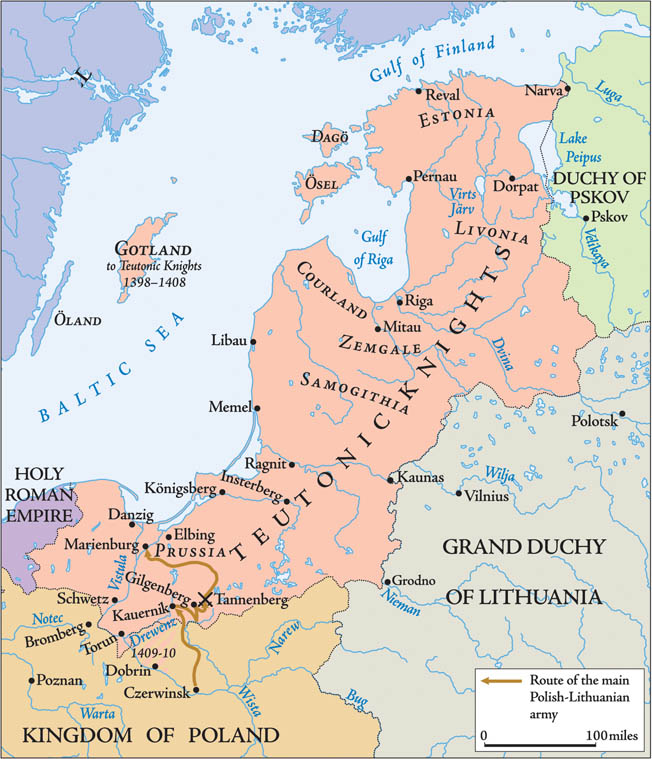
In my opinion, this map from 1409-10 says a lot about how the division should look: 1. HRE 2. Teutonic Order as all german factions. It would be nice to see the Swiss in one of DLCs someday as a third german-speaking faction with their own path through the ages.
I wasn’t proposing that. I actually agree with you that Alemans/Swabians and Swiss are on one side and Bavarians and Austrians on the other. I divided my comment in three paragraphs to suggest that you could even have a third one. But I didn’t touch gameplay, it was just about trying to brainstorm how you could separate each culture.
I think it’s a similar case to Bretons, they were often independent from France or the Frankish empire, in the dark ages and later. That said the reason they added them is because they wanted to make Joan of arc from another perspective. They weren’t reasoning in terms of holes to fill in the map like we do.
Why are you always so excited for the most pointless-but-marketeable additions possible?
Let’s get back to the main topic. Do you like the idea of such a pagan, savage baltic faction with a melodramatic campaign?
It’s a pointless addition. And what’s up with Polish people suggesting only German and Poland-adjacent civs?
I’m up for something from other regions than Europe at this moment, since it is crowded. Okay, Vlachs and Basques could be nice additions, but I’d rather see a development in Africa with new civs or even N. America / Oceania for a change.
Basques and Vlachs aren’t really empires, but once we’ve gotten an African DLC, I’m fine with getting them. Though only after an African DLC. Going to wait until they release an African DLC if the next DLC should be Balkan themed. Basques have their unique language going on, but I don’t really think we need the Kingdom of Navarra soon.
It’s just that the game is really bloated with European civs, and we’re getting way more European civs than for the rest, which is really not warranted IMO considering the potential the rest of the world has which is still untapped.
I don’t mean now. Someday after 3-4 AOE 2 standard civ packs.
I just think that the Polish-German-Czech region is already quite densely populated with civs right now. And if I had to make an European DLC, Old Prussians would probably not be on my list. The region in my opinion which makes sense to feature in a DLC the most for Europe is the Balkan region, though designing a DLC for this region is problematic to do right. Possible additions there would be Albanians, Bosnians, Croats, Serbians and Vlachs, though which to pick without offending anyone is most likely impossible.
For me, I went with the Albanians, Croats, Serbs, and Vlachs, as they present the broadest groups and the widest range of playstyles. You have the Albanians, with their archers and defenses, the Croats, with their infantry and ships, the Serbs, with their cavalry and monks, and the Vlachs, with their cavalry, defenses, and gunpowder/siege. Only two of those areas overlap, and the approaches are completely different for each civ. I think this is the way to make a Balkan DLC without each civ seeming the same.
In this case, the Bosnians would just have to get over not being included, because their lands were controlled by other civs for most of their medieval history. Besides, I think the conflict between Balkan nations is probably overstated.
The main way I would avoid causing offense and strife is by making it so that each new Balkan civ is not fighting any of the other new Balkan civs in campaigns, and will only have either battles against old civs or mirror matches. This should be fairly doable if you choose the right figures.
short answer: no.
long answer: nooooooooooooo (+the rest of this thread)
PS: savage is a pointlessly loaded term.
That’s literally something which applies to the entire Balkan region for all non-Bulgarian Slavs. If we’re going by that factor, none of them should be added. The only long lasting, non-Byzantine or Turk empire thing going on in the region during the time frame we already have in the game in the form of Bulgarians and Magyars. And yeah, like I just mentioned, the Balkan region has already more civs going on than entire continents elsewhere. Luckily, we’re getting that a little bit rectified with the next expansion, though we’re still at the beginning there. Hence my apprehension to add them for now.
Bosnians are as good of an addition than the other Southern Slavs still not represented in the game. They’re just not being pushed by anybody for whatever reason.
I’m not sure why. Maybe it’s just because they don’t really have anything unique to offer in comparison to the other Balkan civs.
No, because no. Childish explanation.