I meant mirror matches in the sense of you playing Italians Vs Italians for all the Sforza campaign with only Venetians being Portuguese for some variety I guess.
Never heard of this but 900s/1000s sound a bit too early, communes and maritime republics were only beginning to develop. I think Dante was the first to speak about Italians, then Boccaccio and Petrarca but even then I think it was mostly an intellectual fabrication, nobody in real life would call themselves Italian in the middle ages. They were all identified with their local city or region until modern times. Wasn’t Garibaldi the one who said “we made Italy, now me must make Italians”?
I think a fair comparison to a guy from Milan calling himself “Italian” in the middle ages would be someone from Italy calling himself “European” in the present day. “European” is not a cultural identity at the moment but just a political structure superimposed on local identities and cultures. People nowadays would 99% of times say they’re Italian, French, German etc rather than say they’re Europeans since being European only possess a geographical or abstract political quality. You hear mostly intellectuals and elites trying to push for “European”, the same way nationalists back then were pushing for Italian, French etc over local identities.
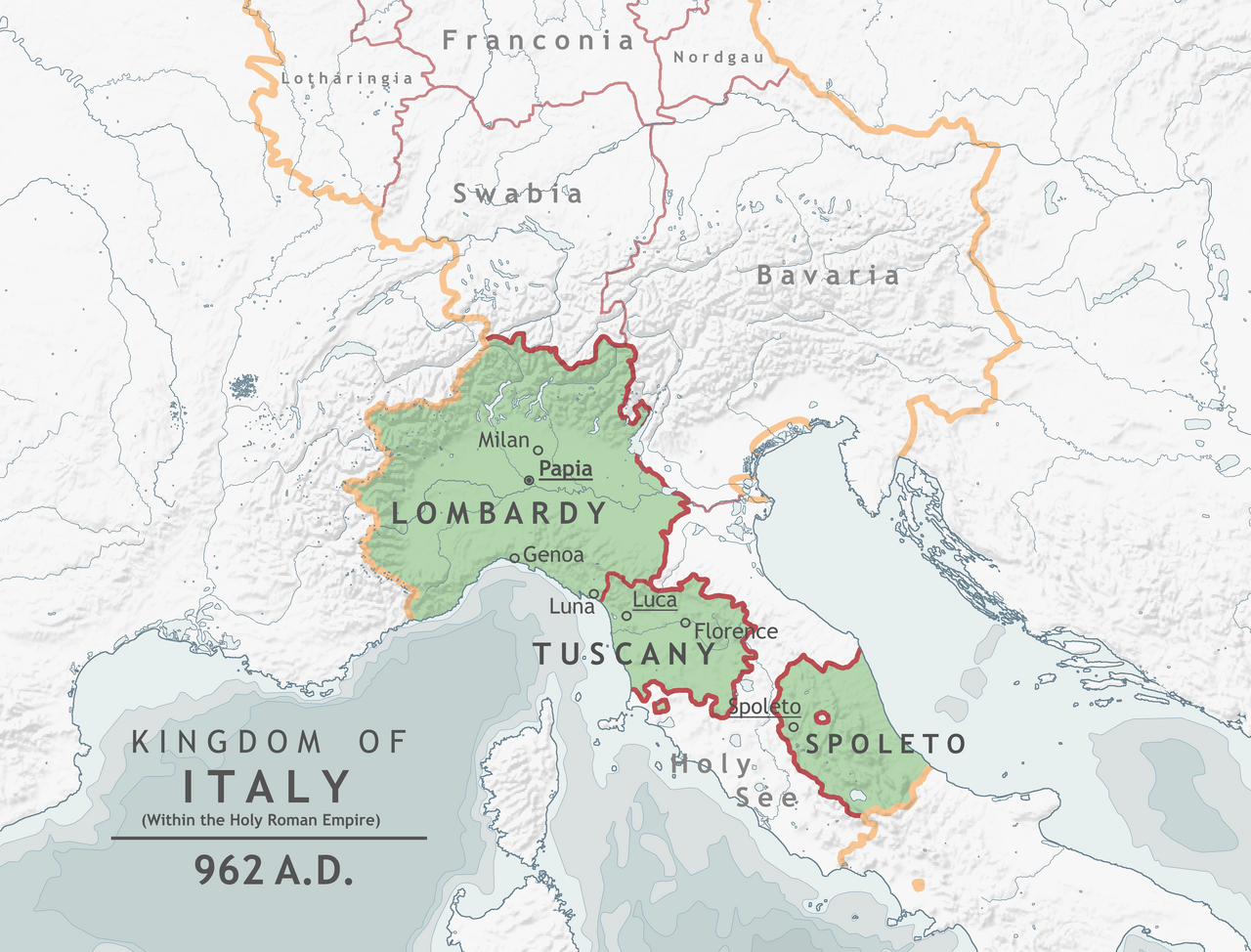
If you mean the kingdom of Italy within the hre well it was only Northern Italy and I’m quite sure it was just a geographical expression not to be intended as the “kingdom of Italians”. It’s not that the inhabitants of the hre called themselves “Romans”, it was only political, they all knew they were Germans. Italians who resisted Barbarossa named themselves the “Lombard league”, not the “Italian league”.
It’s this passage that I’m missing… To me it’s something like:
Italic tribes (antiquity, iron age) → at this point Italy is just the southern tip where Greeks created their colonies.
Social wars of the late Republic → Roman citizenship is extended to all people south of the po river.
Caesar and Augustus (early empire) → Caesar extended the citizenship till the Alps, Augustus finished the conquest of the Alpine arch and created an administrative division called Italia which is basically modern Italy without the islands. At this point tribal identities start to disappear like samnites, Etruscans etc and everyone learns Latin.
Caracalla and Diocletian (late antiquity) → everyone becomes Roman, Italy is not the centre of the empire anymore since Diocletian made it just a province among others so all citizens start to revert back to local identities to distinguish themselves. In Gaul for example those identities are still alive (Gaulish is spoken until the 6th century which is not the case for any native Italian language, you still see people identified as Averni, Senoni, Aquitani and other Gallic tribes after the fall of Rome) but not in Italy where Etruria is now known as Tuscia (eventually Tuscany) so they’re just Romans which becomes synonym of being Christians (not Aryan like Germans though).
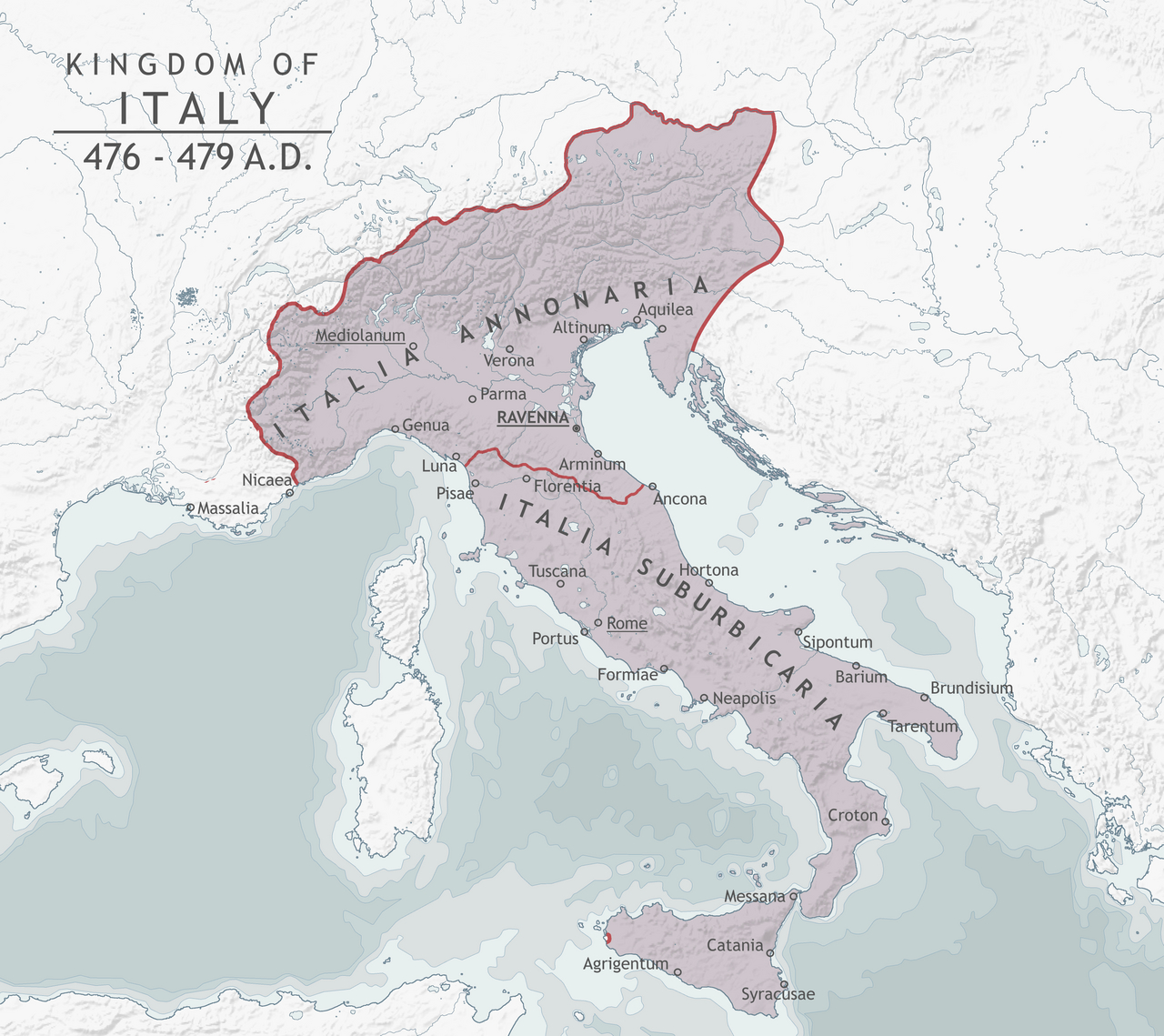
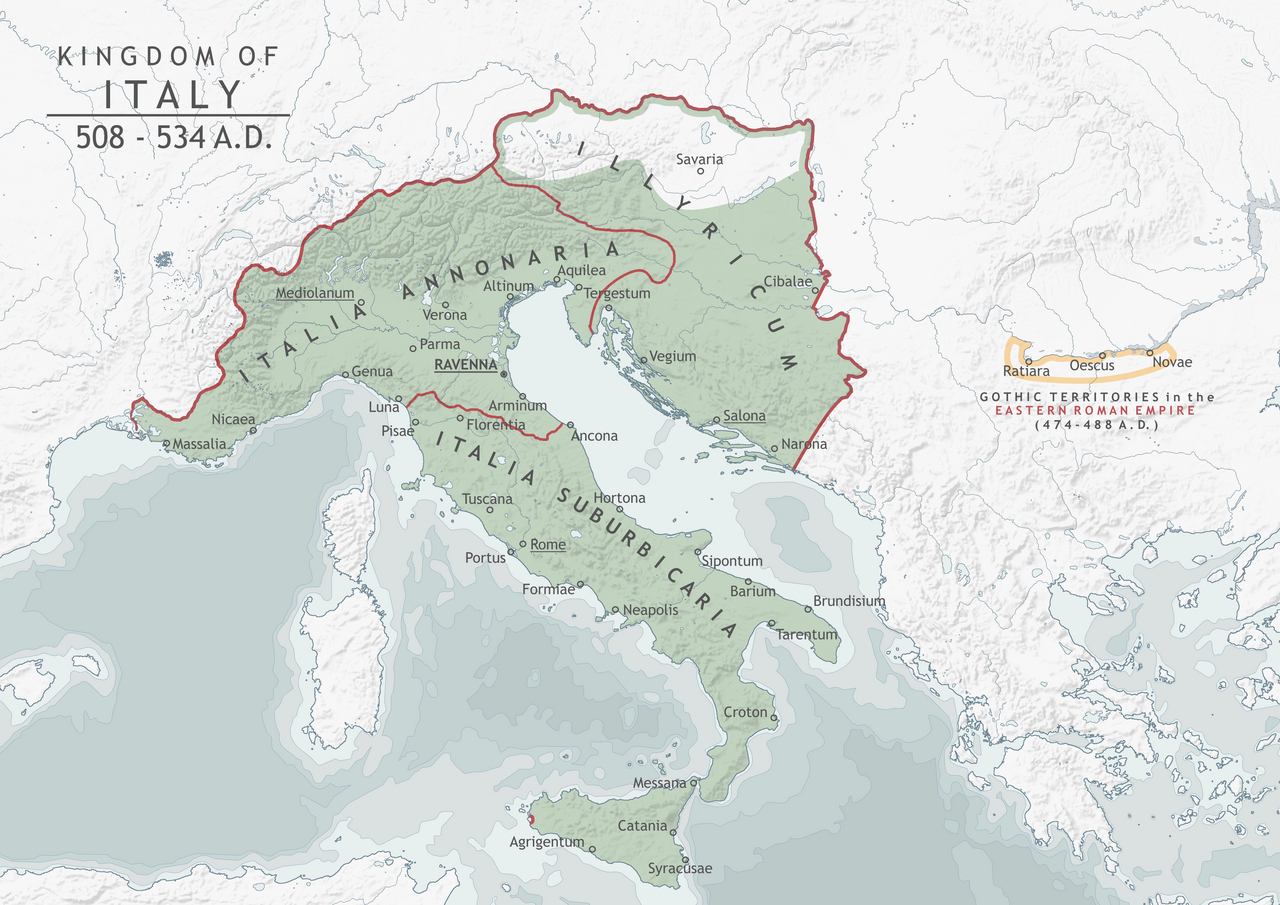
Gothic war + Lombard invasion combo → Italy is broken apart for the next 1300 years, disillusioned with “Roman” emperors from Constantinople from a side and Germanic Lombards to the other. Roman identity lingers on cause Rhotari still issued laws based on ethnicity rather than territory (no nationalism yet) so Romans follow Roman laws and Germans follow Germanic customs. Didn’t help that Romans are Catholic, Germans are still Aryans for the most part. The segregation stops towards the 8th century cause Lombards convert and Liutprand unified the law codes so they start to merge but…
Charlemagne happens → “Roman” here basically stop making sense and they all identify as Lombards creating the confusion people have nowadays about Lombards being Italians. You don’t even see much Latin names anymore and a lot of Germanic ones which may mean that tables have turned and it’s simply more convenient to identify as a Lombard in everyday life.
Here goes the part I’m missing where you say they identified as Italians (900s/1000s) but I think they were either Lombards or local identities at this point.
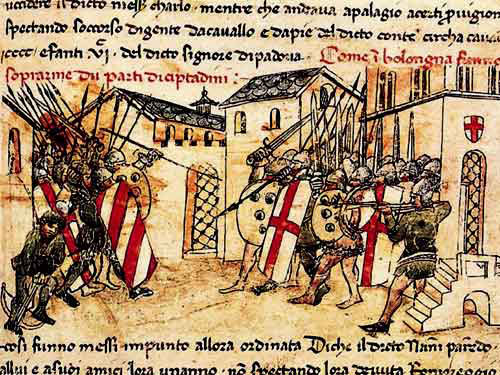
Communes, Dante and early renaissance → Dante defined Italians in opposition to the Romans of his days who he didn’t like, tries to push for Italian unity by using the vulgar Florentine language but it’s the age of communes so everyone’s still very local. Then French and Spanish intervene so Italian unification is postponed as you said.
Risorgimento → many Italians couldn’t even speak Italian when Italy was created, they were still speaking their dialects but the government started a deep program of alphabetisation towards the end of the 19th century until the mid 20th century. If you’re old enough you may have had a grandma or great grandma who spoke her local dialect better than proper Italian or that would know all prayers in Latin (in the north cause the south had more Byzantine orthodox influence).
So the part where I disagree is that I don’t think there was an unified Italian identity between “Roman/Lombard” and the commune fragmentation but it simply went from Roman/Lombard to Venetians, Florentines, Milanese etc. unless I’m missing something.