The source!
3 Likes
Sorry, I misread the Chinook subdivision of Kathlamet as Klamath.
I’m not saying you’re supporting racial pseudoscience, but part of the idea behind the Malay world comes from that.
The Malay and their language do have influence over much of the area, but that doesn’t mean every culture in the area is blended with Malay. It’s more similar to French being the dominant culture and language in Europe in the medieval and early modern period.
2 Likes
Yeah, some revolution civs introduced in DE didn’t really become independent until shortly before or after World War 1.
I would love the addition of the Polish-Lithuanian Commonwealth, it was powerfull in Europe between the 16th and 18th centuries. I also think that the tame has longed moved from the original “Age of Discovery” idea.
I need my Winged Hussars in AoE3!!
1 Like
Thanks for your answer!
I read the references in the bibliographical sources and I find it fascinating.
The sources are true, there is no doubt about that, however some clarifications have to be made:
In the sources it is reported that there were gold deposits, and that many Mapuches were taken to work there against their will, from here it is deduced that gold was found in territories adjacent to the Mapuche territory or that they were territories conquered by the Spanish; so there is only one option: The city of Valvidia.
I found some information about the city of Valvidia a few years ago when I was reading about the Jivaros, two of the cities that produced the most gold in the peripheral areas of the Viceroyalty were Logroño and Valvidia (obviously they generated a much lower amount of gold than the central areas of the Viceroyalty); what is interesting is that both cities were destroyed in the same year (1599) by the Jivaros and Mapuches respectively. However, the Spanish managed to reconquer and rebuild Valvidia a few decades later. For this purpose, support was requested from the professional army of Lima (Capital of the Viceroyalty of Peru at that time) and they managed to defeat the Mapuches in the Battle of La Albarrada, after which the Mapuches agreed to capitulate in the Parliament of Quillin (1641) in where they gave up much of their territory.
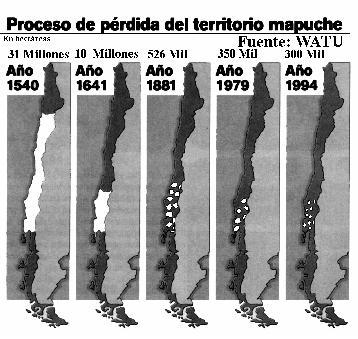
The city of Logroños (and the other 5 cities that the Jivaros destroyed) did not have the same luck, the Spanish tried to reconquer the territories of the Jivaros for centuries but failed in all attempts.
(spanish)

Conclusion:
There was gold in some areas of the Mapuche territory, but those areas were conquered by the Spanish, however, it must be recognized that the Mapuches fought for their autonomy and reached an honorable agreement.
The subject of Mapuche silverware caught my attention because they refer to it as “silverware” and not “metallurgy”, when I found out about the subject I discovered that the reason is because they mainly used silver for their metal crafts, and this has a very simple reason: The Mapuches, as a vassal people of what was the Spanish empire, negotiated with the Spaniards receiving silver coins as payment (mainly coming from the Cerro Rico/Potosí, which was the richest source of silver in the history of mankind), the Mapuches used those silver coins to make ornaments (perhaps the economic value of the coins was not as important to them as the hierarchical ornaments).
Thank you very much for considering it.
I know that the Jíbaros have enough history and personality to be considered a major civilization. I have personal experience with the peoples of the Amazon, I worked for a while in the western part of the Amazon and I was fascinated by the history and culture of those areas, so in some way I consider it to be a kind of personal mission to publicize the achievements of peoples like the Jívaros, obviously I am just a man in a huge world but I try to contribute as much as possible.
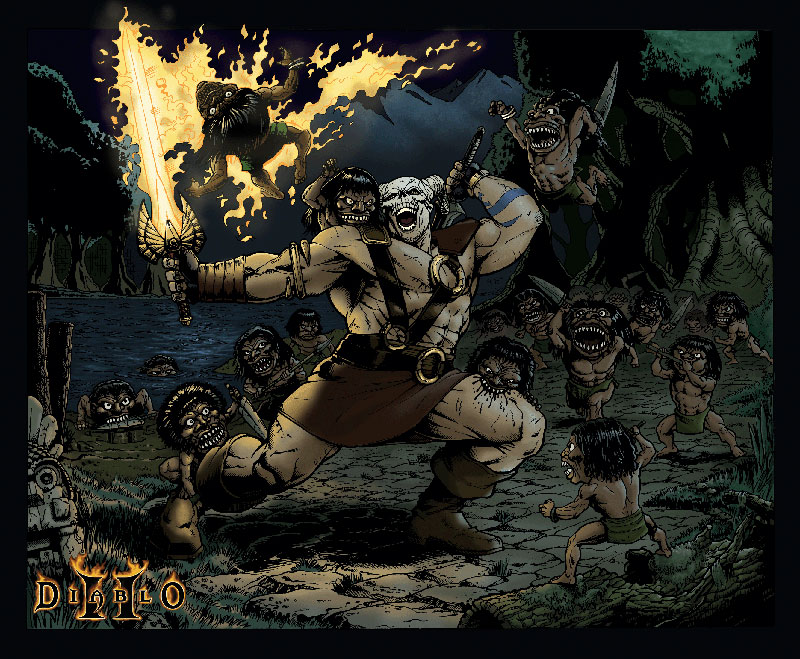
Of course, Blizzard video games like Diablo and Warcraft had a certain influence on me  , and elements like Tzantza seem macabre and fascinating to me.
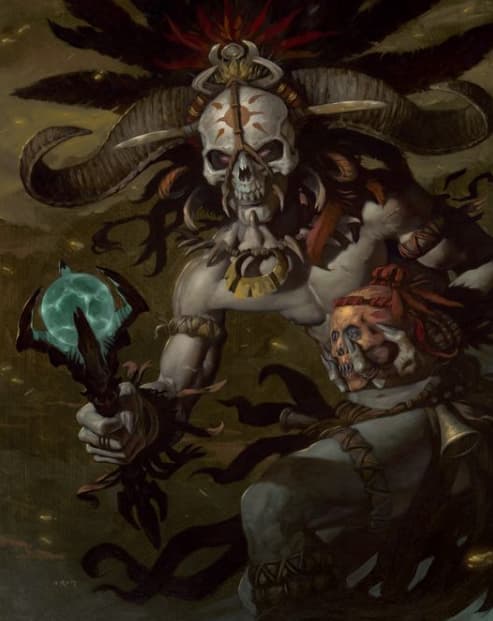
Sometimes I think people associate the Amazon, the green hell, more with horror stories than with real history… and the games are an example of this 
3 Likes
Today 5 new achievements were added, I think the possibility of a 2nd civ is very likely now.
4 Likes
It could be achievements related to MP historical scenarios, USA, etc.
I doubt that we will get a 2 civ
Those 25 achievements are certainly not related to 1 civ.
4 Likes
5 achievements per new civ (2 new civs) + 15 achievements for Historical Battles (3 new HB)
Or
16 achievements for old civs (Victory civ achievement) + 9 achievements for USA civ
2 Likes
She is the European dlc incoming as to new achievements
1 Like
At first, I thought those 20 achievements would be for the new civ and game mode that was teased a while back but now I don’t know what to think. If we were getting multiple civs civilization would have been plural.
1 Like
Don’t forget about their confirmed new game mode, it can be related with achievements.
I think the 5 extra that were added today are related to that.
1 Like
Definitely so, possible.
All info related to the new mode (it could have been economic mode) had stopped to be shown on the Upcoming content. Maybe was cut.
But if there was coming a full DLC it would have been marketed as that to build more hype. Maybe I’m wrong.
It’s nice how you’ve been quite thorough in reasons for and against civs in question.
Like how Danes are the last time relevant european civ that makes sense (Poland the most requested making sense as a revolution but not a main civ).
Well other than the german civ being split into two somehow.
2 Likes
La verdad es información bastante interesante la que acabas de mandar colega y con respecto a algunas cosas Técnicamente si, los shuar (jibaros) derrotaron reiteradas veces a escuadrillas españolas (que en su mayoría no eran mas de 100 o 150 españoles acompañados de cientos de indígenas, y si bien no recuperaron esas ciudades el valor que poseían no era tal como para sacrificar tanto recurso, lo mismo ocurrió con chile no había demasiado valor ahí así que tampoco era necesario seguir malgastando dinero en esa guerra, y aunque los shuar ganaron fue una victoria muy pírrica en las batallas sufrían muchísimas bajas y las enfermedades europeas se cebaron con ellos, pero no se les puede quitar ese merito de resistencia, también se puede decir que si se sometieron de alguna manera al imperio español pero mediante el catolicismo
1 Like
A very strong option I hadn’t seen discussed here is the Malagasy. The Merina Empire was the first to Industrialize in Subsaharan Africa and also one of the first to Westernize. Radama I, a contemporary of Napoleon, actually reformed his army on napoleonic lines, uniforms and everything. And his successor Queen Ranavalona built an industrial complex that had nothing to envy those built in Europe.
They were the only state south of the Maghreb consistently producing their own guns and artillery. So, although obscure, if you’ve read about them they really sound like a strong contender.
5 Likes
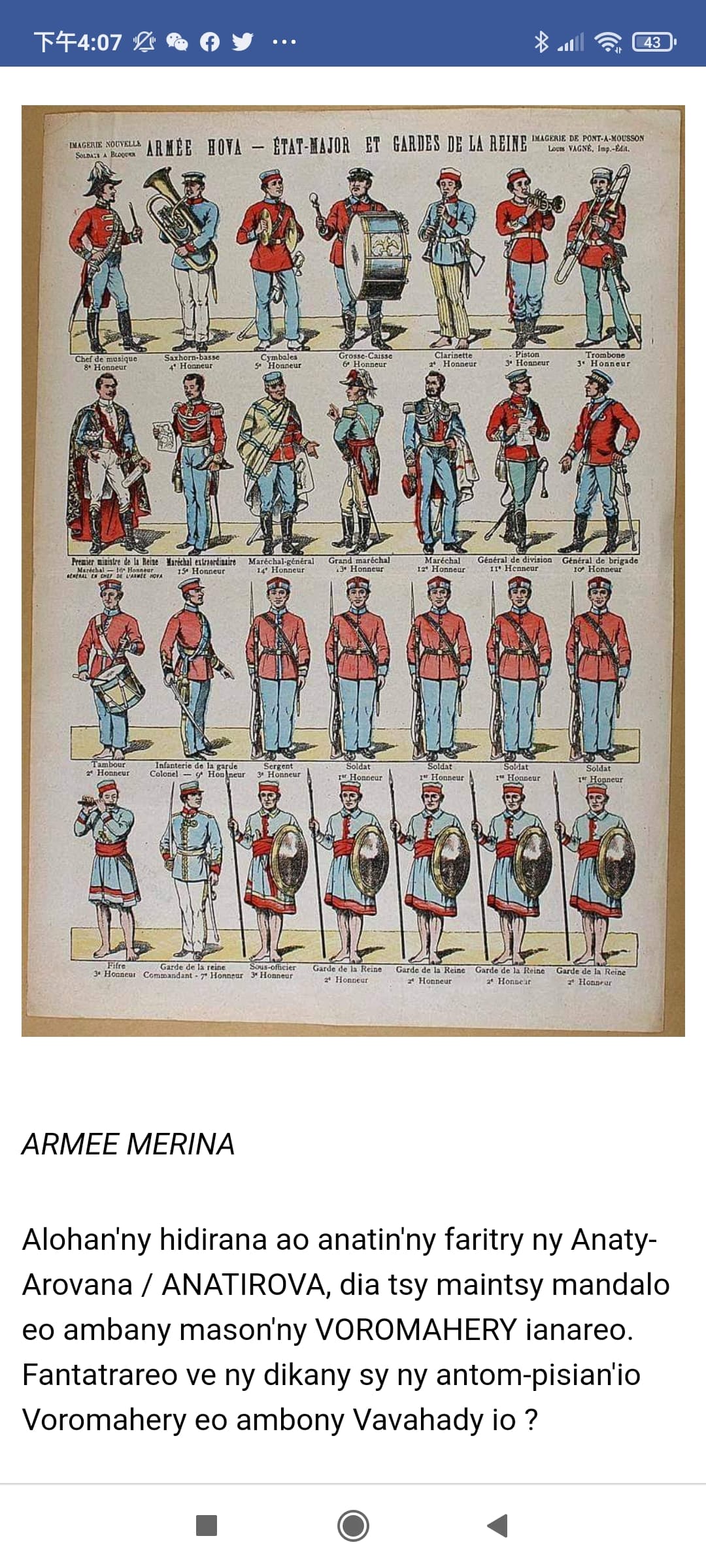


Hi HoopThrower,
You made your point ! I agree the Merina Kingdom gathers all the conditions to be a contender
I’ll try to add them in the thread, otherwise I keep updated a Steam guide that is much more easier to edit for me and visually more appealing too: