I wonder when we’ll hear voice lines
I hope they don’t pull another 3K
The Mapuche and Tupi are fairly accesible languages I believeq
Chibchan (Muisca) seems to be extant as well, but the devs have already shown they’re willing to cheap out.
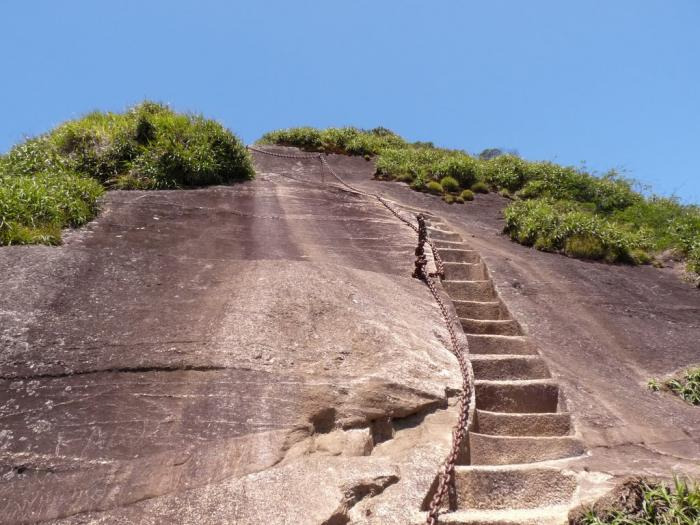
By the way, the stairs in the Tupi wonder might be based on Pico da Tijuca, which isn’t located anywhere near Iguazu
The Muisca language is part of the wider Chibchan language family. There are various surviving Chibchan languages still existing with very few speakers today throughout Colombia and Central America, but the Muisca language per se has been extinct since the 18th century.
However, the Spanish wrote grammars and dictionaries of the Muisca language during colonial times and with those sources the language is studied in some universities in Colombia, with very few scholars being able to say a couple of phrases in Muisca.
There are also efforts in the few remaining modern-day populations of Muisca descendants in native reservations close to Bogotá to revive the language, based on those “scholarly” sources, with some very few people of those communities having some competency in the language.
For the game, they could go in two directions:
- Consult a university scholar and contemporary Muisca communities that are trying to revive the language, in order to use those sources and make the voicelines of the game in this reconstructed “scholar” variety of the language. OR
- Use actual native speakers of other living Chibchan languages that currently exist and are still spoken by indigenous communties. They could go with the U’wa language, the closest language to Muisca that still has native speakers, or the Ette Ennaka language of the Chibchan peoples of the Magdalena River, as well as the Chibchan languages of the Sierra Nevada de Santa Marta. These are not exactly the Muisca language, but they are related and form part of the same language family, as well as having modern native speakers, which Muisca hasn’t had since the 18th century.
(BTW, do we know when are we getting the “Deep Dive” information about the Muisca?)
I’m still bothered they never replaced the made up Aztec language with real nahua
Especially considering that it is way easier to find native speakers of Nahuatl (even in the United States) than it is to find modern-day native speakers of Mapuche, Tupi or Muisca
I hope we get it with a Mesoamerican DLC alongside a Maya campaign. We still have that chance.
Tbh if we get another non-Chronicles DLC yet this year (which I think is possible) I’m 95% sure it would be either Meso themed like this, or North America themed, and Meso themed seems like the safer option tbh (though i’d love a North American one)
There’s also the Byzantines speaking Latin. Khitans speaking Mongolian and Jurchens speaking Mandarin. Just fix them devs.
Byzantines and Italians, in this case
Yes, it’s probably Mapuche (which is widely spoken in southern Chile) and Guarani (which is spoken in half of Paraguay; in fact, my university, being in northeastern Argentina, offers courses in Guarani languages)… Classical Tupi disappeared in the 18th century, and you can find Muisca in some villages in the interior of Colombia…
In AoE 3 it was the same, they changed the voices of the North American civilizations but the Aztecs still speak the same voices as in AoE 2…
Hopefully, but it looks like it’ll be from Chronicles of Rome, and a Mesoamerican or North American DLC won’t be released until next year…
Mapudungun actually (it does get called Mapuche, but Mapudungun seems to be more common)
I’m asking you, everyone is asking you, please stop wording your opinions as if they were facts.
Yes, you’re right…it’s Mapudungun, but I didn’t want to get too technical…
Well, I won’t say anything more then… for my opinion it’s 95% the Chronicles of Rome DLC and I won’t argue about it anymore…
The issue is you lumped it in with talk of a North American DLC, as if it was equally likely. Which of course it isn’t.
The Muisca language has been extinct since the 18th century. You can find find some rare speakers of other related Chibchan languages in some very remote areas of the mountains of Colombia (such as the U’wa people), but the exact language used by the Muisca is no longer spoken as a native language. It has, however, been studied by scholars in universities using Spanish colonial sources that describe the language. Also, some remaining Muisca populations that still survive in some reservations in central Colombia have been trying to revive the language. I live in the area were the Muisca used to live and have never in my entire life heard anyone speaking in Muisca, nor any other indigenous language, sadly.
Also, the Guaraní language, even if its also part of the Tupi-Guarani language family, is a completely different language to classical Tupi or the language used by the Tupi peoples per se. That would be like giving the Spanish in-game German voicelines because their languages are somewhat related. Sure, they could go with Guaraní since it is the most widely used Tupi-Guarani language today, but it wouldn’t be accurate, though it could be a solution. I’d rather go with the Nheengatu language, which is the modern version of the Old Tupi language brought to the Amazon by the remaining Tupi who fled from the coast during Portuguese and Brazilian colonization. It is still spoken by 19,000 people in the Amazon regions of Brazil, Venezuela and Colombia. Sure, it would be way harder to find a speaker of Nheengatu than it would be to find a Guarani speaker, but in my opinion, it would be the most accurate choice. I’m not sure if Brazilian universities study Old or Classical Tupi language, but that could also be an option.
The easiest here would be the Mapudungun language of the Mapuche, which still has a lot of native speakers, with almost 260,000 people. I’m sure it wouldn’t be that hard to find a native speaker of Mapudungun, especially around Temuco in southern Chile.
Is not that different really, the best example is to explain it like romance languages, you get the words, some are identical, some change a litlle, some has new meanings, but you can adapt as you go
A sweetspot is there
That’s true, but they were just my opinions…
I know precisely nothing about native South American languages to judge if they did voicelines properly/historically/accurately, but from watching some Viper gameplay vids each of the civs has their own unique voicelines, so at least they didn’t 3K us in that regard.
Or in general, from everything i’ve seen so far, sure there will be some balancing and such that needs done, but this DLC seems like a breath of fresh air and what a lot of us have been asking for in the “classic” DLC model, and with 3 new civs instead of just 2 like a lot of the early DLCs, so all in all i’m extremely pleased with what i’ve seen so far.