Roman period
In Poland, after the end of the Late Latin period (approx. From the second half to the end of the 2nd century BC), the period known as the Roman period begins. It was named in this way because it was during this period that we can notice the greatest impact of the Roman Empire on the society of Polish Slavic tribes so far.
The Roman period can be divided into three sub-periods:
1st subperiod - from 35 to 170 AD,
2nd subperiod - 170 - 370 AD,
3rd subperiod - from 370 to the end of the 5th century AD
The period from the 1st to the 3rd century AD covers only the first subperiod and the beginning of the second. This is when the Roman influence is most visible.
What caused the influence of the Romans on the civilization of the Slavs? There are many reasons for this. We have many material sources, continuous archaeological research gives us the opportunity to delve into the history of a given period.
One of the reasons is the march of foreign tribes through Polish territory, for example in 170 there was an invasion ready. At the time of the attack, this civilization was already under a strong Roman influence. It introduced numerous rituals and traditions into Polish culture, and also led to a change in the craft.
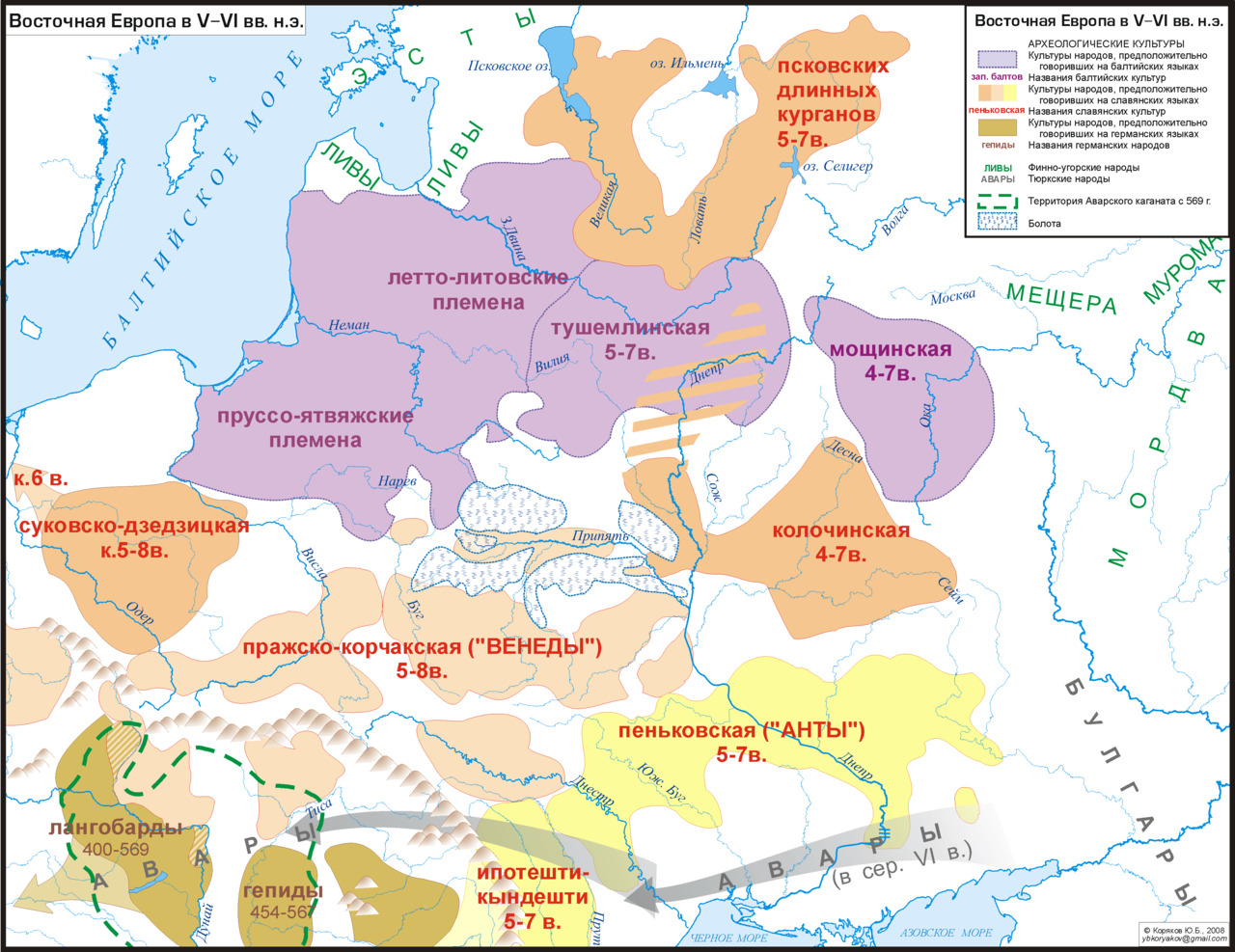
There were many more such peoples, for example the Lombards (a few groups of Slavs inhabited the same area) and other Germanic peoples. Thus, both other peoples and the Romans themselves contributed to the creation of the Roman period.
Trade
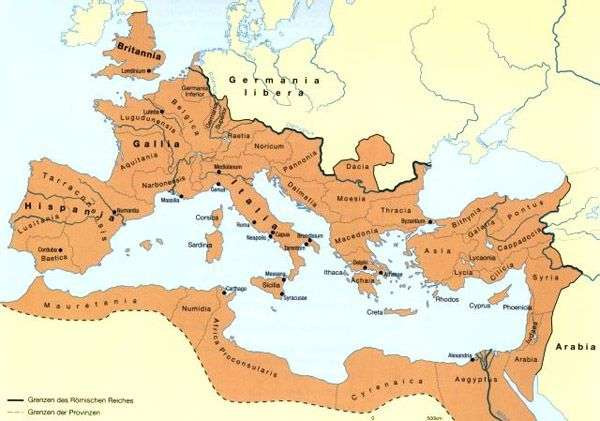
Economic relations include primarily trade. From the 1st to the 3rd century, the Slavs actively traded with the Roman Empire. The constant trade contacts of today’s Poland with the Roman Empire are evidenced not only by numerous coins, but also by significant groups of other imported goods, such as clay vessels, metal vessels - especially bronze - gold and silver products, glass vessels and many other items.
Roman goods flowed to the Slavic countries mainly from the Danubian provinces. The city of Carnunntum in Pannonia played a special role here, being the beginning of the amber route. It ran through the northern lands of the Marcomanni, Boers, Lugids Dunijskie and further along the Moravian Gate, reaching the Odra near Wrocław, from where it headed to central Wielkopolska, where it branched into the western and eastern branch along the Warta and Noteć and the western branch, ending at the mouth of the Odra in the vicinity of Szczecin, and the eastern branch ran towards the middle Odra, along the Prosna and Vistula valleys up to the Gdańsk Bay. This trail was best known, of course, there were more roads.
There were also sea and coastal roads. Mainly products from the Rhineland traveled along the sea route. It reached the Vistula and continued upwards, then headed towards the Bug and reached the sources of the Vistula and San.
The coastal road led through Thuringia, Saxony, Brandenburg and ended in the Baltic Sea. Various passages in the Carpathians, e.g. through the Jabłonkowska Pass, were also of great importance.
Despite the significant influence of the Roman routes, the system of communication with other tribes did not change much, only the branches of the route could change their original meaning. Thanks to the work of archaeologists, it is known quite precisely what was imported from the Roman state to the territory of today’s Poland, but it is difficult to determine what was exported from these areas.
Scientific sources testify to the great importance of amber, highly valued in Rome. However, the Romans did not only import amber, they were probably also cattle, furs, animal skins, beeswax, goose feathers, salt and maybe even slaves.
The Roman state created perfect conditions for internal and external trade thanks to the creation of a unified monetary system. Roman coins were highly valued also outside the borders of the empire among peoples who did not have their own monetary system, but accepted and eagerly collected Roman coins.
Roman coins
Roman money was an object of trade - at least for the tribal elders also in today’s Poland (the evidence is found “treasures” of Roman coins, for example in Połaniec). It would be worth discussing them here, as they played a significant role in the culture of the Slavs.
The period of arrival of the coins in Poland is not fixed. Archaeologists estimate that the greatest influx occurred between 100 AD and 210 AD. We were the first to receive republican coins, and a bit later imperial coins.
Various amounts of coins were delivered to Poland at different times. For example, during the reign of the Emperor Caracalla, the coins contained little pure gold or silver, therefore the Polish population stopped trusting the empire during the reign of this emperor. After all, we associate coins only with a circular function. As for Rome, the statement is correct, but as for the barbarian peoples, the coins were used by them for various purposes.
In Polish vaults, we find silver coins more often than gold or bronze ones. Roman coins had full cognitive value and were more representative than coins discovered in settlements or graves. Gold coins certainly did not fulfill the circular function. The Slavs probably noticed that gold as a metal was much more valuable and decided to smelt the coins without paying attention to their face value.
Over time, gold was used as a circulating material. Therefore, thanks to such use of Roman coins, the Slavic tribes had the opportunity to get rich and trade with other tribes, e.g. Germanic. We can observe this on the basis of archaeological finds, which show that gold coins are found in the tombs much less than silver coins. Likewise, the circulation of gold coins was slower than that of silver coins.
The coins were also used to improve the production of everyday objects. The obtained metal money was melted down and elements for the production of a specific item were made. It increased the value of the thing they were doing. Many coins were found that had holes in them. These, in turn, could serve as pendants or amulets. Such a custom was common even among much more civilized peoples. The custom itself also comes from the Roman Empire.
Amulets that were not coins most often resembled encapsulated pendants in shape. Medicinal herbs were usually placed in them. It was believed that this could protect against various diseases. But the custom of putting verses on such pendants was not adopted.
The puncture of the coins was also related to the desire to put them in something like a purse. This was to prevent the loss of coins. They were hung around the neck with a wire or string. Coins of high value were probably worn.
Silver and bronze coins played the majority of their roles in circulation. It should also be added that Roman money was not used by the general population, but only by representatives of the elders. Coins also often served as gifts to the tribal chiefs and other leaders. Taking the above-mentioned things into account, we come to the conclusion that the Roman coin played only a limited circulation role in Poland.
Other items of trade
War tools were also found in Poland. However, there were few of them. This proved that the Romans complied with the rule that was imposed by the emperors about the ban on the export of weapons to barbaric countries. A characteristic type of sword called gladius has been found in Poland. Its characteristic feature was that it had a profiled brass knob. He was found in such cities as: Wesółki, Żerków.
Numerous specimens of edged weapons were also found in Grabice and Podolia. On this weapon was engraved the sign of the Roman legions - the eagle and the image of the gods Victoria and Mars. Numerous spearheads have also been found. Scepter and glassware were also imported in the same period. They were often used as grave furnishings.
Among other things, beads, necklaces, clasps, bracelets, clasps, buckles, cups, cases and the like were found. We can find many ceramic specimens. Mainly terra sigillata type vessels are found. They come mainly from cemeteries. From the areas of Gaul and the Rhineland and from Asia Minor. Other relics include buckets, brown cauldrons, bowls, saucepans, pitchers, cups and mugs, pendants, spoons, toiletries and figurines of various deities.
It is interesting that the Romans, in order to facilitate trade contacts, brought wine to Poland. The elders appreciated this drink very much, because they believed that if it was specially prepared, it would obtain healing properties. They did it with the help of special skimmers. Herbs were thrown into such a strainer and poured with wine, which resulted in a healing mixture. There were advantages and disadvantages to trading with the empire.
The downside was that very few weapons were pouring in and a lot of luxury items. You had to pay a lot more for these items than they were really worth. The positive side of the development of trade was getting acquainted with various technical inventions. The Slavs learned to make various tools. This has made significant progress. It was of great importance for later development.
The influence of trade on art and beliefs
Trade is also associated with the influence of Roman art on tribal art, and I think it should be described roughly. The Romans delivered numerous ceramics to Polish territories. The Slavs took over from them the style of making dishes and the way of ornamentation.
The paintings were placed mainly on ceramics, metal and horn objects (possibly also on figurines of animals made of clay). Most often they were geometric figures, but not always. Swastikas, herringbones, fork marks, angles inserted into each other and chessboards were used, which were probably made with a potter’s disk with which they were decorated with a checkered or wavy ornament. But even a realistic shape was found on some of the vessels. Such ornamentation included the representation of human and animal figures.
Several vessels were found that depicted, among others, figures standing by the horses. One of them shows a woman with huge fingers. It is probably a goddess. Moreover, the horse was treated as a sacred animal. This may indicate that the Slavs also took over the cult and magic symbols. Pagan religion passed to Slavic culture mainly through the influx of figurines and paintings of gods.
In Poland, deities such as Mars, Aesculapius, Jupiter, Juno and Minerva were worshiped. Ancient figurines found their way to Poland probably through merchants. People’s beliefs could also be influenced by news or some Roman symbols passed on to the local population. The Slavs also took over the cult of the sun and the cult of some animals, for example dogs. Many cemeteries with the bones of these animals have been found around the cities.
Another cult was the cult of water springs. Water was believed to have healing properties, so we can find the remains of numerous wells around the former urban centers. These springs have been revered for many centuries. It was observed in the Wałbrzych region. Religious traditions also involve burying the dead.
The ritual of burning came from Rome. It was very common in Rome to use resin for this process. In ancient urns located in today’s Poland, lumps of resin were found, which come from the wood given to the pile. We can distinguish two types of pit and urn graves. As for the rich people, as it was in Rome, they were buried in huge mounds. It was very expensive, so not everyone could afford it.
Later, a multitude of burials can be observed. This is evidenced by finds from Gronów, where five people were buried in one burial mound. Various rituals were practiced in cemeteries, such as the cult of ancestors. People believed that the dead could contact and influence the living. This is evidenced by research conducted near Opole. Feasts and games were also an inseparable part of the funeral. It was the Slavs who also took over from the empire. Of course, when it came to rich people, they were characterized by greater sumptuousness. The poor could not afford it, but they also tried to perform the funeral as best as possible. The rite also included songs and dancing. Various instruments were used.
The ceremony usually took place in a sanctuary. There are various kinds of sanctuaries, for example, in Kujawy. But the influence of Rome on this area of tradition is evidenced by the interior of the tombs. Many things from the Empire have been found there. We find mostly items in the graves of rich people. Ordinary people in the tombs have inexpensive things, and people hierarchically higher have valuable items brought from Rome. Duke’s burials can serve as evidence, incl. in Silesia, Greater Poland and Pomerania.
Among other things, ornaments and utensils were found in the graves. For example, in the tomb of the princes, clasps of decorated saucepans, bronze bowls and jugs, glass vessels and a mirror were found. However, most of the glass vessels were found. This proves the popularity of products made of this metal.
The largest concentration of glass products from the Roman provinces in Central Europe was discovered in the Bakery Lagoon. Many clay vessels were also placed in the graves, e.g. a clay amphora, a pitcher, terra sillgata vessels, and a clay goblet.
Weapons were very rarely put into the graves (unlike the Roman Empire). Only a few spurs and javelins were found. Based on the above information, we can see that the empire also changed the way the world was perceived by the Slavic peoples. There was a mixing of two separate cultures, which worked to the advantage of the Slavic tribes.
The economic impact of Rome on the change in the occupation of the population and crafts
As the greater Roman influence followed, one can observe technical progress in the performance of activities by the local population. During their journeys through the ore, the Romans showed the Slavs how to fulfill their maintenance work easier, more efficiently and faster. So in a word, they contributed to the improvement of living conditions.
In Poland, one of the sources of income was the breeding of domestic animals, i.e. cattle, horses, pigs, sheep, goats, dogs, cats, geese and chickens. During the period of Roman influence, the technique improved significantly. The changes mainly concerned horse breeding. For the Slavs used barley to feed their horses.
Later they adopted the Romans’ custom of using oats as food. This was a good change because oats, unlike barley, do not make animals fat and give them a lot of energy.
There have also been changes in farming. During this period, the method of soil cultivation and fertilization improved. New tools were imported, for example, trough-type burrs, iron plow-cutters and a knuckle-knuckle, the use of which became widespread in the areas from Odra to Bug. The technique of the cultivation itself has also changed. Earlier, the incandescent technique was used, and under the influence of the Romans, the plowing technique was increasingly used.
Larger amounts of rye and buckwheat are grown. The burning of cereals ceases more and more often, the fields are cultivated with a fixed two-field system. The arable technique was not common throughout the country. In some areas, only the incandescent technology has remained the system of the incandescent technique. This was the case, for example, in Kołozębie. There has also been a variety of farming tools.
Tools were mainly made of wood and iron. Often, both of these materials were combined with each other. The messages of Pillinius tell us that the barbarian peoples used lime and ash to fertilize the fields. Did it concern Polish lands? I think so, because archaeological finds show that lime kilns became more common during this period. Thanks to these changes, higher yields began to be obtained with less work. Part of the population could also engage in crafts.
Economic relations between Rome and the Polish lands were also characterized by the adoption of various craft techniques. The steel industry and blacksmithing come to the fore in the last century BC and the first centuries of our era bring a breakthrough in the field of iron ore extraction and smelting in Poland. Research shows that, regardless of various small smelting centers spread across the country, there were real smelting centers in some regions where iron ore was smelted on a large scale - the Świętokrzyskie Mountains region, Mazowsze and Silesia.
In some regions there were stone kilns for burning lime and forges near the kilns. This may prove that the smelting and blacksmithing classes were combined in one hand. The specialization probably took place when various products were made of iron. Blacksmithing was one of the professions that aroused respect. Over time, the more skilled in the profession also became goldsmiths. Pottery craftsmanship emerged to a large extent in the south of Poland. It was common in Silesia, mainly in Krakow. Various techniques were used, including turning and turning with the use of a potter’s wheel.
Based on the forms of the vessels made, it can be assumed that this process occurred as a result of external influences (presumably itinerant craftsmen). As a result of archaeological discoveries, incl. in the Igołomie of the aboveground, simple and at the same time domed type stoves, scientists come to the conclusion that this type was transferred to our area from the Roman provinces of the Black Sea or from Pannonia. This was done by relocating entire workshops at the time of the threat of losing outlets, expensive transport, etc. It is very likely that the launch of the pottery workshops was carried out with the active participation of the local tribal elders.
The “Roman” period also includes other monuments that show an external impact, the function of which cannot be precisely defined. For example, in central Poland, the remains of wells were found. Remnants of wooden lining were found, but detailed observations led to the conclusion that due to the shallowness, these wells were not suitable for collecting water, but were presumably used for storing liquid materials related to some production. During the Roman period, comb making was distinguished.
Various types of combs decorated with geometric threads are created. The laboratories discovered include in Mazowsze and Kujawy. The development of crafts and the change of activities of the Slavic community contributed to the improvement of living conditions and gave rise to subsequent changes and significant economic development.
The influence of the Roman Empire played a very important role in the development of the peoples of former Poland. The period that initiated trade was a period of rapid economic, social and political development. People have learned to make different tools, get the job done with greater efficiency. After all, thanks to the Romans, there was also a change of views on various areas of life. Anyway, throughout the period, you can observe rapid changes that made our ancestors people much more civilized.
Following the history of this period, we observe a section of the road in which small pagan tribes became one compact state organism. It is a picture of our history, which was co-created by the Roman Empire in such a short but important period.
The end of the inflow of Roman money to Poland should be dated at the end of the 6th century, although individual coins could reach our lands in the first half of the 7th century.
The Romans, among other things, bought amber from the Slavs.





 .
.