This is exactly the example of what NOT to do when making maps: having grotesque representation of country shapes that are completely unscaled to the reality of the game. Fun, sure, but not as an official map.
7 Likes
Not only is Australia continent sized so why would you want to make a single random map but why would you put MAORI out of all peoples there?
2 Likes
Don’t you think they are not in parallel with other civs in this game? Austria, Bavaria, Bohemia that are stronger than them are still under a superior civ “Germans”, how could they(I mean Vlach, Swiss and Greek) become independent?
Then think of great civs that are still not in this game, I mean Persians, Afghans, Siamese, etc.
1 Like
I challenge you to design an Afghan civilization that is relevant to the game timeframe (starts around 1500 but the civ should be well establish BEFORE) and not too Persian or Indian.
If they delete all civs not around 1500 I will design it. In fact, the game already has some civs established in around 1800, your requirement is unfair.
5 Likes
Lately, I feel like I’ve been seeing some people getting weirdly obsessed with the time frame the game is set in.
2 Likes
The simplest way to say that Early Modern times is roughly from 1400 to 1900 - everyone has their own ideas about when it starts and ends, and it’s easier to live with approximate time frames in mind.
Good point, you are both right…maybe in the end they will release several maps of Australia and not just one huge one of the entire continent…
The Vlachs were a semi-independent people of the Ottoman Empire since the 14th century…and the Greeks became independent from the Ottomans in 1821, the same year as Mexico from Spain…
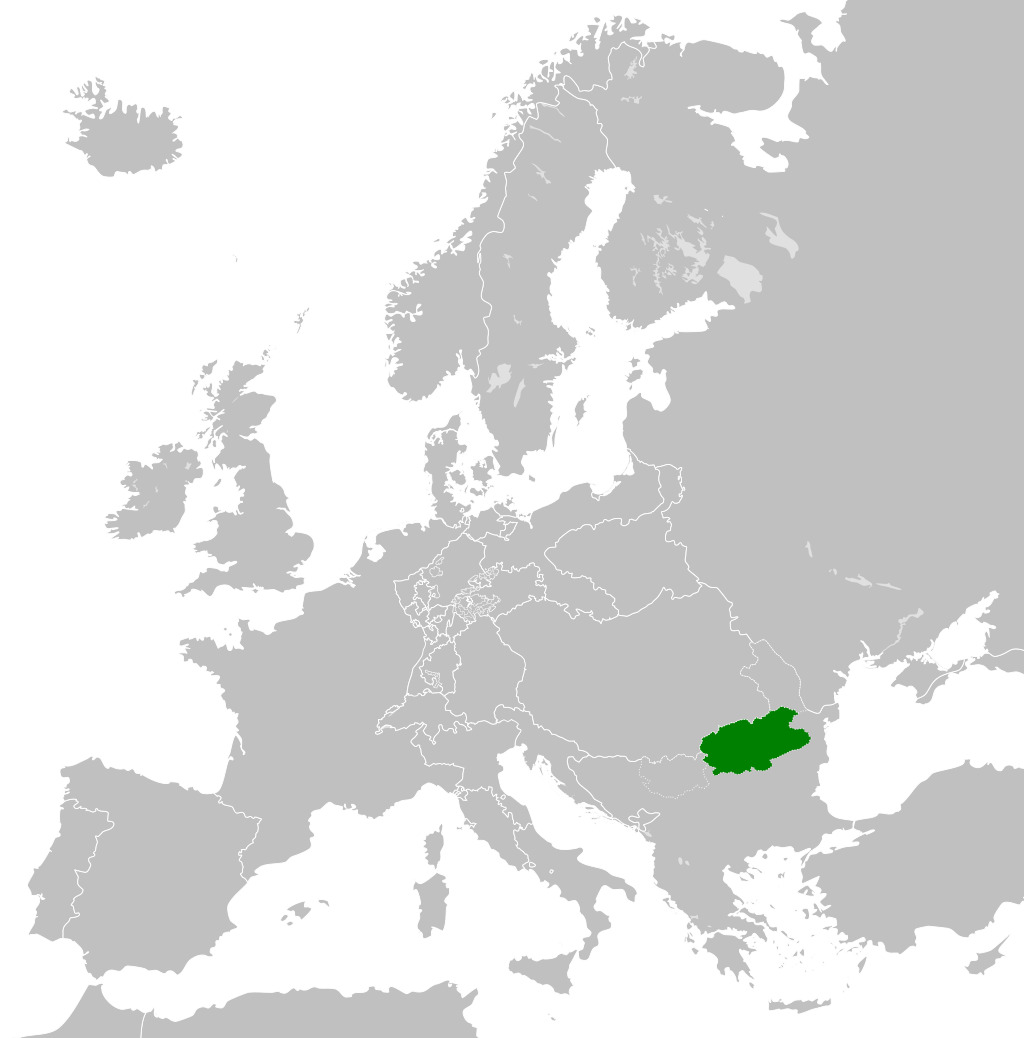
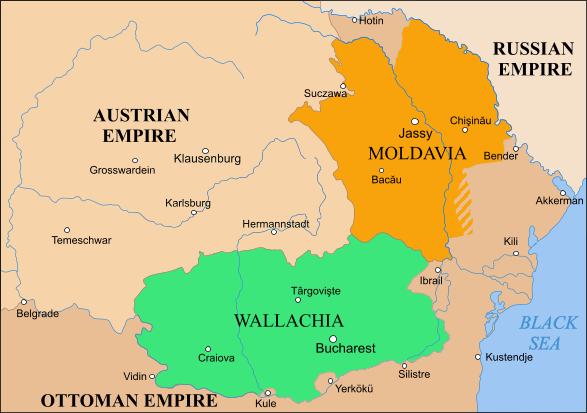
The Principality of Wallachia, 1793–1812, highlighted in green
Outside the eyalet system were states such as Moldavia, Wallachia and Transylvania which paid tribute to the Ottomans and over which the Porte had the right to nominate or depose the ruler, garrison rights, and foreign policy control. They were considered by the Ottomans as part of Dar al-'Ahd, thus they were allowed to preserve their self-rule, and were not under Islamic law, like the empire proper; Ottoman subjects, or Muslims for that matter, were not allowed to settle the land permanently or to build mosques.[
During the nineteenth century, as Ottoman territory receded, several breakaway states from the Ottoman Empire had the status of vassal states (e.g. they paid tribute to the Ottoman Empire), before gaining complete independence. They were however de facto independent, including having their own foreign policy and their own independent military. This was the case with the principalities of Serbia, Romania and Bulgaria.
The roots of Greek success in the Ottoman Empire can be traced to the Greek tradition of education and commerce exemplified in the Phanariotes.[138] It was the wealth of the extensive merchant class that provided the material basis for the intellectual revival that was the prominent feature of Greek life in the half century and more leading to the outbreak of the Greek War of Independence in 1821.[139] Not coincidentally, on the eve of 1821, the three most important centres of Greek learning were situated in Chios, Smyrna and Aivali, all three major centres of Greek commerce.[139] Greek success was also favoured by Greek domination in the leadership of the Eastern Orthodox church.
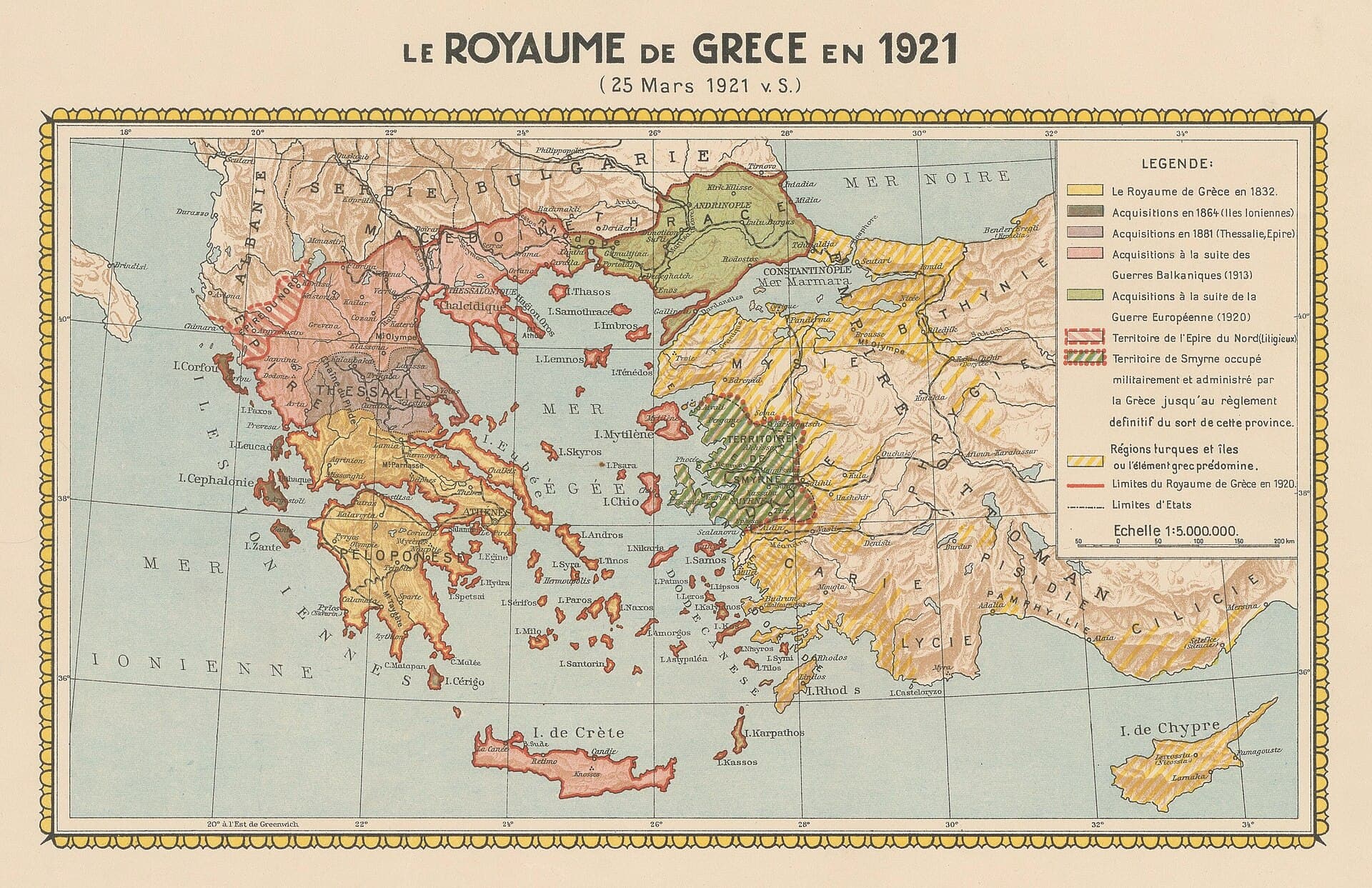
The Kingdom of Greece (Greek: Βασίλειον τῆς Ἑλλάδος [vaˈsili.on tis eˈlaðos]) was established in 1832 and was the successor state to the First Hellenic Republic. It was internationally recognised by the Treaty of Constantinople, where Greece also secured its full independence from the Ottoman Empire after nearly four centuries.
Switzerland originates from the Old Swiss Confederacy established in the Late Middle Ages, following a series of military successes against Austria and Burgundy; the Federal Charter of 1291 is considered the country’s founding document. Swiss independence from the Holy Roman Empire was formally recognised in the Peace of Westphalia in 1648. Switzerland has maintained a policy of armed neutrality since the 16th century and has not fought an international war since 1815.
The Old Swiss Confederacy, also known as Switzerland, or the Swiss Confederacy [6] was a loose confederation of independent small states (cantons, German Orte or Stände [7]), initially within the Holy Roman Empire. It is the precursor of the modern state of Switzerland.
It formed during the 13th century, from a nucleus in what is now Central Switzerland, expanding to include the cities of Zürich and Bern by the middle of the century. This formed a rare union of rural and urban communes, all of which enjoyed imperial immediacy in the Holy Roman Empire.
This confederation of eight cantons (Acht Orte) was politically and militarily successful for more than a century, culminating in the Burgundy Wars of the 1470s which established it as a power in the complicated political landscape dominated by France and the Habsburgs. Its success resulted in the addition of more confederates, increasing the number of cantons to thirteen (Dreizehn Orte) by 1513. The confederacy pledged neutrality in 1647 (under the threat of the Thirty Years’ War), although many Swiss served privately as mercenaries in the Italian Wars and during the early modern period.
After the Swabian War of 1499 the confederacy was a de facto independent state throughout the early modern period, although still nominally part of the Holy Roman Empire until 1648 when the Treaty of Westphalia ended the Thirty Years’ War. The Swiss Reformation divided the confederates into Reformed and Catholic parties, resulting in internal conflict from the 16th to the 18th centuries; as a result, the federal diet (Tagsatzung) was often paralysed by hostility between the factions. The Swiss Confederacy fell to invasion by the French Revolutionary Army in 1798, after which it became the short-lived Helvetic Republic.
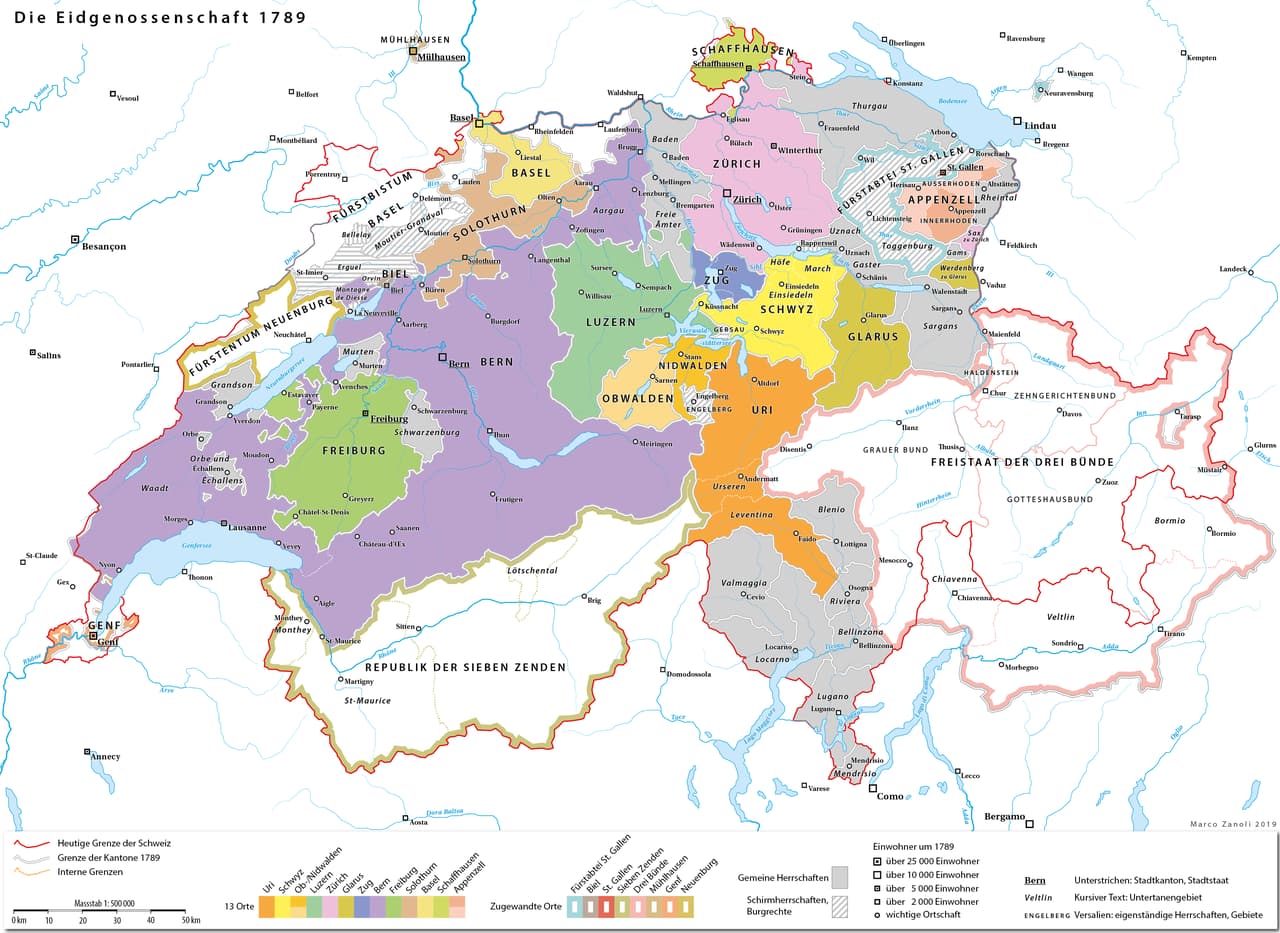
The Old Swiss Confederacy in the 18th century, with the modern Swiss national border in red.
Likewise, I consider Switzerland a meme civilization like Malta, but I don’t rule out that they won’t include it in the future…
And I don’t rule them out, at least in regards to Persia and Siam (Afghanistan would have to be seen due to the current state of the country, but it may be)…
Good point…with the US and Mexico, the possibility of including 19th century civs opens up (Aztecs and Incas already existed during the conquest of America, so they fit in AoE 3, but very much at the limit of the chronology)…
That’s true, I mean AoE 3 was always set between 1400 and 1900…Henry the Navigator, the German War Wagons and the Chinese campaign prove it…originally with the original game it went from 1492 to 1817 with the original campaigns, with The Warchiefs the chronology extended forward to 1876 and with The Asian Dynasties backwards to 1421…that is, between 1421 and 1876 is the real and factual chronology of the game; later with cards and technologies it extends until 1901 (the Victorian era of the Hanover Royal House) or 1911/1912 (the Porfiriato and the theme of the Wild West)…to that, if you add the Finnish revolution, it extends until 1917 and finally if you count the fall of the Ottoman Empire and independence from Ireland to Great Britain, the game extends until 1922… (obviously the game does not cover WW1 for gameplay reasons, but it takes place during the period of the conflict)…
That’s because AOE3 is a game not historical, but aim to show some “unique features” for some well-known civs. Think of war wagon for Germans, if they care alot about historical, then how could it replace dragoons? If concern real history, all units will be musketeers, musketeers on horseback, and cannons, mortars, and something like that.
The same is for the Afghan civ I said before, we do not need what Afghans had around time 1500, we can take many unique weapons once used by Afghans along its history, like the devs already did for Chinese, Japanese and Indians. Flame Throwers, Meteor Hammers are all out of dated weapons in around 1500, but they are all added to this game for more Chinese flavours. If you want historical, Chinese cavalries were also equipped with lances, sabers, pistols in game’s timeline like Europeans did, which will make them a reskin of European cavalries, it is historical, but not that good for gameplay.
1 Like
Good point, but it is also done for balancing reasons and because unique units replace their unit type…the Europeans have Dragons, but the Germans have War Wagons instead, the Dutch have Ruyters and the Russians have Horse Archers…
1 Like
It would be strange if Archaic Units were not completely weeded out if we paid too much attention to the details. Any Civ must become untrainable after Age 4. As for Native Civs, even though Age 4 is named “Industrial”, the only corresponding element is the train from Trade Routes, which is a strange situation.
I think devs added more Euro civs not cuz they like em, but Euros mean less work (and cost) required
Explain why they are cheaper to make? They make all the models in house before you answer.
2 Likes
You chose that starting date just because that’s exactly the cutting date for the Safavid Dynasty, didn’t you?
1 Like
Europeans have a common template: Pikeman, Crossbowman, Musketeer, Skirmisher, Grenadier, Hussar, Dragoon, 6 artilleries, etc. Creating a new civ only need replace some of them with a unique one and add one or none unique buildings. Civs outside Europe, however, has no template, so they need create everything from begining.
1 Like
I just told you the models are made internally, so they aren’t meaningfully going to add to the cost.
The primary cost for creating factions for AOE3 is going to be voiceacting, everything else is internal and at best simply competes with other priorities like AOMRT.
You know that Time of work cost money, right??
Not just models, but cards that are shared among europeans (royal mint, refrigeration, forts, ships…) and the balance of such units.
Creating a new culture means to add a new age up system among other mechanics. We suffer these with possible new effects for wonders, tribal council and unlockable dances at firepit
which all the Asian factions have as well?
do you think people like Tilanus get fired between DLCs or what? balancing is really not a cost at all, and italy and malta where just as complex as other factions since DE in this regard.
they probably wont make more new cultures from the ground up, Persia most likely would just be an asian faction with wonders.
1 Like
Btw if you guys want to learn a bit about some aspects of the Persian culture at the time of the game, I strongly advice you to read the novel “The Blood of Flowers”. Really good!
Even they made Persians as a typical Asian civ, it still need more efforts than a European civ. You could check other Asian civs, and you will find their common contents are only some cards, some buildings(towncenter, barracks, etc, but they even have no shared house building) and the Wonder system(however, evey civ get totally different wonders), thus you can’t design an Asian civs with a premade template.